Explaining Fibromyalgia to Family Members Who Don't Believe You
A nervous system stuck in high alert causes real pain that family skepticism makes worse.
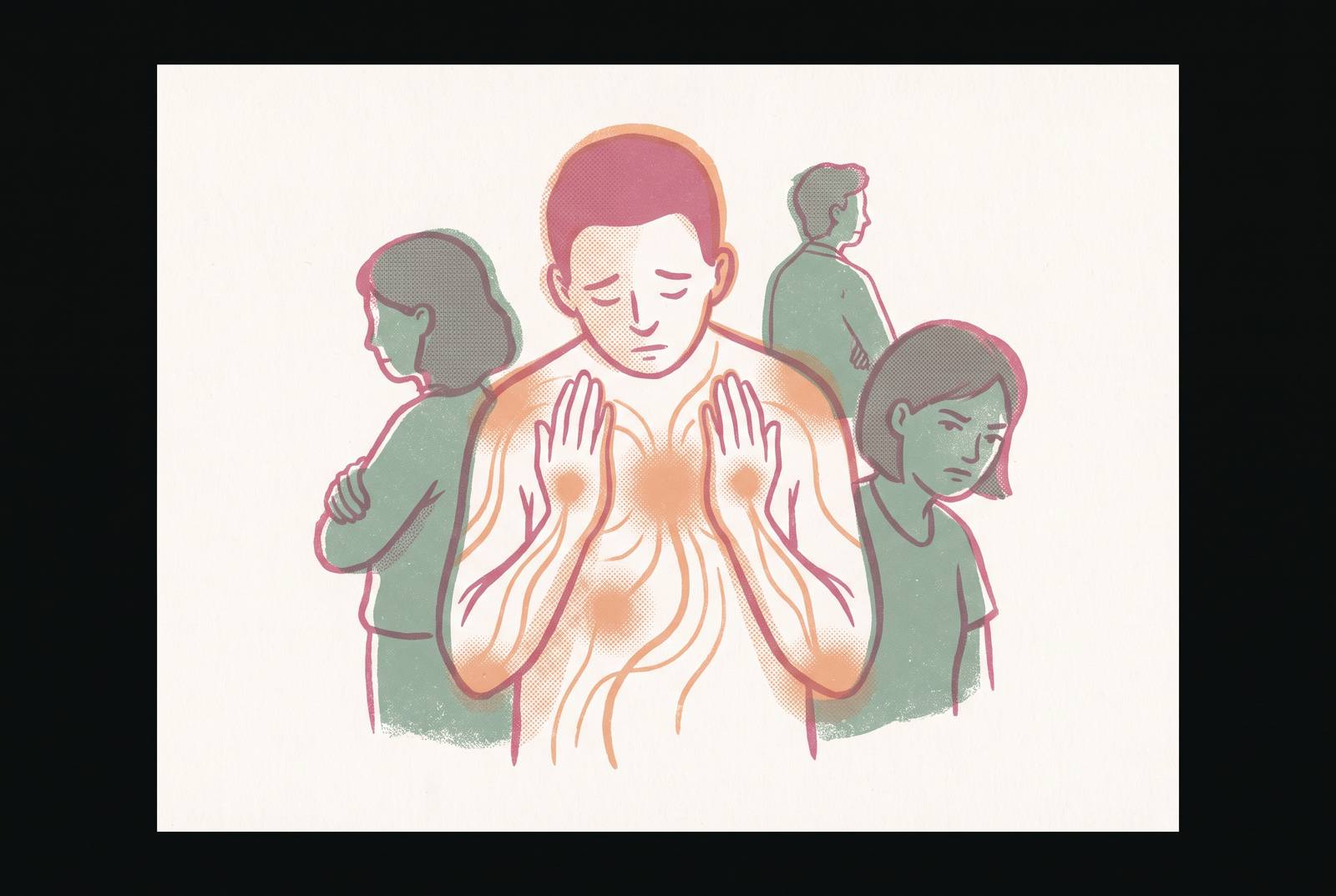
"But you don't look sick." "Everyone gets tired sometimes." Most people with fibromyalgia have heard some version of this from someone they love, usually more than once. It stings, and it's tempting to read it as cruelty or a refusal to care. But the more accurate read is structural: families are pattern-matching machines, and fibromyalgia gives them almost no pattern to match. No visible wound, no cast, no scan lighting up on a screen. Skeptics aren't unkind so much as understaffed on facts, and they fill that gap with the nearest explanation available, which is usually the wrong one.
That gap doesn't close on its own, even with a diagnosis in hand. A 2026 focus group study found that participants who had already completed a structured pain management course still ranked "explaining this to family and doctors" among their most persistent, unresolved struggles. Diagnosis gives a name. It doesn't automatically translate into something a spouse, parent, or sibling can act on.
Part of the problem is genuinely scientific, not just interpersonal. There's no blood test, no biomarker, nothing a lab can hand back with a number on it. Absent that, families tend to default to one of three explanations: something visible they're misreading, a psychological issue, or a disruption to roles they expected the patient to keep playing. None of those three are correct, but all three feel like reasonable guesses when nothing more concrete has been offered.
Which points to the actual task here. Filling that vacuum with accurate information is a necessary, practical kindness. It's the single most practical tool available for changing how a family responds.
The fibromyalgia nervous system, in plain language
Fibromyalgia isn't damage to muscle or joint tissue.
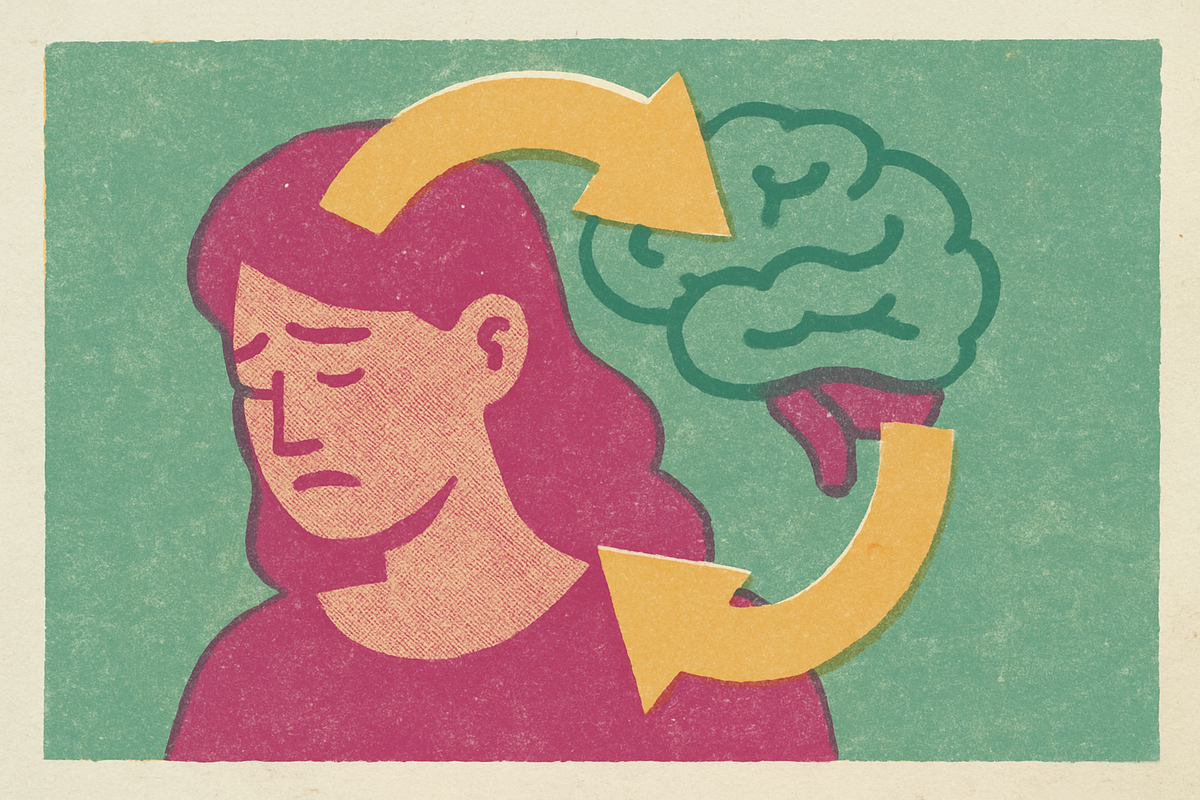
Central sensitization is the term researchers use, and the plain version goes like this: the nervous system gets stuck amplifying signals that a healthy system would tone down. Picture a volume dial jammed at maximum, with the knob that's supposed to turn it back down broken off. Researchers have found disrupted connectivity in the periaqueductal grey matter, the brain region responsible for damping pain signals on the way down. In plain terms: the brain's own pain brake is documented as impaired, not missing, not imagined, impaired.
Fatigue and the non-restorative sleep that comes with fibromyalgia follow the same script. They are a dysregulated system problem. They're the same dysregulated system failing to let the body recover overnight the way it's supposed to. Brain fog runs on the same logic too: a nervous system already working overtime on pain signals has less bandwidth left for cognitive tasks, so recall and focus suffer as a direct consequence.
Newer research adds more layers without settling into one tidy answer. Patient-derived antibodies have been shown, in lab studies, to bind to nerve cells and produce pain hypersensitivity. Reduced gut microbiome diversity is linked to pain patterns in research models, alongside genetic signals pointing toward how neurons function. None of this closes the case. Reduced microbiome diversity is linked to pain patterns in research models, and genetic signals point toward how neurons function, adding weight to the argument that something biological, layered, and real is happening.
Diagnostic criteria for fibromyalgia have gone through repeated revision since the 1990 tender-point model, each version an attempt to identify cases more accurately. That's the behavior of a medical establishment refining its understanding of a real condition. It's decades of refinement. And in 2025, the FDA approved sublingual cyclobenzaprine, the first new fibromyalgia drug in over 15 years, bringing the total to four approved treatments. Regulators don't spend years vetting medicine for something they consider imaginary.
"But you don't look sick" as the predictable response to an invisible condition
Families calibrate belief using what they can see. Fibromyalgia hands them almost nothing to see, so the mismatch between what's happening internally and what's visible externally produces disbelief as a predictable output, not a moral failing on anyone's part.
The cost of that mismatch runs deeper than an awkward conversation. A 2026 review of 69 studies capturing first-person accounts found that fibromyalgia functions as something closer to an existential rupture than a purely physical illness: patients described a split between a "before" and "after" self, a future that suddenly felt smaller, a shrinking of daily life, and a sense of identity threatened by roles they could no longer fill. That's a heavier claim than "chronic pain is hard," and it reframes chronic pain as a threat to identity itself.
Disbelief from people close to a patient doesn't sit outside that experience. It actively feeds it. The same research found that invisibility, disbelief, and isolation shape how patients experience the illness from the inside, so a dismissive comment from a parent or partner is part of the same wound. A separate 2026 focus group study backs this up from another angle, finding a real emotional toll tied specifically to hiding symptoms, with participants reporting that fibromyalgia is poorly received by peers and clinicians alike, even among people already deep into treatment programs.
The mechanism by which this plays out at home is fairly specific. Family members who land on "this is psychological" tend to respond with dismissal or distraction rather than accommodation. That sounds subtle, but it has a direct practical cost: dismissal and distraction don't leave room for rest or pacing, and pacing is often the one thing keeping symptoms from spiraling further. So the wrong mental model doesn't just hurt feelings. It removes the exact support a patient needs to function.
What happens when stigma follows patients into clinical settings
Disbelief doesn't stay contained inside the living room. It travels into the exam room too, which raises the stakes on getting family members on board considerably.
A study following twenty adults with fibromyalgia across seven European countries documented the forms this stigma takes in medical consultations. Participants reported nearly the full range of stereotype-based mistreatment mapped in a validated stigma framework, and the most common single form was being treated as a category rather than a person, what researchers call person-othering. A 2026 piece in a rheumatology journal found that patients regard a clinician's basic empathy as central to whether they feel safe in that room at all, precisely because dismissal is common enough to be an expected risk rather than a rare exception. That dismissal has consequences beyond hurt feelings: it's linked to longer diagnostic delays and can make the medical encounter itself part of the harm rather than the remedy.
This isn't a one-sided failure of bad clinicians either. Research from the healthcare provider side confirms that fibromyalgia remains poorly understood by many professionals, some of whom will openly admit uncertainty because the training simply isn't there. Patients can't assume a doctor will advocate for them by default.
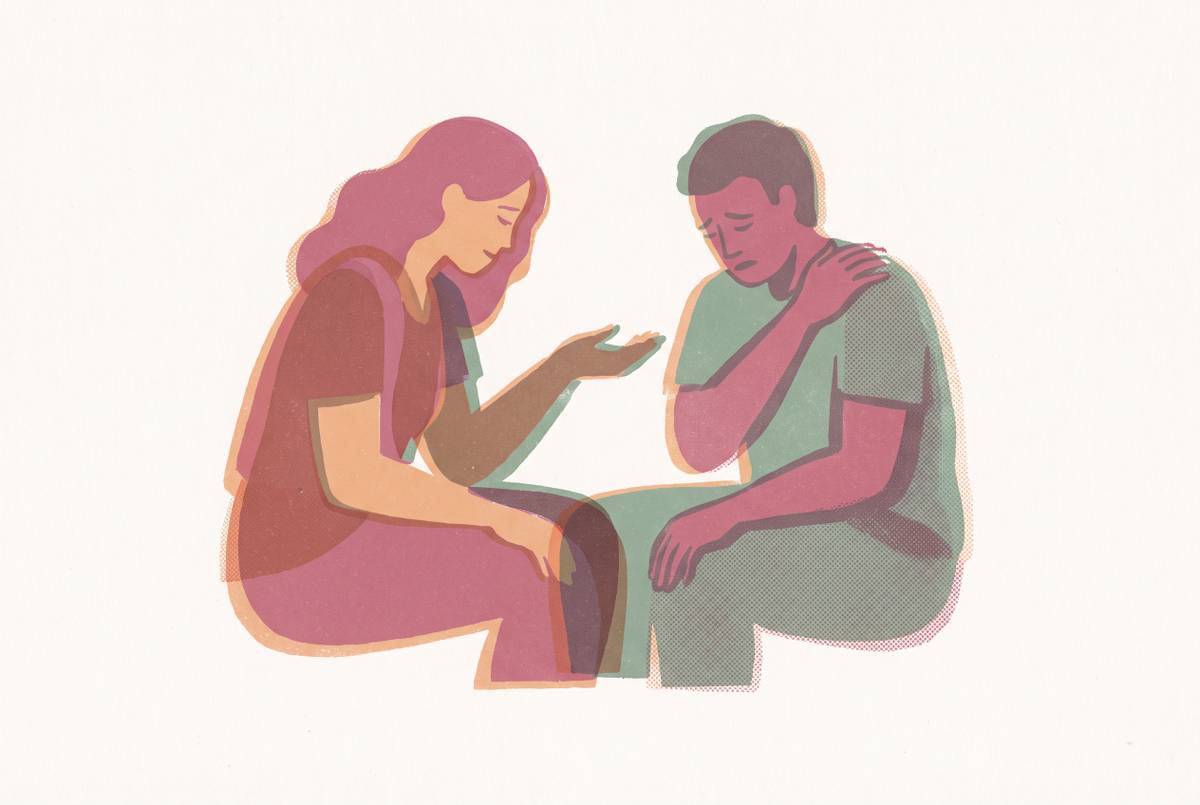
Which is exactly where family belief starts to matter beyond the dinner table. A family member who understands the mechanism and takes the condition seriously can sit in that appointment, back up what the patient is describing, and help catch details that brain fog or flare-day stress might otherwise erase. That's a functional gesture of support. It's a functional one, with a real effect on whether an appointment goes well or badly.
Translating the neuroscience into scripts that skeptical family members can receive
None of this works as an argument to win. It works as a model to hand over, one that replaces "you're being dramatic" or "it's probably stress" with something more accurate to build understanding on.
A starting line, adaptable to however it actually gets said out loud: "My nervous system is stuck amplifying pain signals, researchers call it central sensitization. My brain's pain brake isn't working the way yours does. So something that would feel minor to you can feel severe to me, and that's not a mood, and it's not a choice." Use it as a jumping-off point.
For the "but you seemed fine yesterday" moment, the honest answer is that fibromyalgia fluctuates, and a good day doesn't mean recovery, it means the nervous system happened to be quieter for a few hours. Something like: "When I seem fine, it's because I managed my energy carefully, not because I got better. Push too hard on a good day and it costs several bad ones after."
For "it's probably stress" or "sounds like depression," the honest move is to concede the real overlap without conceding the dismissal. Stress does interact with an already sensitized nervous system, and chronic pain absolutely affects mood. Neither one is the cause, though, and both are downstream effects of the same neurological picture, not evidence the whole thing is invented. The FDA line does real work here too: regulators don't approve medicine, four separate drugs at this point, for conditions they consider imaginary.
And for "just push through it," this is where spoon theory earns its place in the conversation, because pushing through is exactly the wrong model for how this illness behaves.
Spoon theory and energy envelopes: giving families a working model of daily life with fibromyalgia
Spoon theory does something clinical language can't quite manage: it turns an invisible, abstract energy deficit into something countable, something a skeptical relative can actually picture.
The story behind it is the original essay does more explanatory work than any summary of it will. In 2003, Christine Miserandino was sitting in a diner trying to explain lupus to her best friend, and she grabbed a handful of spoons off nearby tables to make the point physical. Each spoon represented a unit of energy for the day. Every task, showering, cooking, a phone call, costs spoons, and once they're gone, they're gone until tomorrow. That essay became the founding document of what's now called the "spoonie" community, and it remains the most widely used framework for explaining energy-limiting illness to people who've never lived inside one.
Adapted for fibromyalgia specifically, the key point families need to absorb is this: unlike a healthy person who can push through fatigue and recover with a good night's sleep, someone with FM who overdrafts their energy doesn't build resilience from it. They trigger a flare instead. Energy Envelope Theory backs this with more clinical framing: staying inside the envelope prevents things from getting worse, and exceeding it doesn't toughen the system up, it sets off exactly the crash that pacing was meant to avoid.
Two extensions from the patient community make this even more concrete for families trying to apply it day to day. "Energy pockets" describe short windows where energy briefly ticks up, useful for a family member to know so a decent hour doesn't get mistaken for a full recovery. "Energy ladders" describe breaking one task into pieces spread across a longer stretch of time, which gives family members something specific to do: take over a step, rather than expecting the whole task finished in one go.
None of this is about giving up on things. Pacing is a strategy for rationing a limited resource to keep the nervous system stable, and presenting it to family as a medical strategy rather than a personality trait changes what kind of conversation follows.
Structured symptom tracking before appointments
Arriving at a family conversation, or a doctor's appointment, with an actual written record beats relying on memory pulled together under stress and brain fog. That gap matters more than it sounds.
Brain fog and fatigue make real-time recall genuinely unreliable, and a symptom that felt sharp and obvious mid-flare can be surprisingly hard to describe clearly once a skeptical relative or a rushed clinician asks a direct question about it later. Logging in the moment, rather than trying to reconstruct it afterward, closes that gap.
There's already a validated clinical tool built for exactly this: the Revised Fibromyalgia Impact Questionnaire, free for academic and clinical use. The medical field has built structured instruments specifically because this condition needed them.
Digital tools extend that same idea into daily life. Some apps focus on daily symptom logs paired with visualizations connecting pain, sleep quality, and activity levels, building a personal record meant to be shared with a specialist rather than serving as a diagnostic tool itself.
The record does double duty either way. For family, it's a pattern stretched across weeks rather than a single claim made in the middle of an argument. For a clinician, it's structured context that makes dismissal a little harder to default to. Either way, the tracking does the remembering, so the patient doesn't have to do it from scratch under pressure, in the middle of the exact flare it's meant to describe.
Sources
- Lived illness experience in fibromyalgia - PMC
- Has anything changed for Fibromyalgia? Focus groups with patients on their lived experiences in England | PLOS One
- In Search of Molecular Correlates of Fibromyalgia: The Quest for Objective Diagnosis and Effective Treatments - PMC
- Medical gaslighting in rheumatology: listening, learning, and leading - ScienceDirect
- Stigmatisation in medical encounters for patients with fibromyalgia: A focus group study - PubMed
- Spoon theory