Finding a Therapist Who Understands Chronic Pain
Nervous system retraining, not talk therapy, treats chronic pain effectively.

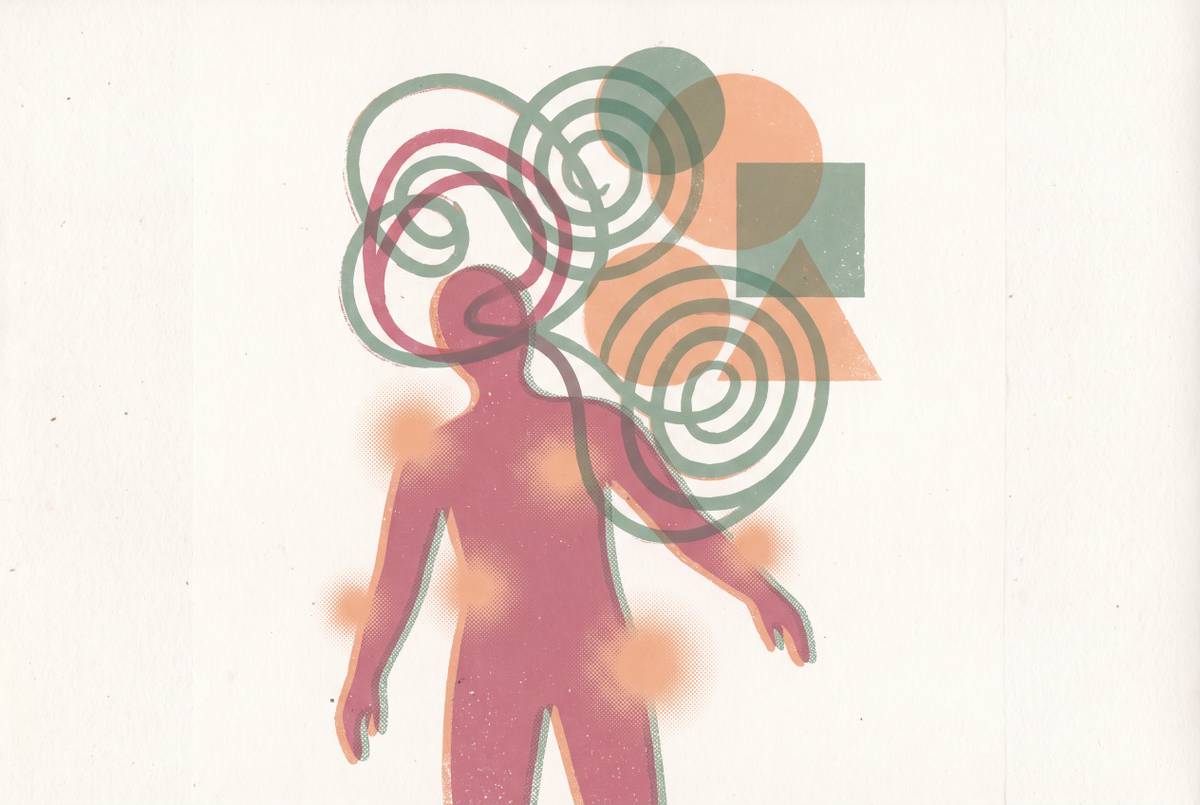
Chronic pain that outlasts normal healing is a nervous system problem, one doctors now call nociplastic pain, where the system that produces the sensation of pain has changed on its own. Rowan Center frames the mechanism in plain terms: an imaging scan shows tissue, not how the nervous system is handling the signals coming from that tissue. That is why someone can have a clean imaging scan and still be in real, severe pain. The scan and the suffering describe two different layers of the same body.
That mismatch feeds a loop that touches sleep, mood, and daily function all at once. Pain disrupts sleep. Poor sleep lowers the threshold at which the next sensation registers as pain and flattens mood along with it. Low mood cuts activity, and less activity leads to deconditioning, which feeds the pain right back into the cycle. Someone living with this doesn't just manage pain in the moment. They run a constant background calculation before every outing: how far is the walk, how many stairs, how long can they sit, what will tomorrow cost for today's errand. That math runs all day and shows up on no one else's radar.
Depression and anxiety travel with chronic pain more often than the two get treated as a connected pair. The relationship works in both directions: psychological distress turns up the volume on pain signals, and unmanaged pain deepens the distress. Treating only one side means the gains rarely hold. Rowan Center has found that people with chronic pain who are already in general therapy stay symptomatic at more than twice the rate of people in therapy without chronic pain. Standard talk therapy was not built with pain in mind, which is exactly the gap this piece is here to help close.
What pain-specialized psychological care is
Psychological care built for chronic pain works on the nervous system and the habits that keep pain going: sleep patterns, how activity gets paced across a day, the stress response that stays switched on long after any real threat has passed. It also deals with the feelings that build up around pain, but that is one piece of the work, not the whole of it. Rowan Center is direct about this. Pain-focused therapy is not general talk therapy, and it is not a fallback for people who ran out of medical options. It sits inside two specific fields built for exactly this overlap: health psychology and rehabilitation psychology, both designed for the place where a medical condition meets an actual, daily life.
Good pain therapy has a shape to it. Rowan Center describes it as structured and time-limited, with specific targets set from the very first session and a defined endpoint in view, rather than an open-ended arrangement that drifts on indefinitely. The physician manages the pain signal itself, through medication, procedures, or physical treatment. The psychologist works on the system that keeps sending that signal. Those are two halves of one job, not two competing approaches pulling in different directions.
A handful of therapy models show up again inside this field, and a patient can check for their names before ever picking up the phone. Cognitive Behavioral Therapy adapted for pain, often written as CBT-pain, targets the thinking patterns and avoidance habits that make pain worse over time. Acceptance and Commitment Therapy, or ACT, builds flexibility around pain. Pain Reprocessing Therapy, or PRT, starts from the idea that the brain is misreading safe signals as dangerous and works to retrain that misreading. Emotional Awareness and Expression Therapy, or EAET, deals with emotional contributors to pain that have been pushed down and not processed. Mindfulness-based approaches round this out, building awareness of pain sensations without treating every one as an emergency. Knowing these names only helps if a patient can also tell whether the person across from them actually trained in them, which is the next question to answer.
Credentials and training signals that distinguish a pain-specialized therapist from a generalist
A therapist who lists "chronic pain" as a specialty on an online directory profile is not automatically a pain psychologist. The training behind that listing is what matters. The backgrounds to check for are health psychology, rehabilitation psychology, and behavioral pain management, specifically as postgraduate training, not a weekend course added to a general practice.
Doctoral-level psychologists holding a PhD or PsyD who came through one of these tracks have typically logged supervised clinical hours working directly with pain populations. That is a different résumé from a licensed counselor who sees a patient with chronic pain every so often among a broader caseload. Rowan Center positions its own practitioners as doctoral-level psychologists who treat pain as a nervous system problem, which gives a useful sense of where the credential floor sits inside a practice built around pain specifically. Licensed marriage and family therapists and licensed clinical social workers can also do strong work in this space, provided they carry specific training in modalities like PRT, ACT, or EAET. License type alone does not answer the question. The training behind it does.
Directories can help narrow the search, though each one works differently and comes with its own limits. Clinicians Who Care is a community-built, crowd-sourced list created by physician Bayo Curry-Winchell, MD, MS, built from her own experience of being dismissed by doctors before receiving a lupus diagnosis. It surfaces providers that patients themselves recommend, and it describes itself as a starting point for finding a compassionate fit. A listing there says something true and useful about bedside manner and patient trust. It does not confirm training in pain-specific modalities, and a patient still needs to ask about that directly.
One more signal matters as much as any diploma: whether a therapist is willing to talk to the rest of a patient's care team. Rowan Center describes practices where the psychologist speaks directly with the prescribing physician and, where relevant, a physical therapist, so the psychological work lines up with the medical work on the same track. The patient sits at the center of their own care, and every provider around them needs to know what the others are doing. A therapist who supports that kind of coordination, instead of working in isolation, understands the territory a pain patient actually lives in.
Questions to ask before committing to a therapist
Most therapy practices offer a free initial consultation, and that short call is the moment to find out whether a therapist actually works in pain psychology, not after three or four paid sessions have already gone by. That call runs in both directions. The therapist is deciding whether the fit makes sense, and the patient should be doing exactly the same thing, with just as much weight behind the decision.
A few direct questions do most of the work. Asking what training a therapist has specifically in chronic pain or health psychology reveals whether they have supervised clinical experience or have simply treated a few patients with pain in passing, while asking which approaches they use for chronic pain, and why, tells a patient whether the therapist can name CBT adapted for pain, ACT, PRT, or EAET and explain the reasoning behind choosing one over another. Asking whether they coordinate with other providers shows whether they see themselves as one part of a connected care team or as an isolated appointment on the calendar. Asking how they measure progress should produce a concrete answer grounded in function, things like sleep quality, activity tolerance, or how flares get managed, beyond a vague sense that mood is improving. And for anyone living with ME/CFS, fibromyalgia, or Long COVID, asking how a therapist thinks about pacing and energy limits reveals whether they treat post-exertional malaise as a real clinical fact or quietly file it away as a lifestyle choice.
The answers carry weight beyond the specific question asked. A therapist who implies that pain is mostly psychological, or who seems unfamiliar with nociplastic pain altogether, risks repeating the same dismissal a patient has likely already faced from other providers along the way. People living with chronic illness run into medical skepticism at a disproportionate rate, and the language a therapist uses in that first conversation tells a patient quickly whether the room ahead is a safe one or another place where they have to argue their way into being believed.
Effective therapy for chronic pain in practice
Good pain therapy is structured, aimed at specific goals, and headed toward a measurable endpoint. It should never feel like an open-ended conversation about how hard everything is, with no destination in sight. Rowan Center describes this work as time-limited, with concrete targets set from the first session. Sessions build toward specific, functional goals: better sleep architecture, smarter pacing of activity across a day, turning down a stress response that has been stuck in the "on" position, and rebuilding daily habits that no longer revolve entirely around protecting a body in pain. Progress gets measured in function, things like whether a patient can prepare a meal, get to an appointment, or sleep through the night without pain breaking it, not only in how someone says they're feeling that week.
Pacing is an active technique a pain-specialized therapist works on directly with a patient, session by session. For conditions like ME/CFS, where no treatment currently addresses the root cause, pacing, regulating activity carefully to avoid triggering a crash, is the main tool available. In session, that looks like breaking tasks into smaller pieces with real rest built in between, ranking tasks by energy cost so that preparing a meal or getting to a medical appointment comes before anything optional, and slowly building tolerance without tipping into post-exertional malaise. Spoon theory, the framework Christine Miserandino introduced in 2003 in her essay "The Spoon Theory" on butyoudontlooksick.com, using a handful of diner spoons to explain lupus to a friend, has become a working shorthand clinicians use with patients and with each other to talk about finite daily energy. A therapist who treats spoon theory as a real clinical communication tool, rather than something that only lives on social media, has already stepped inside the patient's own frame of reference.
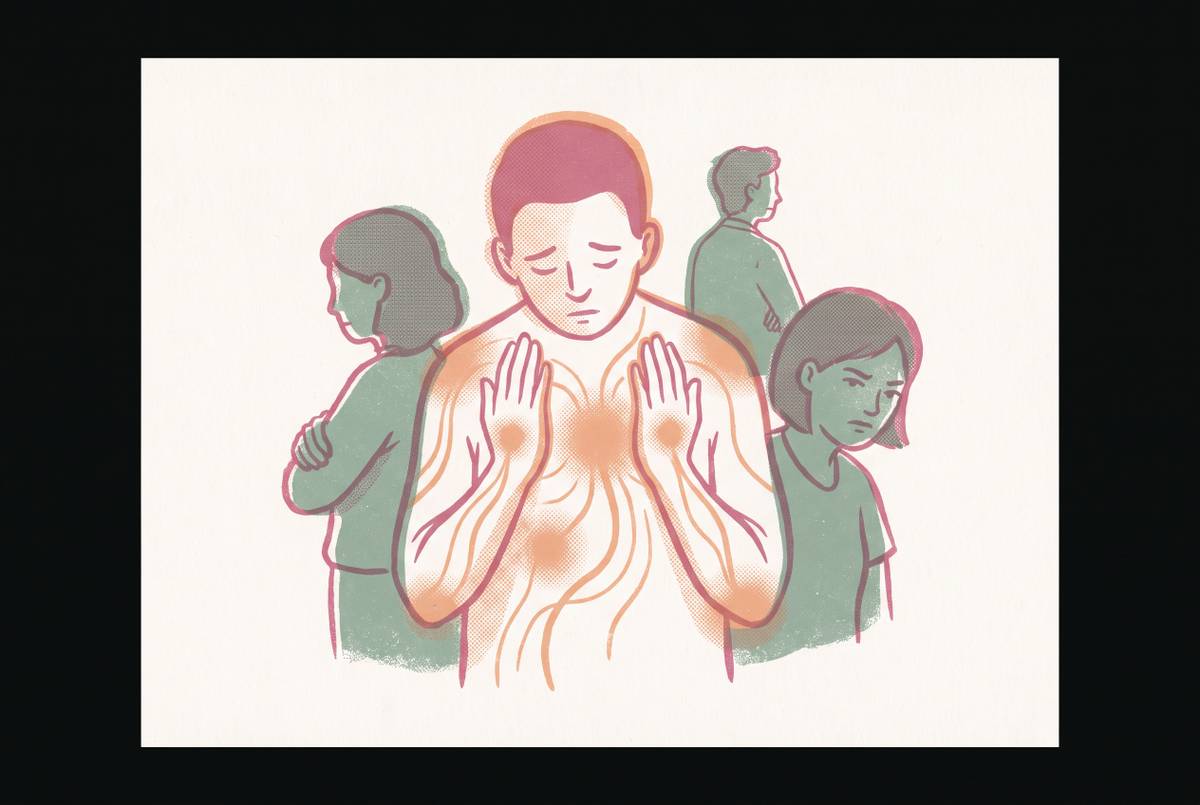
The emotional work inside pain therapy has its own shape too. It centers on grief, a changed sense of identity, and the particular anger of living with a condition other people cannot see, not generic stress management borrowed from an unrelated setting. A diagnosis can bring shock, disbelief, sadness, anger, and guilt, all of which reshape identity and not just mood for a week or two. Chronic illness reshapes social life as well, often toward isolation, and changes how a person sees themselves day to day. A therapist trained in health psychology treats that as core clinical territory. For conditions like ME/CFS, where symptoms stay largely invisible to everyone else, part of the therapist's job is building a space where the patient does not have to prove their experience is real before the actual work can start. Within the first two or three sessions, it usually becomes clear whether a therapist is equipped for this specific work or is a well-meaning generalist operating outside their training.
Structured symptom tracking before appointments
Patients who bring organized, specific records to appointments, with a therapist and with a physician alike, change their own role in the room. They stop being someone waiting to be managed and become a contributor handing over real clinical data. A pain diary that tracks intensity, location, duration, triggers, and functional impact gives a therapist something to actually work with: noting that a flare hit a 7 out of 10, prevented a planned errand, and disrupted sleep that night carries far more clinical information than telling a provider the pain was simply unbearable. Using a standardized scale across visits, a numerical rating, a visual analog scale, or the Brief Pain Inventory, builds continuity, so that a number tracked the same way over months shows a real trend instead of random noise from one appointment to the next. Functional language does more work in a clinical note than emotional language does: terms like flare frequency, functional limitation, and treatment response communicate specifics that "it's unbearable" cannot.
Tracking also feeds directly into the kind of pattern recognition that pain-specialized therapy depends on. A therapist working on sleep, pacing, or a stuck stress response needs data to see which interventions are actually producing change, not just impressions pieced together from memory. Connecting information across sleep, activity, medication, and daily context often reveals patterns in the data that neither patient nor clinician would catch relying on memory alone. Tools that pull in wearable data, from devices like Oura or Garmin, or through a platform like Apple Health, add another layer to that picture. A log that places rest periods next to step counts and sleep quality tells a fuller story than pain ratings can tell on their own, and that fuller story turns a therapy session into a working diagnostic tool.
Finding a therapist when access, cost, and specialist scarcity create real barriers
A large share of people live with chronic pain, and pain-specialized therapists are scarce relative to that number. Knowing exactly which credential to look for and which questions to ask does not guarantee that someone with that training is actually available nearby, in-network, or taking new patients within a reasonable wait. That gap sits squarely between information and access, and it is a real clinical problem, not a minor inconvenience to shrug off.
Closing that gap takes patience and some flexibility in approach. Telehealth has widened the map considerably, since many health and rehabilitation psychologists now see patients across state lines where licensing allows it, which matters most for anyone outside a major metro area where pain psychology practices tend to cluster. Directories built around patient recommendations, like Clinicians Who Care, help surface providers worth a first call, even though, as earlier sections laid out, a listing there still needs to be checked against actual training in pain-specific modalities. Academic medical centers and hospital-based pain programs often keep psychologists on staff as part of a broader pain management team, which can be a more reliable route than a general insurance directory search. Cost remains a real obstacle for many, and asking directly about sliding-scale fees, supervised trainees working at a reduced rate, or group-based pain programs can open options that a standard fee schedule would otherwise close off. None of this erases the shortage. It does give a patient a working path through it, built on the same standard this piece has set from the start: knowing what to look for, and refusing to settle for less just because it's what happened to be available first.
Sources
- Easing the psychological burden of a life with chronic illness
- Beyond the Pain: Rethinking Chronic Pain Management Through Integrated Therapeutic Approaches—A Systematic Review
- Adjunct Psychiatric Approaches to Chronic Pain Patients: Integrating Behavioral and Pharmacologic Strategies Across Outpatient and Inpatient Settings
- 2135: A novel treatment delivery of acceptance and commitment therapy for chronic pain in an integrated primary care setting
- What psychiatric comorbidity in chronic pain? New insights for an “old,” underestimated issue - Minerva Psychiatry 2026 March;67(1):22-33 - Minerva Medica - Journals
- What to Ask a Pain Specialist - My HealtheVet - My HealtheVet
- Journal of Medical Internet Research - Potential of Digital Tools for Chronic Pain Management
- PainTracker Self-Manager: a Web-based Platform to Promote and Track Chronic Pain Self-management