Grief and Identity Loss in Fibromyalgia
The disease strips away identity itself, leaving grief no one recognizes as grief.
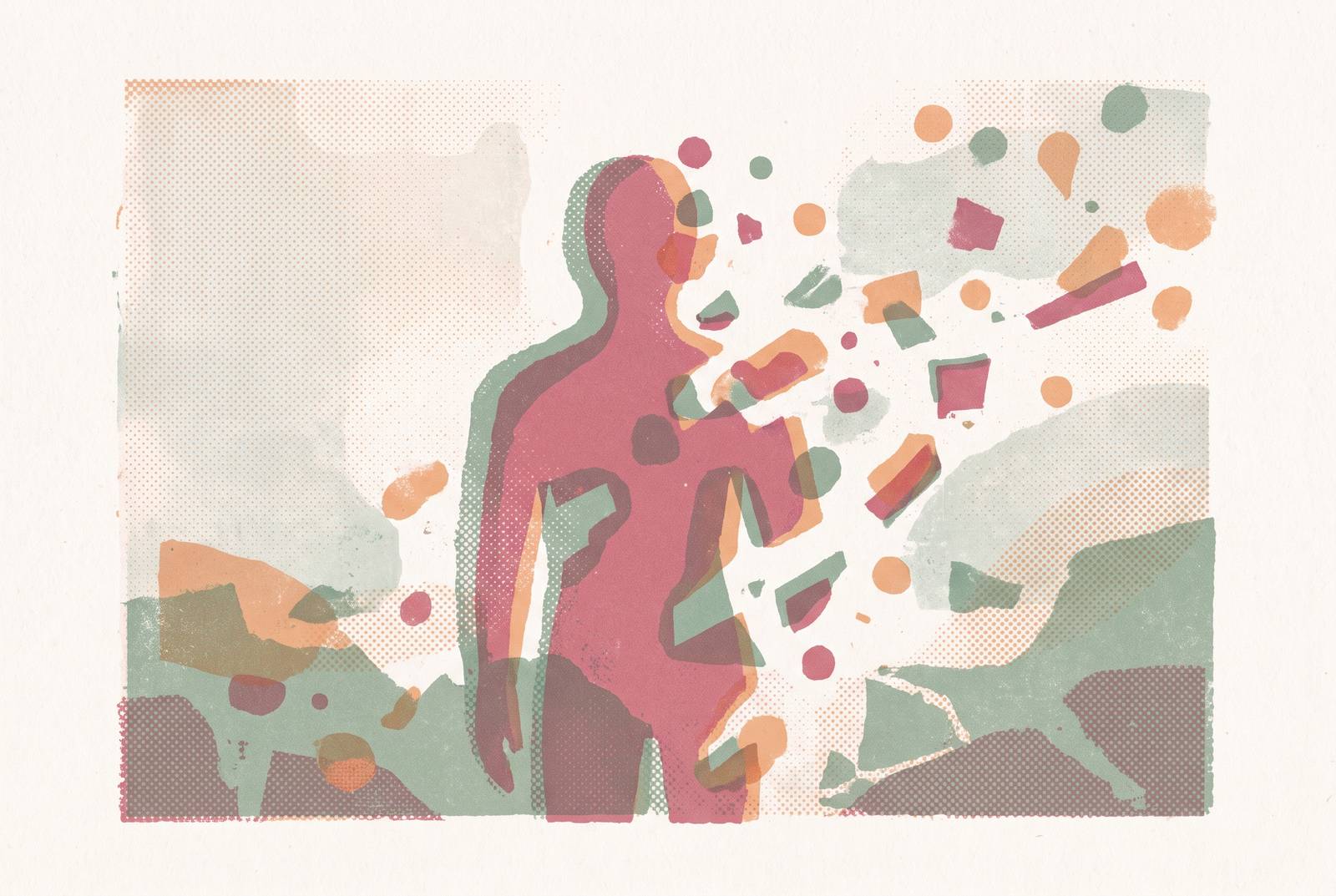
Fibromyalgia doesn't just take away what someone can do. It takes apart the person underneath the doing, quietly, over months and years, until the runner isn't a runner anymore and the reliable friend can't remember the last time she showed up for someone else. That's not the same thing as adjusting to a new normal. It's losing the architecture of who a person understood themselves to be, and the grief attached to that loss almost never gets called grief.
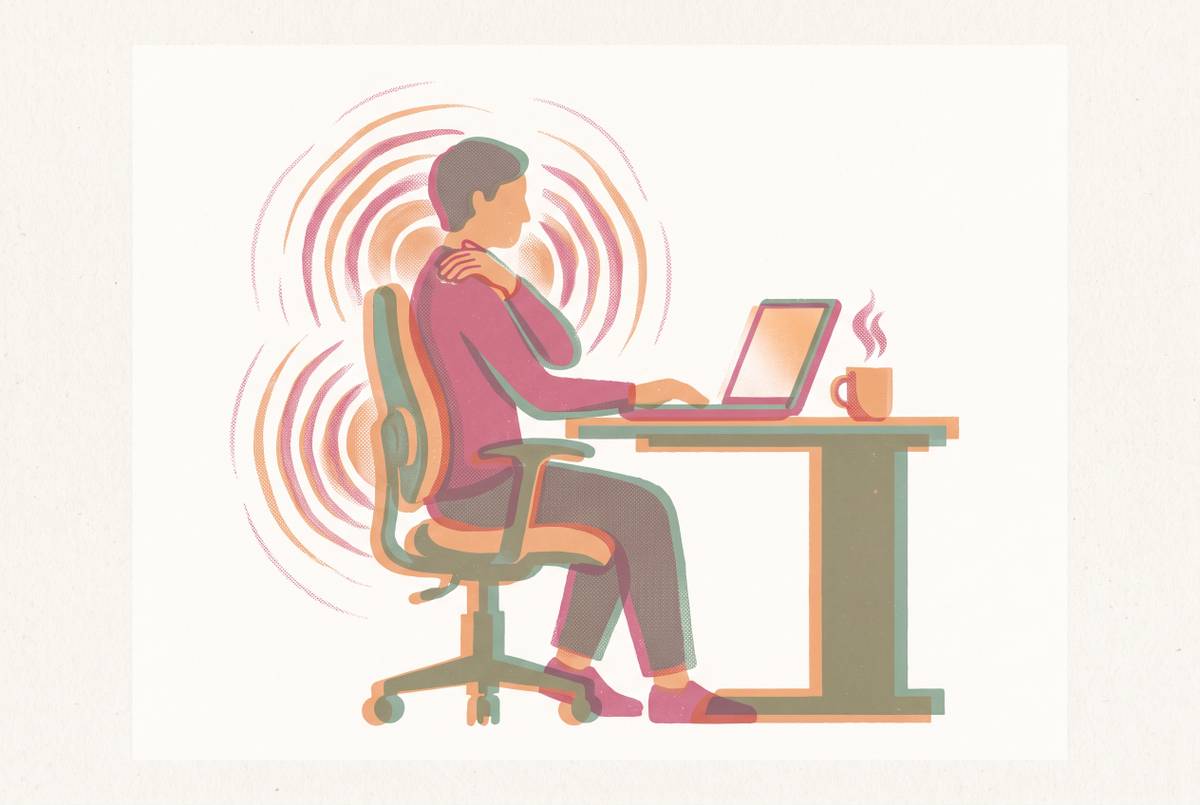
Fibromyalgia affects an estimated 2 to 4% of people worldwide. Widespread pain, fatigue, brain fog, disrupted sleep: the diagnostic picture is built on a Widespread Pain Index and a Symptom Severity Scale, not a blood test or a scan. There's no biomarker. No single moment where a doctor points to an image and says, here it is. Which means the condition is invisible in the clinical sense and often disbelieved in the social one, and that disbelief compounds everything that follows: the hobbies dropped, the career roles that fade out, the social calendar that quietly empties. This piece is about naming that loss correctly, as grief, because naming it is the only way through it.
Why this loss rarely gets called grief
Conventional grief has an object. A person died. A marriage ended. A house burned down. There's a funeral, a legal document, a pile of ash, something the outside world can point to and confirm happened, and you're allowed to mourn it.
Fibromyalgia doesn't offer that. The patient isn't dying. There's no single rupture, no event with a date attached. Kenneth Doka named this back in 1989: disenfranchised grief, loss that can't be openly acknowledged, publicly mourned, or supported the way other losses are. Grief needs witnesses, people who confirm that something real disappeared. Fibromyalgia patients are often short on witnesses, because the loss doesn't look like loss from the outside. It looks like someone who used to be more fun, more available, more reliable, and now isn't.
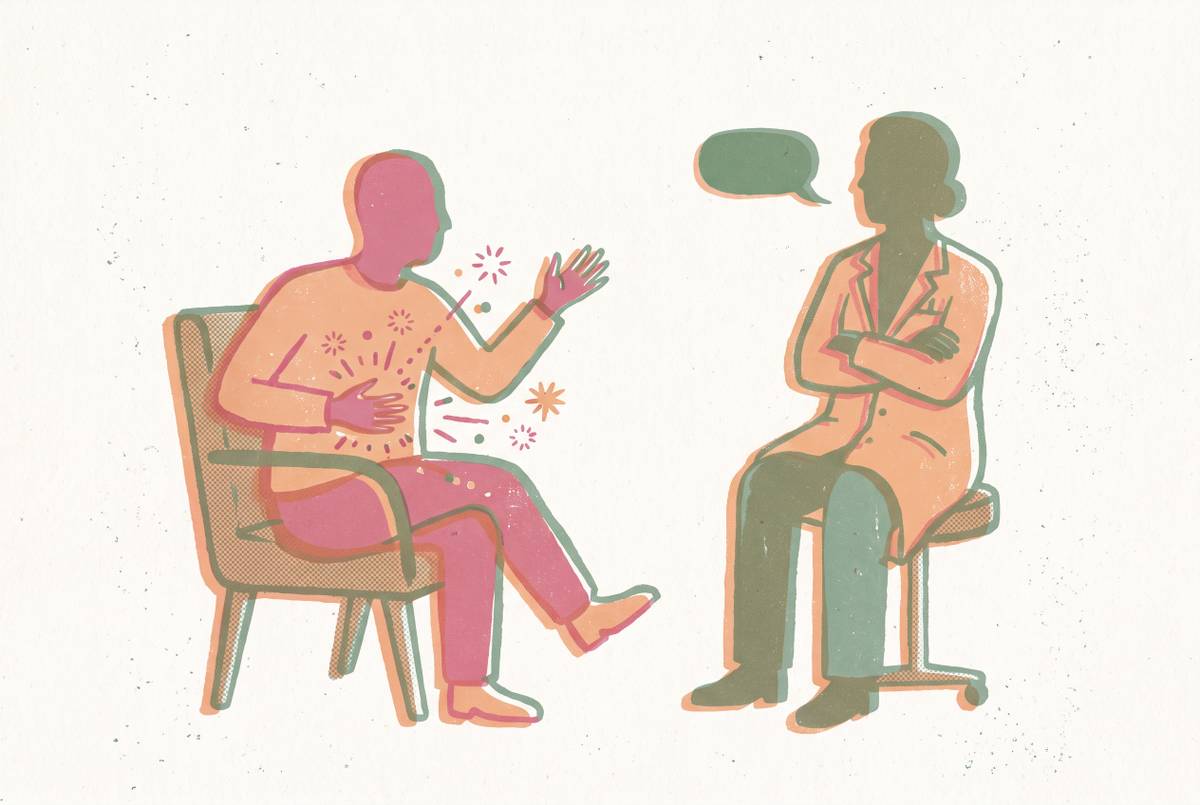
The healthcare system doesn't help. A 2025/2026 paper in Medicine, Health Care and Philosophy points to a persistent pattern in clinical practice: biomedical aspects take precedence, while psychosocial factors get treated as secondary, as reactions to pain rather than as part of the suffering itself. So the person carrying this loss usually can't name it, even to themselves. They show up with depression. With shame. With a functional decline nobody's connected to grief. And because the physical symptoms are already doubted, the emotional losses stacked on top of them become even harder to say out loud.
The scholarly case that chronic pain produces genuine, unrecognised grief
The philosophical argument is direct, and it comes from that same 2025/2026 paper published by Springer Nature in Medicine, Health Care and Philosophy. All loss involves losing life possibilities, the kind of thing that shapes practical identity. Chronic pain produces exactly that category of loss. Which means it can be grieved, in the clinical, structured sense of the word, not the loose metaphorical one. The paper's authors note that this fuller view of chronic pain still hasn't reached most healthcare practice or pain management programs. It's a gap, not a settled debate.
Robert Neimeyer's work on meaning-making, spanning three decades up through 2024, adds the mechanism. Grief, in his framework, is fundamentally a process of meaning-making about who you are. A major loss can knock out the beliefs and assumptions a person's whole life was built on, forcing a new structure to get built in its place. Apply that to fibromyalgia: the diagnosis doesn't just change what the body can do. It can collapse the story a person was telling about their future self, the one who was going to keep climbing at work, keep training for the half marathon, keep being the parent who never misses a game.
Research on prolonged grief backs this up from a different angle. When a loss disrupts identity rather than just circumstance, the grief trajectory gets harder to resolve. It's not who you lose that predicts how bad it gets. It's who you are, and how much of that self was tied up in what's gone, a finding Harris et al. (2021) documented in Current Psychology.
How illness identity takes hold: engulfment, rejection, and the implicative dilemma
Researchers studying chronic illness use the term "illness identity" for how a condition gets folded into, or kept separate from, someone's sense of self. Four positions appear consistently in the literature. Engulfment means the illness has taken over: it becomes the whole of who someone is now. Rejection means denying or minimizing its effect, refusing to let it register. Acceptance means holding the condition as real without letting it define everything. Enrichment means finding genuine meaning or strength through the experience itself.
Engulfment and rejection track with worse emotional and mental outcomes. Acceptance and enrichment track with better ones. That part isn't controversial.
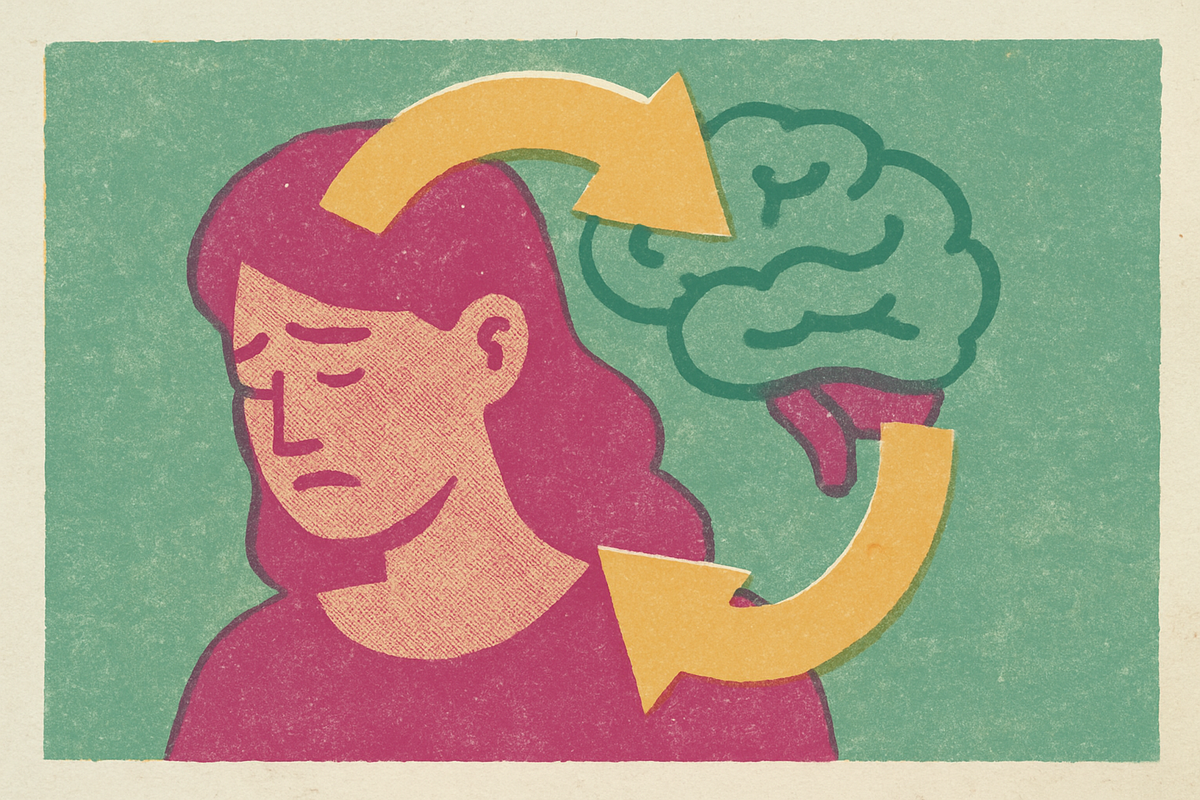
What keeps people locked into engulfment is often mechanical. The boom-bust cycle does a lot of the damage: feel worse, do less, and the less someone does, the more disconnected they get from anything that isn't the illness, until the illness is the only thing left defining them.
Then there's a stranger, less discussed problem: the implicative dilemma. Getting better can feel like losing part of yourself, because somewhere along the way, being in pain got fused with traits the person is proud of. Strength. Endurance. Generosity toward others even while suffering. Recovery starts to feel like erasing those traits rather than keeping them. Research finds this kind of inner conflict occurs in roughly 75% of fibromyalgia patients, according to Who Am I Without Fibromyalgia? Reclaiming Your Identity from Chronic Pain. That's not a small subgroup. That's most people, wrestling with a version of themselves that improvement seems to threaten. Which is exactly why identity work isn't some optional add-on to fibromyalgia treatment. The knot has to be named before anyone can loosen it.
Being disbelieved makes the grief harder to process
Invisibility creates a specific kind of injustice here. Before a patient can even start grieving what fibromyalgia has taken, they often have to spend energy proving the symptoms are real in the first place. That's an exhausting order of operations, and it's backwards.
Scholars of chronic pain and epistemic injustice break the clinical failure into pieces. Testimonial injustice arises when a clinician doesn't believe the patient's report. Hermeneutical injustice arises when there isn't adequate shared language to describe what's happening. And a third failure, less discussed than the first two: sometimes clinicians believe the patient and still don't respond in any adequate way. Belief without action is its own kind of dismissal.
A 2025 paper in the Journal of Bioethical Inquiry calls on healthcare providers to validate lived experience and bring patients into decision-making directly, as a way to cut down on these epistemic injustices. Work on medically unexplained chronic pain similarly recommends clinicians build epistemic humility and protect space for patients to actually narrate their experience, framing it as both an ethical obligation and a practical one.
Here's the quieter damage: when other people don't believe the physical experience, it produces self-doubt that grows out of that disbelief. Patients start questioning their own perception. And once you doubt your own perception, trusting your inner experience of grief, let alone naming it, gets a lot harder. Grief that would normally get processed through acknowledgment and social support has nowhere to land. It goes unnamed, gets misread as depression or personal weakness, and hardens into something much harder to move.
What this grief actually feels like from the inside
It rarely arrives as one dramatic break. It accumulates. The morning you couldn't make it to the event you used to organize. The conversation where the word just wasn't there. The government form where "disabled" had to go in the box for the first time, in your own handwriting.
Grief occurs over former capability: the body that used to run, lift, work late, keep pace with everyone else. It shows up over former roles too, the professional identity that structured the whole day, the parent who never canceled plans, the friend who was always the one who showed up. And it occurs over an imagined future that isn't happening anymore: the career path, the travel plans, a version of getting older that didn't involve any of this.
Shame likes to dress up as grief and take its seat at the table. Feeling like the losses are somehow your fault. Feeling like you should be over this by now, whatever "this" even means. Isolation compounds it further, that specific sense that nobody else quite gets the texture of losing yourself to something most people can't even see on you.
And fibro fog makes all of it worse, because the cognitive symptoms interfere with the very capacities someone needs to process loss: clear thinking, finding words, and advocating for themselves in the moment it matters. Grief needs language, and fibromyalgia's cognitive symptoms can make that language harder to find.
Why the grief can stall, and what keeps people stuck
Prolonged grief disorder, per the StatPearls update from April 2025, occurs when someone can't move from acute grief into an integrated form of it. In traditional bereavement, that's estimated to affect as many as 7% of people grieving a death. Nobody's studied the rate in chronic illness populations specifically, but there's good reason to think it runs higher, because the loss in fibromyalgia is never actually finished.
Research in Current Psychology (Harris et al., 2021) found that the severity of prolonged grief is shaped by how deeply someone's sense of self was tied to what they lost, the closer that bond, the harder the grief. Fibromyalgia creates a uniquely bad structural setup for this. There's no funeral. No burial. No moment after which adaptation is supposed to start. The condition just continues, and new losses keep landing on top of old ones that were never processed in the first place.
Trauma makes it sharper still. A 2025 longitudinal study out of Sanko University followed 100 fibromyalgia patients who lived through the February 2023 earthquakes in Turkey, and found that acute psychological trauma measurably worsened both disease activity and quality of life. Pain and psychological injury don't stay in separate lanes.
The implicative dilemma resurfaces here too, as a stalling mechanism rather than just a conflict. If getting better feels like losing the traits that pain has become tied to, there's an unconscious pull against movement, a resistance that has nothing to do with willpower. And social isolation strips away the relational context grief usually depends on. Without witnesses, mourning simply has nowhere to go.
Recognising the grief as the starting point for moving through it
Naming changes the internal position. "I am grieving" sits differently in the body than "I am failing" or "I am weak" or "I am just depressed." It reframes the problem as something with a known shape, rather than a personal defect.
Neimeyer's meaning-making framework points toward the actual work involved: not returning to the former self, since that self and its former life possibilities are gone, but constructing a new narrative that holds what's been lost alongside what remains. A self that carries the illness without being swallowed by it.
Acceptance and enrichment, the two illness identity positions tied to better outcomes, aren't passive states someone falls into. They're active, and they require first acknowledging what actually got lost. Acceptance doesn't mean liking any of this, or giving up on getting better. It means making room for the loss instead of fighting its reality every single day.
Research on fibromyalgia self-management suggests that how well it works depends heavily on a person's readiness to take on health-promoting behaviors. Unprocessed grief drives that near-impossibility, running the show while everything else takes its cues from it. Which means psychological and identity-focused support isn't a nice extra bolted onto fibromyalgia care. It's the foundation the rest of the treatment plan actually stands on.
Practical ways to begin navigating identity loss
Precision helps more than people expect. "I can't do things anymore" is too vague to grieve properly. Which roles, specifically? Which capabilities? Which futures? Naming the exact shape of the loss makes it something that can actually be processed, rather than a fog hanging over everything.
Separating identity from capacity matters just as much. What someone can do has changed. Who they are runs deeper and holds more layers than any single role or function ever could.
- Locate your current illness identity position. Engulfment, rejection, acceptance, or enrichment: knowing where you sit is the first move toward shifting within it.
- Seek out witnesses who understand the specific texture of this grief. Not sympathy from people guessing at it, but recognition from people who've lived it. Peer communities built around fibromyalgia offer this in a way general support groups usually can't.
- Track symptoms with some structure: sleep, activity, stress, medication, and how they interact. Patterns are far easier to grieve than chaos, because patterns are comprehensible. Chaos just feels like punishment.
- Treat pacing and energy management as acts of self-respect, not just physical strategy. They signal that the self still matters beyond the daily project of managing symptoms.
Tracking does something else too: it externalizes the illness, drawing a line between what's happening in the body and who the person actually is. That line is one of the clearest counters to engulfment there is.
Working with a therapist who knows chronic illness is worth pursuing directly. CBT adapted specifically for fibromyalgia has trial-level evidence behind it, including the PROSPER-FM trial published in The Lancet in 2024. The goal was never to think your way out of grief. It's to process it with someone who actually knows the terrain.
Cognitive symptoms make all of this harder to sustain alone, which is where an AI health companion built for chronic illness conditions can carry some of the load brain fog keeps dropping: logging symptoms by voice or text on the days typing feels impossible, surfacing patterns a foggy mind can't hold onto, pulling together a summary before an appointment. It won't do the grieving. It just reduces the cognitive tax that makes reflection so much harder to reach in the first place.
Showing up to appointments with the whole picture, including the emotional one
A familiar pattern: leaving an appointment having reported the pain scores, the medication side effects, the sleep numbers, but never mentioning the grief, the identity disruption, the psychological weight that produces all of it. Not because it didn't matter. Because there was no framework in the room for saying it.
A pain specialist has pointed out that handing a doctor a typed one-page summary "quickly convinces the doctor that you are organized and can work collaboratively." That principle applies well beyond physical symptoms. Emotional and functional context deserves the same treatment.
The Revised Fibromyalgia Impact Questionnaire, developed by researchers at Oregon Health & Science University under Bennett and colleagues, captures the full weight of the condition on daily life. Filling it out before an appointment structures the conversation ahead of time and makes sure the emotional and functional losses actually make it onto the record, instead of getting crowded out by pain scores in a fifteen-minute visit.
Say the psychological piece out loud, directly. If grief and identity disruption are affecting the ability to engage with self-management, a clinician needs to know that plainly, because it changes what kind of support actually fits. Epistemic injustice, as scholars of chronic illness and pain have described, is a real structural barrier in these encounters, not a personal failing on the patient's part. Arriving prepared, with documented, timestamped records covering mood, sleep, activity, and pain together, gives a clinician something concrete to engage with. It also gives the patient a certain steadiness, the confidence that comes from knowing the experience is on paper and can't be waved away as vague.
Small structural choices help too. Booking appointments for whatever time of day tends to bring more energy. Bringing written notes instead of leaning on memory through brain fog. These aren't dramatic interventions. They just remove friction from a conversation that's already hard enough.
Finding solid ground without finding the old self
The old self isn't coming back, and chasing it is its own kind of trap, a way of staying stuck in rejection or engulfment without ever noticing the pattern. Solid ground looks different: a self that has metabolized the loss instead of denying it or being consumed by it, one built through Neimeyer's kind of active meaning-making rather than sheer force of will.
That new self isn't smaller than the old one, even though it's tempting to frame it that way. It's differently built. It holds fibromyalgia as one true fact among many others, alongside whatever roles, relationships, and capacities still remain, and whatever new ones get built from here. Acceptance doesn't mean this is fine. It means the loss happened, and grieving it is the only road that leads anywhere else.
Sources
- Grief and Prolonged Grief Disorder
- Who Am I Without Fibromyalgia? Reclaiming Your Identity from Chronic Pain
- Chronic pain and unrecognized grief: epistemic barriers to personal and social recognition - PMC
- It’s not who you lose, it’s who you are: Identity and symptom trajectory in prolonged grief - PMC
- The impact of stress and earthquake-related trauma on fibromyalgia: a longitudinal study - PMC
- link.springer.com
- psychologytoday.com
- Chronic Illness and Grief: Understanding Ambiguous Loss