Social Isolation in Fibromyalgia Patients
Disbelief from doctors and loved ones creates a structural isolation that pain alone cannot explain.
Fibromyalgia isolation is usually treated as a side effect of pain: hurt enough, and of course the social calendar empties out. The actual mechanism works differently. Isolation is built into the condition through forces that operate whether or not a given day is a bad pain day, and understanding that distinction changes what counts as treatment. Three forces do the work: medical institutions that withhold validation, personal networks that copy that disbelief, and the coping habits patients adopt to survive both. Each one deserves its own accounting, because each one can be interrupted on its own terms.
Fibromyalgia's invisibility and the roots of disbelief
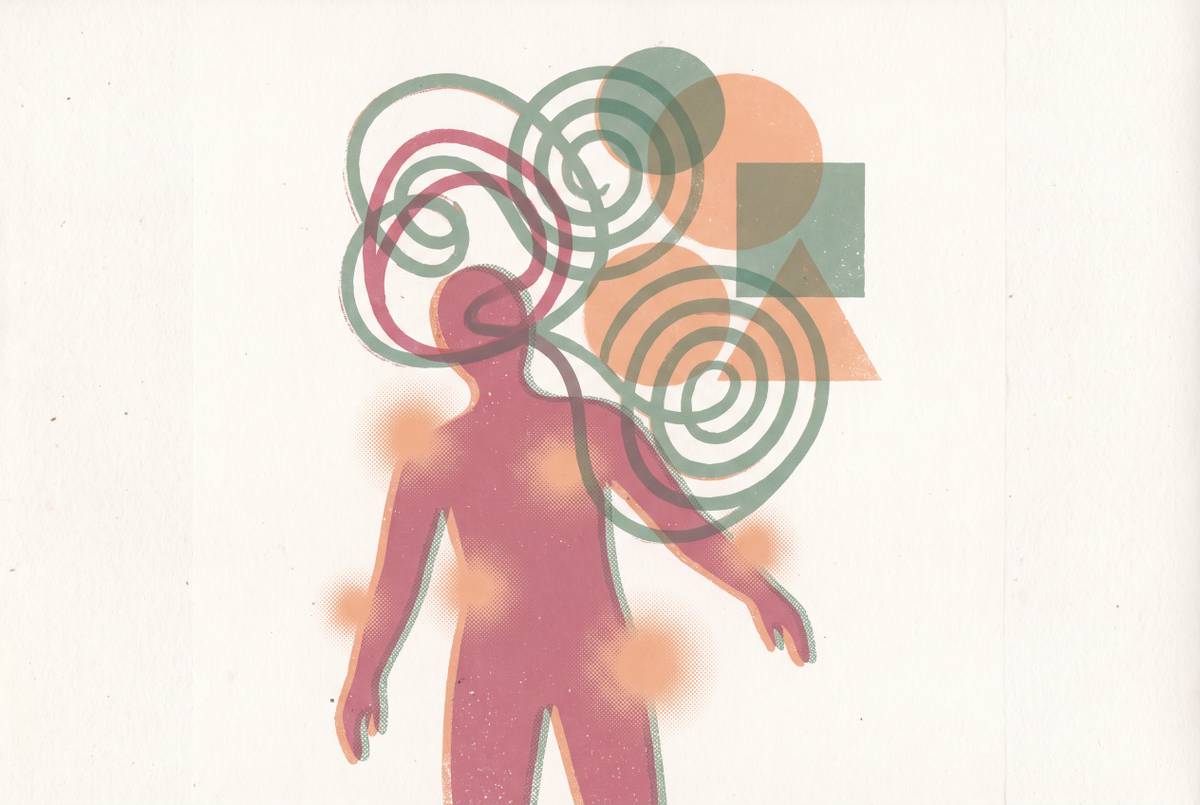
Credibility, in both medicine and ordinary social life, tracks visibility. A tumor shows up on a scan. Fibromyalgia produces no equivalent marker on any scan or test. A person in the middle of a severe pain flare, buried under fatigue, or lost in a cognitive fog episode looks, from the outside, exactly like someone having an ordinary day. That sameness is where disbelief starts, before a single word gets exchanged with a doctor or a family member.
A 2025 metasynthesis in the Journal of Advanced Nursing traced fibromyalgia stigma to three roots: disbelief rooted in the invisibility of symptoms, a diagnostic process that drags on and gets contested at every step, and gender stereotyping aimed disproportionately at women. Invisibility comes first in that list for a reason. It's the foundation the other two roots stand on. A diagnosis that can't be confirmed by any scan or test invites endless contestation, and stereotyping fills the gap left by missing biomarkers with assumptions about who exaggerates and why.
The timeline makes the damage concrete. Patients wait an average of roughly six years from the first symptom to an actual diagnosis, a stretch of time filled with unexplained pain paired with test results that come back normal, over and over, confirming nothing. That combination, pain without proof, is exactly the condition under which the "imaginary patient" trope takes hold: the chronic pain sufferer assumed to be fabricating or exaggerating because nothing on paper backs up what they're describing. Fibromyalgia fits that trope with brutal precision, since the absence of a biomarker gets read, routinely, as the absence of disease.
Gender sharpens the effect further. Fibromyalgia affects women disproportionately, and the metasynthesis names gender stereotyping as its own distinct stigma root, separate from invisibility itself. The same symptom report, in other words, does not land the same way depending on who is describing it. None of this is a failure on the patient's part. It is what happens when a condition's defining symptoms refuse to register on any instrument clinicians or family members know how to trust.
Medical institutions' active withdrawal of support
Medical dismissal of fibromyalgia is an organized pattern, and the research describing it uses a specific word on purpose. A 2025 systems-focused review in Sociology of Health & Illness applied Dorothy Smith's sociology to the condition and concluded that within a biomedically oriented healthcare system, practitioners' activities are organized to withdraw support from people with fibromyalgia and to recast their problems as psychological. Withdrawal, not absence. That distinction carries the whole argument: a system that simply lacked tools for fibromyalgia would be failing passively. A system organized to pull support back once a patient's problem gets labeled psychological is doing something active, and patients feel the difference.
Being told a condition is psychological doesn't register to most patients as a diagnosis. It registers as an accusation, a verdict that the pain was never quite real to begin with. That reframing doesn't just fail to help. It delegitimizes the complaint itself, which is a different and heavier kind of harm.
The research on general practitioners' attitudes gives this pattern a face. A notable share of surveyed GPs described fibromyalgia patients as malingerers, and a substantial majority found consultations with this patient group time-consuming and frustrating. Patients pick up on attitudes like these, whether or not a doctor says them out loud. The diagnostic "merry-go-round", specialist after specialist, test after normal test, the same symptoms re-explained from scratch each time, wears down trust in healthcare professionals long before any resolution arrives.
That erosion feeds back into patient behavior upstream of the next appointment. Institutions don't just fail patients in the room. They train patients to expect disbelief before they ever walk in, which is the first of the three structural forces doing the isolating.
How personal networks mirror medical disbelief
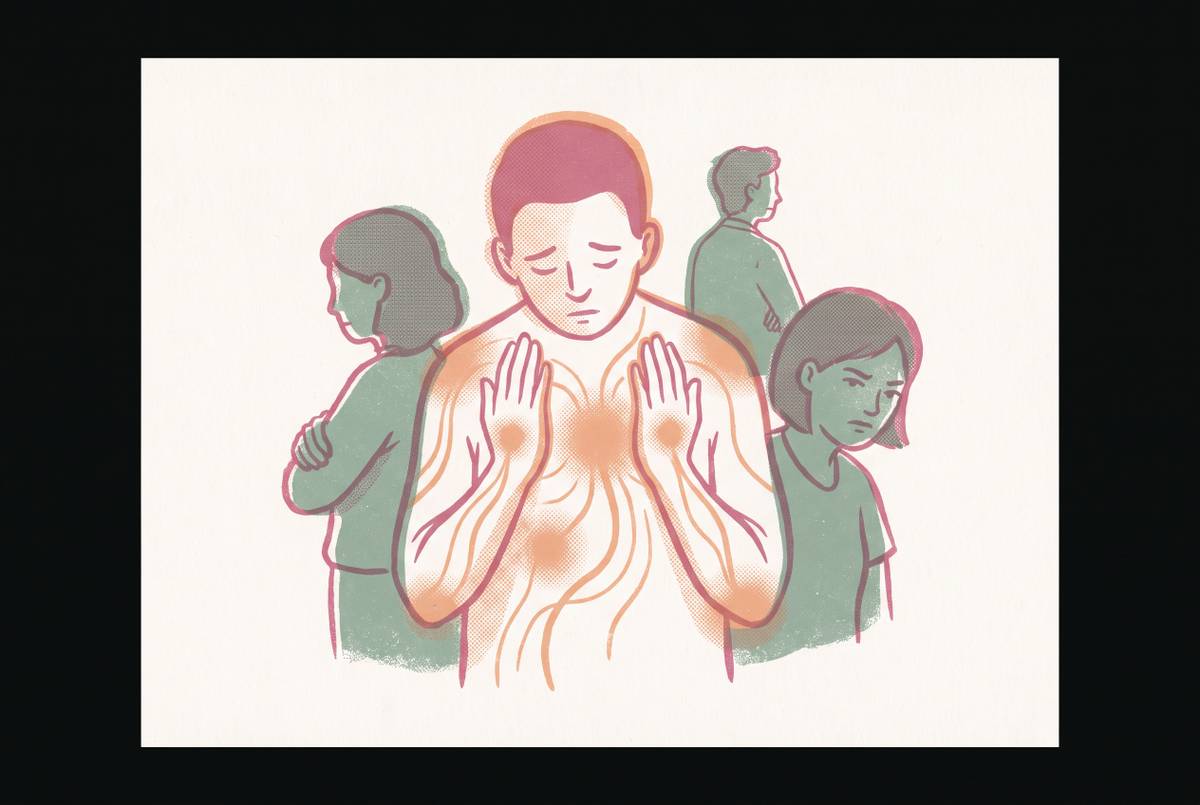
Family members, friends, and coworkers tend to respond to fibromyalgia the same way clinicians do, and that mirroring builds a second ring of withdrawal around a patient who has often already spent years fighting for a diagnosis. The metasynthesis found that most patients experience negative emotions and feel isolated from family, friends, and their community, with the lack of understanding and support from those closest to them named as the primary driver. The social response to the pain does more damage than the pain alone.
That response doesn't form independently. Patients report dismissive reactions from family, friends, and co-workers that echo what they hear from clinicians, and that overlap reflects personal networks taking their cues from institutional authority. Personal networks take their cues, often unconsciously, from institutional authority: if a doctor won't fully validate the condition, the people around a patient tend not to either.
The stakes here are measurable in research findings, not just felt by patients. Research on women diagnosed with fibromyalgia found that roughly 50% of their satisfaction with life can be explained by perceived loneliness and the quality of their partner relationship, and perceived loneliness on its own is a strong predictor of how much the condition disrupts daily life. Half of life satisfaction, tied to one relationship and one feeling of loneliness, is not a small effect. The people closest to a patient are one of the illness's primary levers.
Workplaces compound the problem in their own way. Fibromyalgia is as invisible to a colleague or employer as it is to anyone else, and requests for accommodation get disbelieved or resented often enough to push patients out of working life altogether, taking with them a major source of identity and daily contact. By the time a patient has made it through the years-long diagnostic ordeal described earlier, the networks most people lean on during illness have frequently already started to thin.
Coping strategies that deepen isolation
Patients are not passive recipients of all this disbelief. They respond, and the responses that feel safest, hiding the illness, controlling who knows what, pulling back from social contact, tend to be the ones that make the isolation worse. The metasynthesis identified avoidance and coping as its own distinct theme, finding that patients commonly manage stigma through social isolation, concealment of the disease, and tight control over who receives information about it. The tools patients reach for to survive disbelief are, mechanically, the same tools that produce the isolation they're trying to avoid.
That creates a bind with no comfortable exit. A patient who hides the illness gets no support from people who don't know there's anything to support. A patient who discloses it and meets disbelief gets punished for the honesty. Both paths end in withdrawal, and neither failure belongs to the patient making the choice. Each is a reasonable response to an environment that offers no safe option.
The psychological weight behind these choices is substantial. A global meta-analysis by Medscape/HMP Global found that 50.8% of fibromyalgia patients carry comorbid depression, and roughly half carry comorbid anxiety. Both conditions sap the motivation and the capacity to maintain social ties, on top of whatever fibromyalgia itself takes. A separate 2025 study found fibromyalgia patients scoring substantially lower on self-compassion than healthy controls, with that deficit linked to higher depression and anxiety. Self-compassion matters here specifically because it's the resource a person needs to tolerate the risk of disclosing an invisible illness and trying again after rejection. When that resource runs low, re-engagement gets harder exactly when it matters most.
The isolation has become partly self-sustaining at this point, propped up by the patient's own protective habits as much as by outside disbelief. Removing the external stigma, even if that were fully possible, would not automatically restore the connections already lost. Some might argue the fix is for patients to disclose more and advocate harder for themselves. That places the burden on the person with the fewest resources to carry it, and it ignores that disclosure without a receptive audience produces harm rather than connection. Patient effort was never the problem.
Social Support, Pain, and Quality of Life
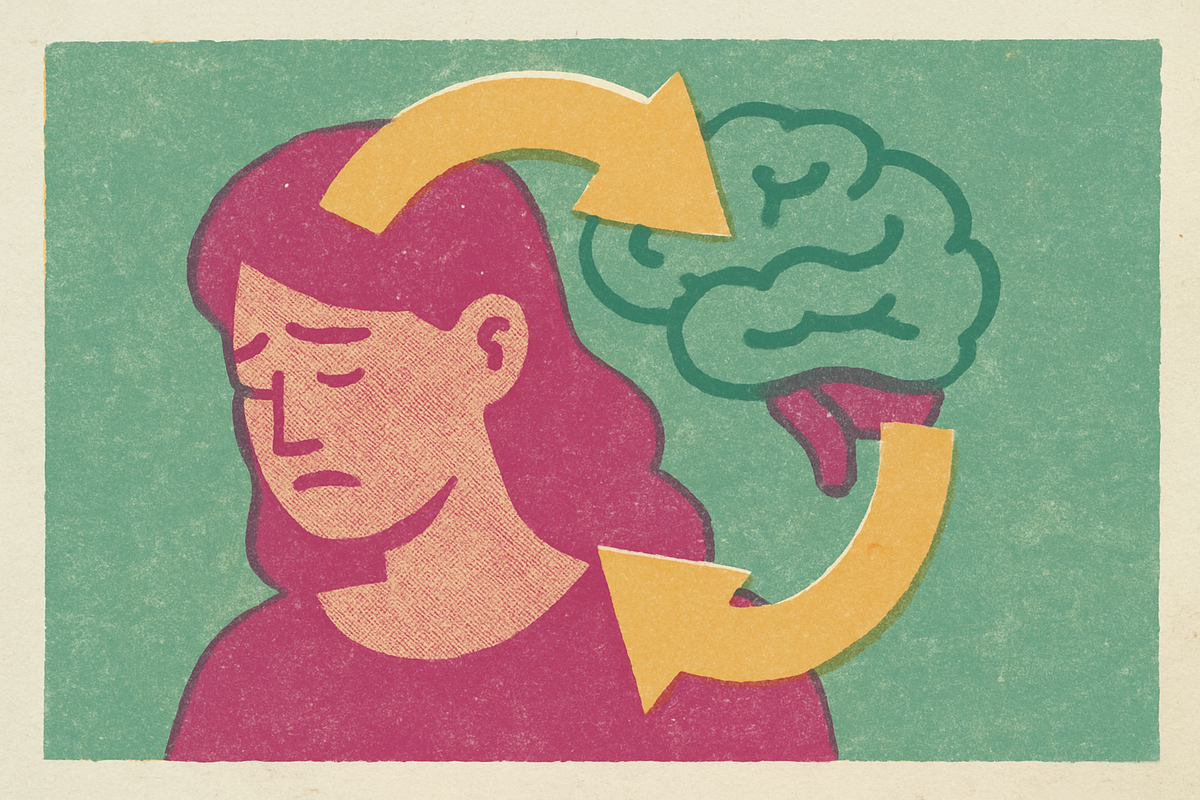
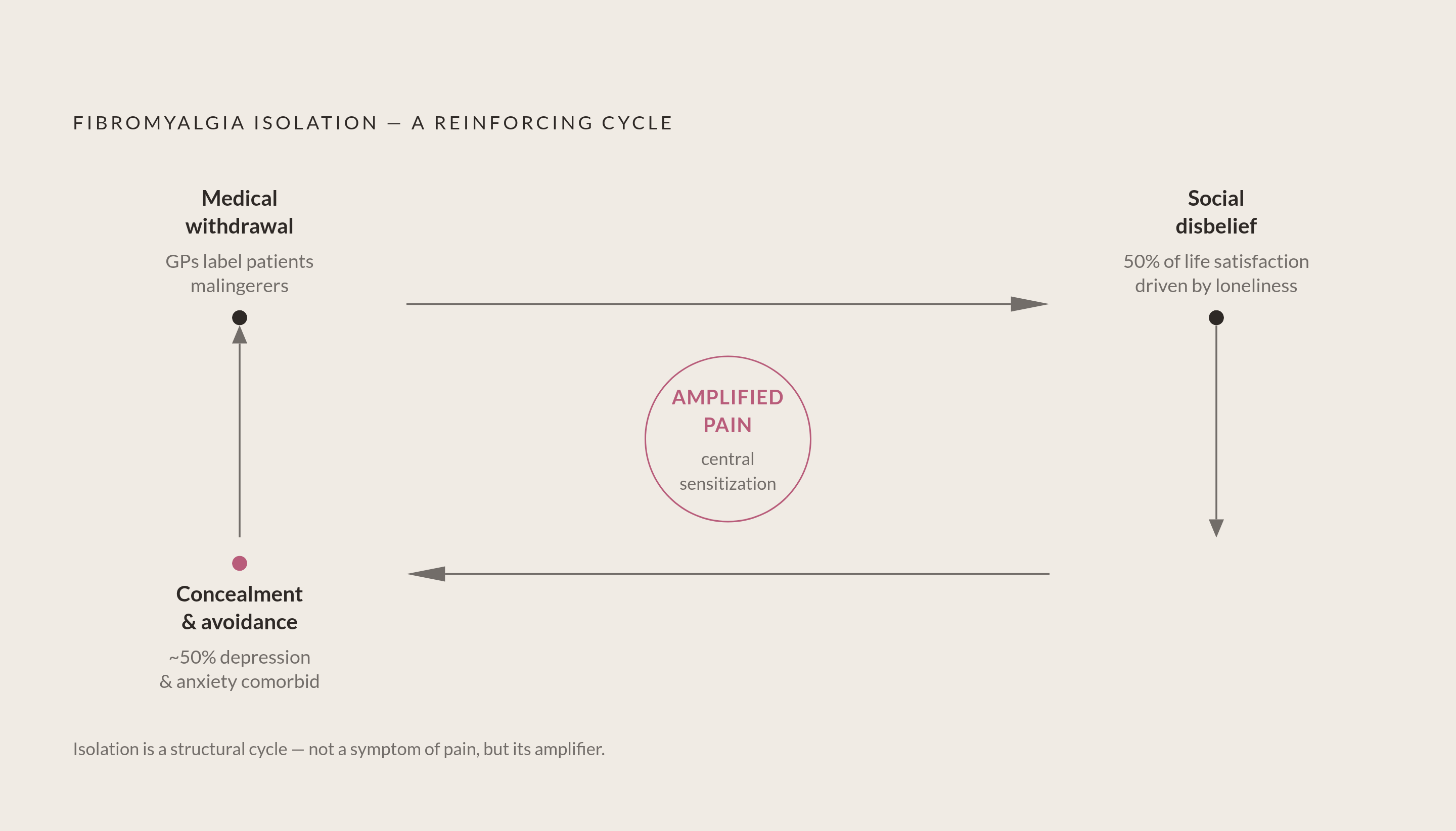
Low social support in fibromyalgia correlates with higher pain perception, a lower pain threshold, and worse quality of life, and that means the isolation produced by invisibility, medical withdrawal, and personal network disbelief loops directly back into the physical symptoms that started the whole cycle.
A 2025–26 study in the Turkish Journal of Physical Medicine and Rehabilitation compared fibromyalgia patients with poor social support to those with normal social support. The poor-support group showed higher symptom impact scores, lower pressure pain thresholds and tolerance, and higher pain intensity scores. These differences were not marginal. The same study found significant gaps in quality of life subscales tied specifically to pain, emotional reaction, social isolation, and sleep, four domains that sit at the center of what fibromyalgia already disrupts.
The biological logic behind this follows a known stress pathway. Social support acts as a buffer against stress, and stress amplifies central sensitization, the mechanism currently used to explain how fibromyalgia produces its pain. A plausible path runs from isolation to amplified pain, not just a coincidental association sitting next to it.
The clinical implication follows directly. A treatment plan built entirely around medication and physical therapy, while leaving isolation unaddressed, works against its own goals: it can reduce pain somewhat while leaving in place the exact conditions, stress, loneliness, lack of buffering support, that keep sensitization elevated. Pushing back against isolation is part of managing the condition itself.
Structured symptom tracking and the clinical encounter
Interrupting the dismissal cycle starts in the exam room, and the most direct lever available there is documentation. Patients who show up with a structured history of their symptoms are harder to wave off than patients relying on memory under pressure, in the middle of a short appointment, to summarize months of a fluctuating illness.
The scale of the communication problem is well documented: 59% of fibromyalgia patients report difficulty communicating their symptoms effectively, and roughly a third delay appointments altogether out of fear they won't be taken seriously. Structured tracking answers both problems at once. A journal that logs events, activities, symptoms, and mood changes over time builds a patient's own awareness of patterns and triggers, and it converts a vague verbal account, delivered under the stress of a short visit, into something closer to evidence.
Digital tools have moved into this space directly. Current apps now build in fibromyalgia-specific measures, including in-app Fibromyalgia Impact Questionnaire scores, pain diaries, and fatigue and sleep trackers, some paired with AI-based summary visualization. A viewpoint in JMIR described patient-reported digital tracking as moving from a supplementary habit to a primary self-management tool.
The preparation side matters just as much as the tool. Noting what made symptoms better or worse, and bringing that record into the appointment, changes what the consultation can accomplish. University of Wisconsin School of Medicine and Public Health guidance advises clinicians to address patient expectations early in the visit. A patient who arrives with a clear account of their own trajectory is participating in a different kind of conversation than one starting from scratch under time pressure. Over repeated visits, that shift reduces exposure to dismissal and rebuilds enough trust in the healthcare relationship to keep a patient engaged with treatment instead of avoiding it, which is the pattern isolation currently produces.
Energy-aware pacing and the social budget
Rebuilding trust with the healthcare system addresses one source of isolation. For many patients, the barrier to reconnecting with family, friends, or coworkers isn't unwillingness but a finite energy budget that fibromyalgia already spends down before any social plans enter the picture.
Pacing frameworks exist to manage exactly this kind of scarcity, treating energy as a limited resource to be allocated deliberately rather than spent reactively until a crash forces rest. Used this way, pacing also protects a portion of that limited energy specifically for connection, the dinner with a friend, the phone call with a parent, the hour at a family gathering, so that social contact doesn't automatically lose out to whatever physical demand came first in the day.
That reframing matters because every force described so far, the invisibility that invites disbelief, the institutions that withdraw support, the networks that mirror that disbelief, and the coping habits that deepen withdrawal, converges on the same scarce resource: a patient's limited capacity to keep showing up for the people and systems around them. Protecting even a small, consistent share of that capacity for social contact is one of the few points in the cycle a patient can act on directly, rather than waiting for institutions or networks to change first.
Sources
- The influence of social support on pain, symptom severity, and quality of life in fibromyalgia - PMC
- The Experience of Stigma in People Affected by Fibromyalgia: A Metasynthesis - PMC
- Mapping the Social Organisation of Neglect in the Case of Fibromyalgia: Using Smith's Sociology for People to Inform a Systems‐Focused Literature Review - PMC
- The Antidote to Medical Gaslighting: Validating Patients’ Concerns