The Bidirectional Relationship Between Fibromyalgia and Depression
Depression and fibromyalgia reinforce each other through shared neurobiology, not coincidence.
Fibromyalgia and depression aren't two conditions that happen to overlap. They run on the same wiring, and treating them as separate diagnoses is the mistake driving a lot of bad treatment plans. Roughly 2% to 8% of the world's population lives with fibromyalgia, so this isn't a rare edge case. A 2024 systematic review of 88 studies and 31,104 fibromyalgia patients found depression in 50.8% of them, with major depressive disorder alone hitting 32% and lifetime prevalence in some reviewed studies reaching 63%.
A 2025 retrospective from HCA Healthcare, looking at 1,516 hospitalized fibromyalgia patients (mean age 52.24, almost 96% female), found depression in 39.75% of them. That number is a floor, not a ceiling: it only captures people sick enough to be admitted. Depression rates climb with age in fibromyalgia populations, while anxiety rates tend to decline with age. The depression burden doesn't stay flat over the course of the illness. It builds.
So when about half the people with fibromyalgia also carry a depression diagnosis, the real question isn't whether the two show up together. It's why, and which one starts the chain. Most clinicians still treat that as an open question. It shouldn't be. The evidence points to a loop that feeds itself, not a coin flip over which came first.
What it means for one condition to cause the other, and why the arrow points both ways
"Comorbidity" usually conjures two unrelated conditions that happen to land in the same body, one showing up alongside the other by bad luck. That's not what's happening with fibromyalgia and depression.
A Taiwan National Health Insurance study followed 25,969 fibromyalgia patients and 17,142 depression patients who did not have fibromyalgia, tracking who developed what and when. Fibromyalgia patients faced a sharply higher risk of later developing depression, with a hazard ratio of 7.46 (95% CI 6.77-8.22). The reverse held too: people diagnosed with depression first showed a higher risk of developing fibromyalgia down the line. That's a population-level signal that each condition can trigger the other, not just tag along with it.
A 2024 Mendelian randomization study, published in Frontiers in Psychiatry, tried to pin down whether depression causes fibromyalgia at the genetic level. It came up short: no significant direct causal link. That matters, because it means shared genetic architecture and environmental triggers, not a clean line running from gene to disease, are doing most of the work.
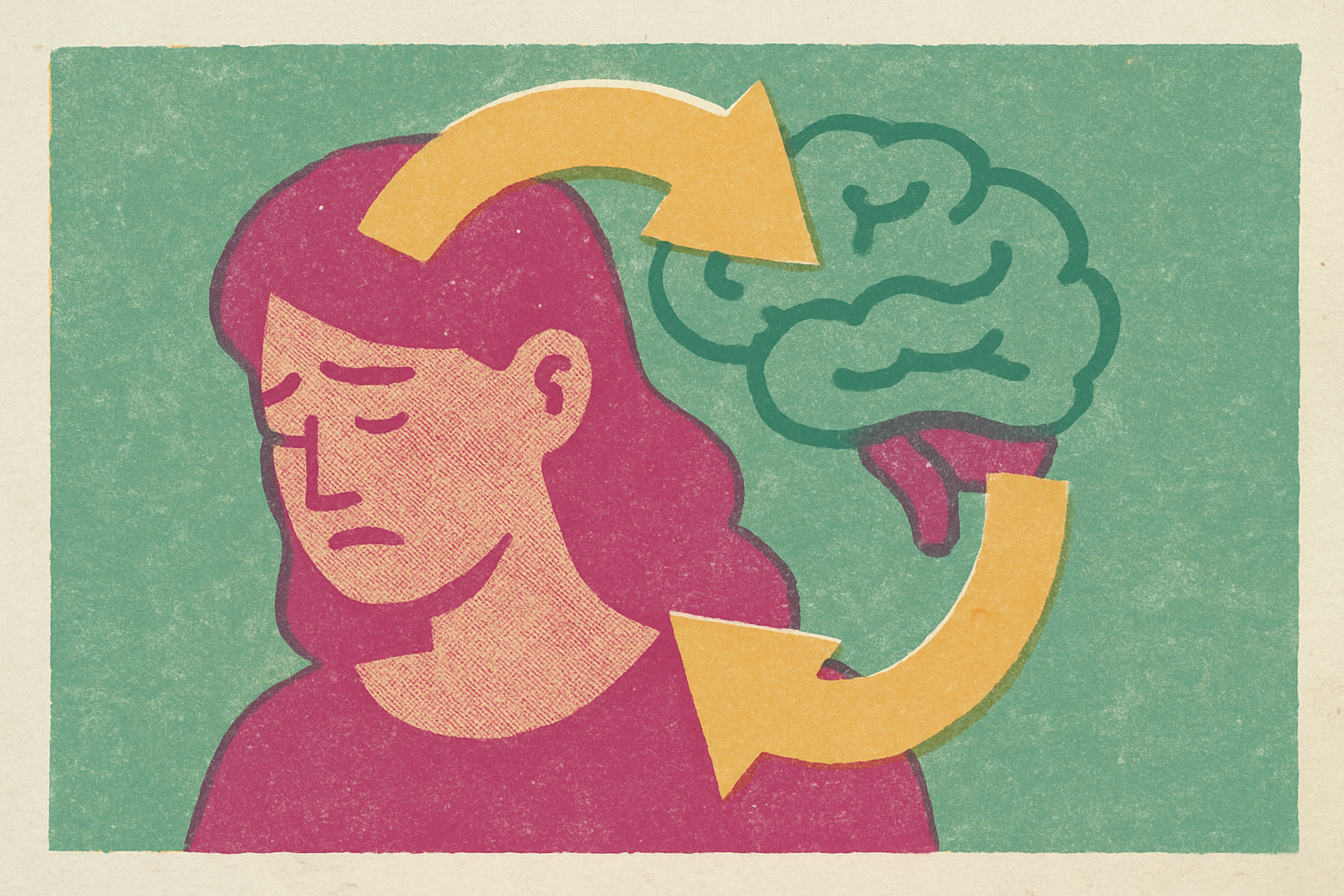
Put those two findings together and the picture is this: the bidirectional risk, tracked over time across real populations, is well documented. Pure genetic causality is not. What the research shows is a loop that reinforces itself, not a straight arrow running from cause to effect. Anyone looking for a single "root cause" here is asking the wrong question.
The shared neurobiology that makes each condition feed the other
Fibromyalgia is now understood mainly as a problem of how the central nervous system processes pain. Central sensitization means the nervous system amplifies signals that wouldn't register as painful in a healthy brain. A rock in the shoe becomes agony. A light touch becomes a burn.
Depression disrupts that exact wiring. It weakens descending pain inhibition, the brain's built-in brake on incoming pain signals, compounding the central sensitization already present. Depression doesn't sit next to the pain quietly. It turns the volume up on it.
The molecular overlap runs deep, and it isn't just a loose metaphor:
- Serotonin and norepinephrine run low in both conditions, and both chemicals also govern sleep and mood
There's a genetic layer underneath all of this. Poorly working versions of genes that regulate monoamine signaling, glutamate transmission, neurotrophic factors, opioid response, and inflammatory cytokines raise a person's risk for both conditions at once. Environment, stress, illness, life circumstances, decides which condition shows up first and when.
Treating the pain alone doesn't fix the brain chemistry sustaining the depression, and treating the depression alone doesn't undo central sensitization. Most treatment plans still pick one target and hope it drags the other one down with it. It doesn't work that way. There's no single switch that turns the whole loop off.
How negative affect and cognitive symptoms (not pain) hold the loop together
A 2025 network analysis, drawing on data from three fibromyalgia studies (219 patients total), mapped how individual symptoms of fibromyalgia and depression connect to each other. The finding cuts against intuition: most symptom clusters mixed fibromyalgia and depression symptoms together. They didn't split into two neat piles.
The symptoms with the strongest bridging power, meaning the ones most tightly wired to both conditions at once, were negative affect and memory problems. Pain itself didn't turn out to be central to the network. That's a strange result given that pain is supposed to be the defining feature of fibromyalgia, and it should change how clinicians prioritize treatment.
The psychological and cognitive symptoms are the connective tissue holding the comorbidity together, more than pain is. Negative emotions like anger and sadness act as direct amplifiers of pain in women with and without fibromyalgia, according to Medscape's clinical overview on the topic. The emotional state isn't downstream of the pain. It's a mechanism that makes the pain worse.
Catastrophizing works the same way. As a cognitive stressor, it activates the HPA axis and the sympathetic nervous system, feeding straight back into pain sensitization. The network analysis findings suggest that treatment aimed at negative affect and cognitive symptoms could move the needle on both conditions at once, not just one. That's a stronger claim than most clinicians act on: chase the mood and cognition symptoms first, not the pain score.
How the chronic illness experience itself (stigma, disbelief, and isolation) deepens depression in FM
Fibromyalgia has no blood test, no scan, no visible marker. Patients look healthy from the outside, which makes it what's often called an invisible illness, and that invisibility carries a real cost.
The stigma runs through clinical encounters as much as social ones. In surveys, physicians have admitted they wouldn't disclose a fibromyalgia diagnosis to colleagues if it were their own. Healthcare workers frequently question whether the diagnosis is even real, and patients pick up on that doubt and internalize it. Many describe something close to a healthcare odyssey: specialist after specialist, long waits, repeated appointments that never land on a clear answer.
None of that is incidental to the depression numbers. Self-stigma, rejection from providers and even family members, and social isolation are all documented drivers of depressive symptoms in fibromyalgia patients. The condition creates a specific credibility problem: patients learn to filter what they say and who they say it to, deciding case by case whether disclosing the diagnosis is worth the risk. That filtering is its own kind of work, and it drains psychological resources that are already stretched thin.
Being disbelieved over and over isn't just unpleasant. It functions as a real stressor with physical consequences, landing on a nervous system already primed to overreact to stress. The isolation that follows compounds it: disconnection from peers, family, and doctors strips away the social buffer that normally keeps depression risk in check.
The loop isn't only running inside the nervous system. It's also driven from outside, by systems and relationships that fail to take the patient's experience at face value. Blaming the patient's mood for the pain, without naming that outside pressure, gets the causality backwards.
Why sleep disruption and fatigue are underappreciated amplifiers in the loop
Persistent fatigue and disrupted sleep sit right alongside pain in fibromyalgia's core symptom cluster. They are not side complaints, and treating them as an afterthought is one of the more common errors in fibromyalgia care. Serotonin, noradrenaline, and substance P changes, the same neurotransmitter disruptions running through the depression side of the equation, likely explain why sleep and mood problems track so closely together in fibromyalgia.
Poor sleep is a well-established trigger for depressive episodes on its own. It weakens emotional regulation, raises pain sensitivity, and hurts memory and concentration, the same cognitive domains the network analysis identified as bridge symptoms between the two conditions.
That sets up a smaller loop nested inside the bigger one: fibromyalgia disrupts sleep, disrupted sleep worsens mood and cognition, worsened mood and cognition intensify fibromyalgia symptoms and pain perception, and the pain disrupts sleep again. Round and round.
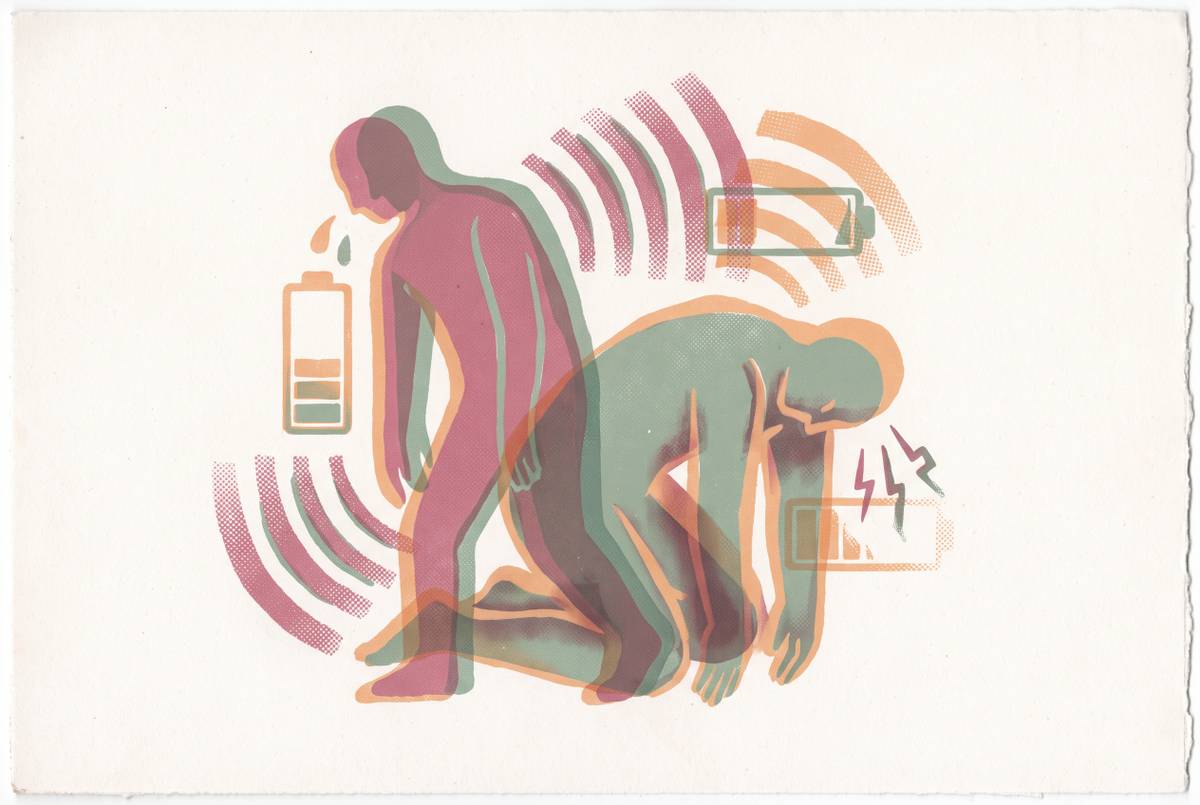
For people managing an energy-limiting illness, this is also where post-exertional worsening comes in. Activity that drains already-limited reserves can trigger a symptom flare, and that flare can deepen a depressive episode on its own. A clinician who manages pain but never asks about sleep quality is leaving one of the biggest levers on the table untouched, and that's a gap worth naming plainly instead of softening.
What integrated treatment looks like when both conditions are on the table
Established fibromyalgia treatment guidelines broadly converge on the same basic model: medication paired with aerobic exercise and cognitive-behavioral therapy, with the non-drug approaches given priority. That ordering isn't a formality. It follows from the evidence that negative affect and cognition are central bridge symptoms, making psychological intervention a natural priority alongside medication.
CBT does double duty here. It targets negative affect, catastrophizing, and cognitive distortions, the same symptom domains the research identifies as most central to the comorbidity. SNRIs (serotonin-norepinephrine reuptake inhibitors) work on the shared brain chemistry directly, and their use in fibromyalgia is grounded in the same logic that explains why they work as antidepressants in the first place.
Treating the emotional side is pain management in its own right, not a soft add-on tacked onto the "real" treatment. Therapies that lower negative emotional states may reduce pain sensitization directly, through the same HPA axis and sympathetic nervous system pathways discussed earlier. Routine screening for mood disorders in fibromyalgia patients, using tools like the PHQ-9 or GAD-7 in primary care and rheumatology visits, is something the authors of the 2024 global meta-analysis recommend outright. Any clinic that skips this screening is missing half the picture, full stop.
The hospitalization data adds weight to the argument. The 2025 HCA Healthcare study found that fibromyalgia patients carrying multiple psychiatric comorbidities stayed in the hospital significantly longer. Integrated care isn't just better medicine on paper. It cuts real, measurable downstream cost.
Patients asking for both conditions to be addressed in the same appointment aren't overreaching. That request is grounded in exactly how these two conditions work.
How patients can advocate for integrated care and track what matters across both conditions
Patients who show up with structured, objective documentation of how the illness limits daily function give clinicians clearer, more actionable information to work with. Vague descriptions of pain get dismissed more easily than specific, functional ones, and that's a communication gap patients can close on their own before the next appointment.
A few concrete moves, grounded directly in the research above, make a real difference:
- Bring a written symptom log covering both pain and mood, not because the doctor doubts the patient, but because the two conditions interact and the clinician needs both pictures at once
- Describe functional impact, "couldn't walk to the kitchen without stopping to rest," rather than relying on emotional language alone, since functional language gives clinicians concrete, actionable detail that is harder to dismiss
- Ask directly for physical and mental health to be handled in the same visit; the tendency toward siloed care is a structural problem, and pushing back on it is reasonable
- Request a written care plan naming both diagnoses, which creates a shared reference point and some accountability going forward
What's worth tracking day to day goes beyond pain level and location. Mood, energy, sleep quality, and cognitive symptoms like memory lapses or brain fog are the bridge symptoms the research points to as most central, so they deserve equal billing in any log. Context matters too: activity levels, medication timing, and stressors, tracked over time, start to reveal the actual triggers driving the loop. A single data point from one clinic visit shows almost nothing. Patterns only show up when the tracking runs continuously, across weeks and months, not in the fifteen minutes before an appointment.
AI health companions built for chronic illness, tools that let someone log symptoms by text or voice, then surface patterns across sleep, mood, activity, and pain, and put together a summary before an appointment, exist for exactly this kind of continuous, multi-domain tracking. They cut down the mental load of self-monitoring and let patients walk in with real, dated context instead of a reconstructed memory of a rough month.
Community counts here too. Connecting with other people living with fibromyalgia chips away at the social isolation that is a documented driver of depressive symptoms in this population. Peer understanding isn't a nice-to-have tacked onto the side of treatment. It's part of the actual treatment picture.
Seeing the loop clearly isn't bad news. It means progress on either condition, pain, sleep, mood, cognition, can start easing the other, and it points straight at where the highest-leverage treatments already sit: the shared mechanisms running underneath both diagnoses at once.
Sources
- Fibromyalgia and Depression: A Network Analysis Approach - PubMed
- Assessing comorbid PTSD, depression, and anxiety in fibromyalgia patients: a retrospective observational study
- Fibromyalgia and Depression: A Network Analysis Approach - ScienceDirect
- Frontiers | Depression and the risk of fibromyalgia syndrome: a two-sample Mendelian randomization study
- Bidirectional Association Between Depression and Fibromyalgia Syndrome: A Nationwide Longitudinal Study - The Journal of Pain
- Bidirectional Association Between Depression and Fibromyalgia Syndrome: A Nationwide Longitudinal Study - ScienceDirect
- pmc.ncbi.nlm.nih.gov
- Current Views on the Relationship between Fibromyalgia and Mental Disorders | Neuroscience and Behavioral Physiology | Springer Nature Link