Fibromyalgia Flares and Emotional Dysregulation
Emotional intensity in fibromyalgia stems from the same nervous system malfunction that causes pain.
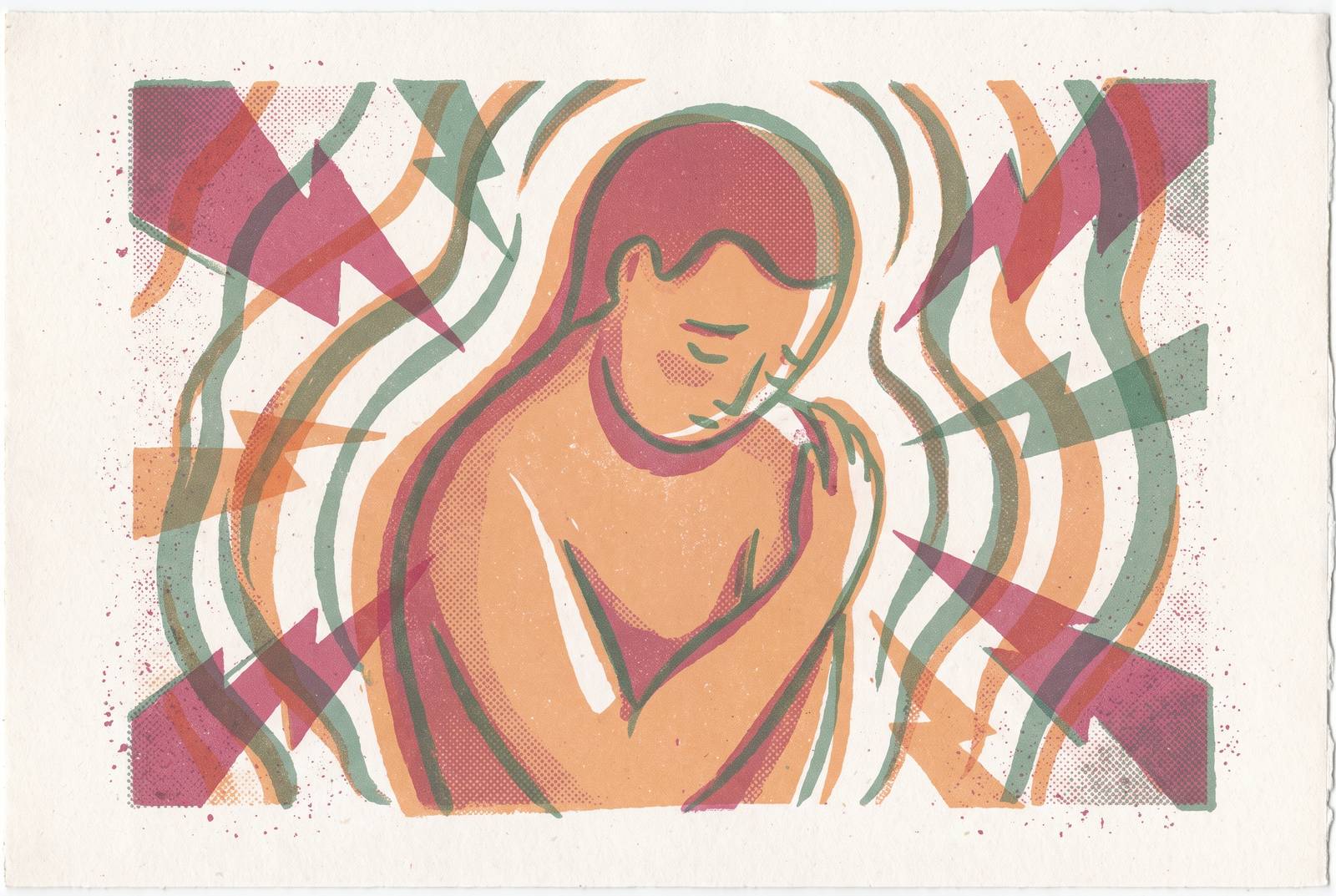
A flare hits, and along with the burning, aching, deep-tissue pain comes something else: irritability that arrives out of nowhere, tears that won't stop, a sense that one more small demand will break something. Patients describe feeling emotionally raw in a way that seems out of proportion to whatever triggered it, and for years, that reaction has been filed under "coping problem" rather than treated as part of the disease itself.
That framing has done real damage. Patients in England who took part in focus groups published in PLOS One in February 2026 described being disbelieved, and other people trusted the emotional side of fibromyalgia the least among its aspects. Told often enough that their emotional intensity is a personal failing, a lot of patients start to believe it.
Pain and emotional overwhelm in fibromyalgia come out of the same malfunctioning circuitry, not from a personal failing.
Fibromyalgia's classification and central sensitization
Fibromyalgia sits in a category called nociplastic pain. That's a fancy way of saying the pain doesn't come from damaged tissue or pinched nerves. It comes from a nervous system that has changed how it processes signals, full stop, regardless of what's actually happening in the body.
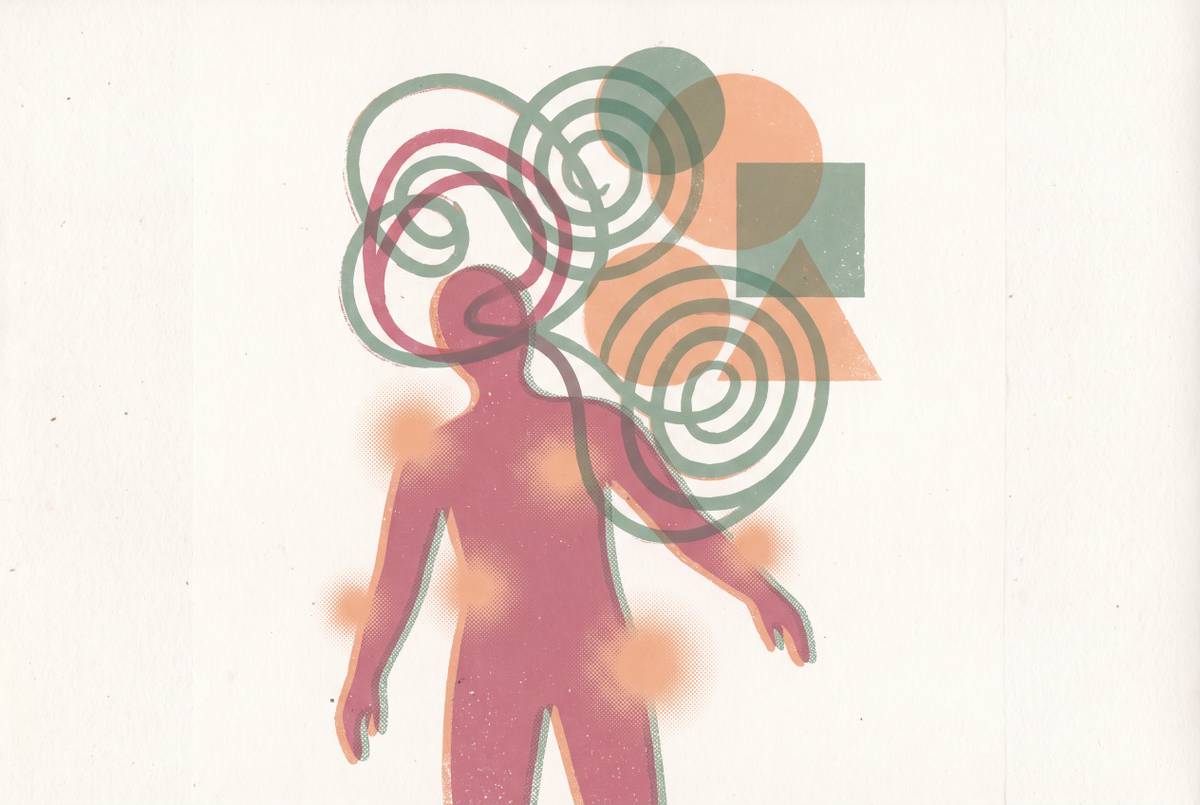
Central sensitization is the mechanism behind that. Picture a volume knob stuck somewhere near maximum: sounds that should register as background noise come through as an alarm. In a sensitized central nervous system, signals that would normally get filtered or turned down instead get amplified. A light touch reads as pain. A minor stressor reads as a crisis.
That amplification doesn't stay confined to physical sensation. The same over-response appears in emotional and stress signals because they run through overlapping circuitry. Research on fibromyalgia points to shared neurobiological pathways connecting chronic pain, emotional distress, and the systems that regulate mood, including changes in corticolimbic brain regions and the hypothalamic-pituitary-adrenal axis, the body's central stress-response system.
None of this works as a simple chain where pain causes stress which then causes emotional trouble. One dysregulated system produces both outputs at the same time, from the same malfunction. Understanding that single point of origin matters, because it changes where treatment should aim.
What the salience network does in fibromyalgia
Deep inside the brain sits a network of regions that scan constantly for anything that might matter: threats, pain, emotional signals, social friction. Neuroscientists call it the salience network, centered on the insula and cingulate cortex, and its job under normal conditions is to flag something worth attention, then let the brain move on once the moment passes.
In fibromyalgia, that circuit doesn't get to move on. Integrative models describe threat-detection circuits running in a state of chronic over-engagement while the systems responsible for calming things back down sit under-active, and that combination keeps the salience network locked in continuous alert. The network stays recruited between one threat and the next instead of resetting, so the bar for triggering a response keeps dropping.
The failure to power back down matters just as much as the over-triggering. Once a threat gets processed, the systems meant to quiet the response are supposed to step in. In fibromyalgia those systems lag, so the signal lingers and builds instead of fading out. That combination, quick to fire and slow to settle, explains why fibromyalgia patients register more negative emotion overall and react to ordinary daily stress with an intensity that looks mismatched to whatever caused it.
Pain catastrophizing, the exaggerated emotional response some patients have to anticipated or perceived pain, has a physical signature to match. Research using brain scans has linked pain catastrophizing to structural changes visible in brain regions that handle both emotional regulation and pain processing, a CNS-level phenomenon rather than a personality trait.
The mechanism reaches past the brain, too. HPA axis dysregulation pairs with changes in gut microbiota to drive both immune dysregulation and emotional dysregulation together, according to research published in Clinical and Experimental Rheumatology. So the system producing both pain and emotional overwhelm spans the gut as well as the brain.
In daily life, this plays out as a minor disagreement with a partner landing like a genuine crisis, or a delayed email response spiraling into hours of distress. The reaction feels disproportionate because, measured against an ordinary threat, it is. Measured against a nervous system that never returns to baseline, it makes complete sense.
Emotional allodynia
Somatic allodynia is a term pain specialists already use for a nervous system so sensitized that a light touch, something that shouldn't hurt at all, registers as pain. Researchers at the University of Bari Aldo Moro have proposed a direct parallel for the emotional side, emotional allodynia, a condition in which mild interpersonal moments, a flat tone of voice, an offhand comment, trigger a distress response scaled for something far more serious.
The comparison holds exactly. Somatic allodynia takes a touch that shouldn't hurt and turns it painful. Emotional allodynia takes a social cue that shouldn't register as threatening and turns it into a full-blown distress response.
To measure it, the research team built the Emotional Allodynia Questionnaire, an 11-item self-report scale. It went through preliminary validation with 107 fibromyalgia patients in a study published in the Journal of Pain Research, then got tested again in a larger cross-sectional study of 136 adults with fibromyalgia, published in Frontiers in Psychology.
Fibromyalgia's history includes a long stretch of patients being told their symptoms were exaggerated or psychological. A formally named construct, backed by a questionnaire that produces a number, doesn't erase that history. It does give clinicians and patients a shared, measurable term for something that used to have no name at all, and that's worth taking seriously even while the validation work stays at a preliminary stage.
What it offers patients directly is a way out of self-blame. Recognizing a disproportionate reaction to a social trigger as a feature of the condition, rather than a character flaw, frees up energy that would otherwise go toward berating oneself, energy the dysregulated CNS has very little of to spare.
The facets of emotion dysregulation that drive emotional allodynia
Emotional allodynia doesn't come from one general failure to manage feelings. The Bari research team found four specific, distinguishable regulatory breakdowns tied to it, each one surviving even after the researchers controlled for depression, anxiety, pain catastrophizing, and central sensitization.
The first is impulse: losing behavioral control once an emotion activates. It's the sensation of a reaction running on its own once it starts, with no way to interrupt it partway through.
The second is strategies: doubting that any regulation tool would work. That's a confidence gap as much as a skills gap.
The third is non-acceptance, the layer where a patient rejects that she's having a negative emotional response. The "I shouldn't be feeling this" reaction stacks on top of the original emotion and makes the whole experience heavier.
The fourth is clarity: not being able to name what emotion is actually present. That's the feeling of being flooded without being able to say what, exactly, is flooding through.
One facet that did not turn out to matter was awareness. Fibromyalgia patients notice their emotional states just fine, they aren't numb or disconnected from what they're feeling. What breaks down happens after noticing: in naming the feeling, accepting it, and reining in the behavior it produces. That has a direct implication for treatment. Interventions built mainly around boosting awareness (generic mindfulness apps, unstructured journaling) are working on the one piece that was never broken, while leaving identification, acceptance, and control untouched.
How emotion dysregulation and disease severity feed each other
Emotion dysregulation doesn't sit next to fibromyalgia severity as a side effect. It drives severity higher, and higher severity then makes emotional regulation harder still, closing a loop that most standard pain management only half-addresses.
A 2026 observational study from Recep Tayyip Erdoğan University, published in Healthcare, used the Fibromyalgia Impact Questionnaire and the Difficulties in Emotion Regulation Scale with FM patients and controls to examine emotional dysregulation's effects on disease severity and establish the bidirectional relationship.
The loop runs through the body's stress machinery. Emotional distress activates a stress-response system that's already sensitized (the HPA axis, the sympathetic nervous system), which raises inflammatory markers and neuroinflammation, which increases pain sensitivity, which then produces more emotional distress. Round and round.
That loop is visible in behavior, too. The same Healthcare study named emotional eating as one downstream pattern, evidence that the dysregulation doesn't stay contained inside mood, it spreads into habits that affect health on their own.
A fair objection: maybe sicker patients are just more distressed, and distress isn't driving anything. The study design was built to test effects on severity, using the Fibromyalgia Impact Questionnaire alongside DERS to address whether distress drives severity rather than just accompanying it. A flare that starts with a stressful phone call, not a physical trigger, is the loop in action: the emotional spike alone was enough to set the whole cascade moving.
The boom-bust cycle when emotion is part of the fuel
Most descriptions of the fibromyalgia boom-bust cycle stick to the physical: push too hard on a good day, crash for the next three. That framing misses half the story. Emotional over-expenditure, difficult conversations, social obligations, sustained effort under pressure, draws from the same limited neurological resource pool as physical activity.
On a lower-pain, higher-energy day, the instinct is to catch up: run the errands, take the phone calls, say yes to the gathering. All of that burns through resources faster than a sensitized system can refill them, and the bill comes due for physical and emotional spending alike.
The crash that follows isn't only physical exhaustion. It includes the same regulatory failures described earlier: loss of impulse control, an inability to name or accept what's being felt, regulatory confidence collapsing altogether.
Spoon Theory gives patients language for this. The idea: each day comes with a fixed number of "spoons," and every demand draws from that same limited supply, physical or otherwise.
That vocabulary earns its keep because it explains something that used to sound irrational: why an argument, a hard phone call, or bad news can set off or worsen a flare. The CNS treats emotional activation as a resource demand on par with physical exertion because that's how the threat-detection system is wired in fibromyalgia.
Pacing that accounts for emotional as well as physical load
Pacing gets misread as a synonym for resting more. Done properly, it's a deliberate strategy for staying inside the nervous system's available energy budget, and that budget includes emotional and social spending as much as physical movement.
Two frameworks anchor this in practice: Energy Envelope Theory and Spoon Theory. Both rest on rationing available energy to keep the nervous system stable, and both apply as much to emotional output as to physical exertion.
In practice, that means treating a hard conversation, a medical appointment, or a family gathering as a neurological expense that needs a line item in the day, the same way a long walk or a physical therapy session does. Skipping the recovery time after an emotionally demanding event causes a deficit that appears later as a flare with no obvious physical cause.
Catching depletion early is harder than it sounds, because the clarity deficit described earlier means a lot of patients can't reliably feel it coming from the inside. External tracking, a symptom log, a simple daily check-in, a pattern noticed by someone else, ends up doing work that internal awareness can't always manage on its own.
Pacing should address the non-acceptance layer directly, too. Accepting that an emotional response is happening, instead of fighting it or arguing with it, cuts down the secondary activation that would otherwise pile onto the original signal and make it worse.
This isn't unique to fibromyalgia. A 2025 prospective study of structured pacing in people with long COVID found it cut down the frequency, length, and severity of post-exertional symptom episodes. The framework appears to carry over across other nociplastic and post-exertional conditions, including MS fatigue.
Clinical trials on emotion-regulation interventions for fibromyalgia
Clinical research has started testing this link directly rather than treating it as a side observation. Trials now underway are adding structured emotion-regulation components to standard multimodal fibromyalgia care, exercise, medication, physical therapy, and measuring whether outcomes improve beyond what physical treatment alone produces.
That a formal trial framework exists at all marks a shift. Emotion regulation is being tested as a treatment target in its own right, on the same footing as the physical interventions fibromyalgia care has relied on for decades, rather than being waved off as a coping skill patients should just handle on their own time.
Sources
- Exploring Emotional Eating and Emotion Dysregulation in Fibromyalgia Patients: Implications for Disease Management - PubMed
- Frontiers | Which facets of emotion dysregulation are uniquely associated with emotional allodynia in fibromyalgia? A preliminary analysis using the emotional allodynia questionnaire and the difficulties in emotion regulation scale
- The Emotional Allodynia Questionnaire: Preliminary Validation and Clinical Phenotyping in Fibromyalgia - PMC
- Exploring Emotional Eating and Emotion Dysregulation in Fibromyalgia Patients: Implications for Disease Management
- Review Fibromyalgia: one year in review 2025
- Multicomponent FIBROWALK Therapy Plus Unified Protocol for Emotional Regulation in Individuals With Fibromyalgia
- Emotion regulation and the salience network: a hypothetical integrative model of fibromyalgia | Nature Reviews Rheumatology
- Investigation of Anhedonia, Emotional Expression, and Emotion Regulation Difficulties in Individuals Diagnosed with Fibromyalgia - PMC