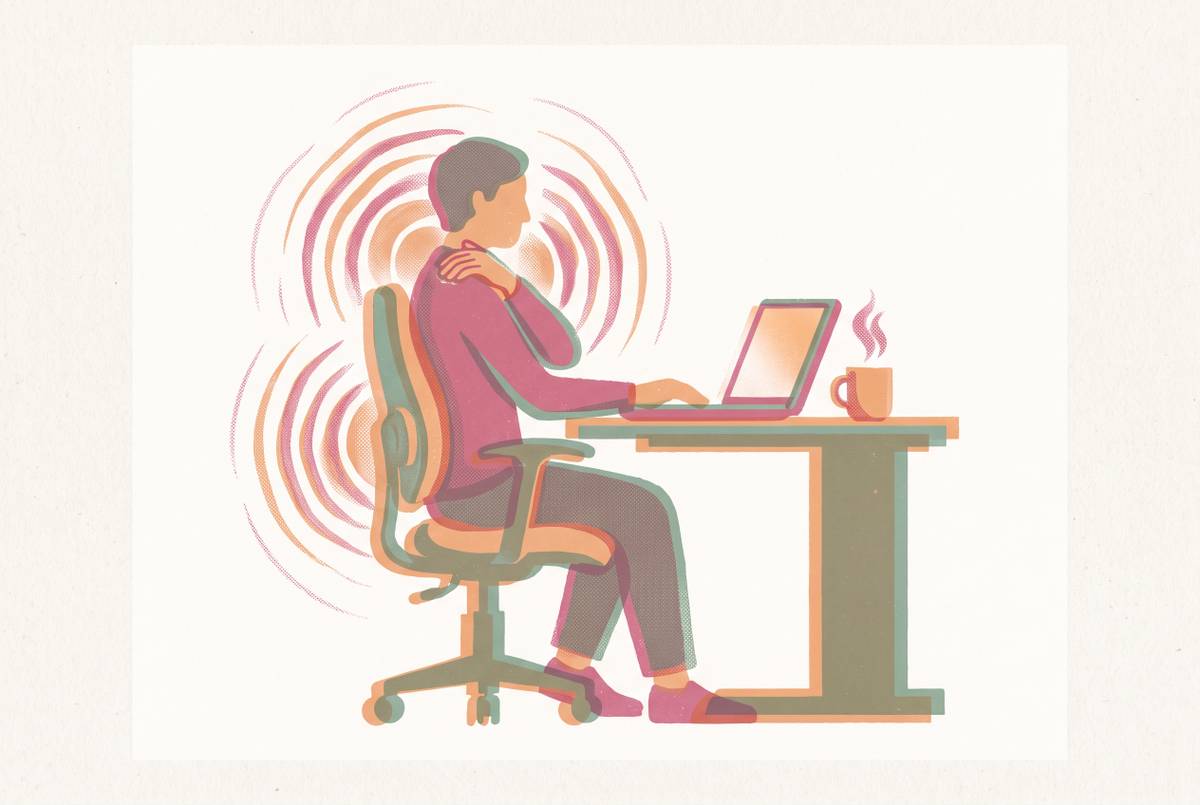
Yoga for Fibromyalgia Pain and Fatigue
Gentle movement and meditation can help reset a nervous system stuck in pain amplification.

Fibromyalgia involves a nervous system that amplifies pain, not simply muscles that need stretching. Yoga brings gentle movement, breath regulation, and meditative attention together to help with that wider problem. The evidence is promising but limited, and the practical message is clear. Yoga belongs in a broader treatment plan, with its demands matched to your energy.
Why fibromyalgia pain is a nervous system problem, not a muscle problem
Fibromyalgia pain does not follow the same pattern as pain from a damaged muscle. Fibromyalgia involves changes in how the nervous system processes pain signals. This amplification of pain by the nervous system is called central sensitization. Treatments that focus only on the painful tissues miss this change in how pain signals are handled.
That amplification overlaps with other changes in pain regulation. The body's systems for dampening pain work less effectively, while automatic nervous system functions and the stress response can also be disrupted. Pain can then trigger fear and anxiety, which keep the nervous system on high alert and feed more pain. This pain-fear cycle makes emotional distress part of the disease process.
Diagnosis reflects this wider understanding. Current criteria use symptom-based tools, including the Widespread Pain Index and Symptom Severity Scale. No validated diagnostic biomarker currently exists, so diagnosis depends on the pattern of symptoms. That pattern, rather than a single sore muscle or test result, is also what treatment has to address.
Why a mind-body practice targets the right system
If pain regulation is disrupted, a useful treatment needs to reach beyond the muscles. Yoga combines physical postures, breath regulation, and meditative attention in a practice that addresses stress as well as movement.
Gentle movement can activate pathways that inhibit pain and help the body function better without the inflammatory response that can come with high-intensity exertion. Meditative attention works on a different part of the same problem by reducing stress and helping interrupt the pain-fear cycle. Breath regulation adds breathing to the practice so that it goes hand in hand with movement.
This combined approach also differs from a purely cognitive treatment. Cognitive behavioral therapy, or CBT, can reduce pain and negative mood in fibromyalgia, but its effects are small. Yoga engages body and mind at the same time, which offers a reason to study it. EULAR guidelines give a strong-for recommendation only to aerobic and strengthening exercise, placing yoga as an adjunct. The mechanism makes a benefit plausible, but clinical trials have to show whether people actually feel and function better.
What the clinical evidence actually shows
The Yoga of Awareness randomized controlled trial reported a 31.4% improvement in the Fibromyalgia Impact Questionnaire Revised total after an 8-week intervention. This questionnaire, also called the FIQR, captures the wider impact of fibromyalgia. The trial also reported reductions in pain, fatigue, and pain catastrophizing, which is the tendency to think about pain in fearful, worst-case terms. These findings show how yoga may make the condition less disruptive.
Although encouraging, this improvement cannot be expected by everyone who starts yoga. The evidence so far comes from a few randomized controlled trials and several uncontrolled pilot studies. Without a comparison group, it is harder to separate the effect of yoga from other changes during a study. Participants have also been almost exclusively women, which limits how confidently the findings can be extended to men. Reported adverse events were uncommon and mild, but that does not make every class suitable for every person.
The 2026 PhYoMind trial protocol describes a comparison of physiotherapy-integrated yoga and mindfulness plus home exercise against home exercise alone. Its results are pending, so it cannot yet strengthen the case for benefit. For now, the evidence supports yoga as a potentially helpful added tool. Knowing that it may help is only useful if the practice does not leave you worse afterward.
Why pacing a yoga practice differently from a standard fitness routine matters for fibromyalgia
A standard class can lead to the boom-bust pattern that makes fibromyalgia symptoms worse. You do more when energy is available, exceed what you can manage, and then pay for it with exhaustion or a flare. Fibromyalgia fatigue is not ordinary tiredness, and daily capacity can shift with sleep quality, stress, weather, and symptom load. A fixed session length or intensity ignores that variation. The useful target is a session that fits today's baseline.
Christine Miserandino's Spoon Theory is a simple way to think about this energy budget. Each activity uses some of the energy available that day, and once it is spent, exhaustion or symptom flares can follow. Yoga has a cost too, even when it is gentle, and that cost can change from day to day. Pacing means matching the session to what is available while gradually building tolerance. It is a strategy for greater stability.
There is an important distinction for people who also have ME/CFS. Fibromyalgia pacing uses a graduated activity model, while ME/CFS uses a stricter energy envelope because post-exertional malaise can make exertion-triggered crashes more severe. Treating these approaches as interchangeable risks advice that is too cautious for fibromyalgia or too demanding for ME/CFS. For fibromyalgia, a restorative 20-minute session on a low-energy day is a better outcome than forcing a full class and crashing for two days afterward. The shorter practice is not a failed version of the longer one.
Which yoga styles and starting points suit fibromyalgia best
Yoga styles impose different demands, so the name of the class matters less than what it asks you to do. Yoga Nidra is a guided body-scan meditation practiced in stillness, with essentially no physical demand. It can serve as a recovery or wind-down practice. Restorative yoga uses passive, supported poses that are held for a long time and ask little of the body. Its emphasis on the nervous system's rest-and-recovery activity makes it well suited to low-energy days and people starting yoga with fibromyalgia.
Yin yoga is also slow and floor-based, but it targets connective tissue and can be moderately demanding. People with hypermobility need to pay particular attention to avoiding overstretching. Hatha yoga uses foundational postures at a gentle pace, though its suitability depends on the instructor and class level. These are different options for different capacities. The Yoga of Awareness trial used a combined program of postures, breathing practices, meditation, and group discussion, so its findings should not be treated as evidence for stretching alone.
Before starting, talk with a healthcare provider, especially about other conditions you have that may change what is right for you. Tell the instructor about fibromyalgia before class so modifications can be part of the session from the start. Start with shorter sessions and build up slowly, using props, a smaller range of motion, or seated options as needed. Online videos and home practice are also possible starting points.
How tracking what happens during and after yoga sessions makes the practice more useful
Your response to yoga is not limited to how much pain you feel on the mat. Sleep or mood may get better first, while pain takes longer to change. Without a record, those early gains can be easy to miss, especially when symptoms change anyway. Tracking helps show which parts of the practice help, which cost too much, and what changes over time.
A simple entry can record the style practiced, session duration, energy and pain before and after, sleep quality that night, and mood. Fatigue and anxiety are also relevant outcomes. The record needs to be manageable enough to keep. Its value lies in patterns across sessions. For example, a duration or style that repeatedly goes with a two-day fatigue crash is a signal to reduce the duration.
That adjustment is the graduated activity model in practice. Progress depends on what happens after exertion as well as what you can complete during it. A diary gives you details to bring to a clinical appointment so you have more to go on than a general sense of how things have been. A 2025 UK qualitative study found that being asked to keep a diary was a turning point in patients feeling taken seriously by their medical team. Once patients felt believed, they trusted their healthcare team much more, so symptom records helped with more than choosing the next yoga session.
How yoga fits into a broader fibromyalgia management plan
A full fibromyalgia management plan can include medication, aerobic and resistance exercise, psychological approaches such as CBT, and behavioral self-management. Yoga fits within that plan by addressing physical function, stress, and the way a person responds to pain together. It does not remove the need for those other parts of care. Its role is to contribute something useful where pain, fatigue, and emotional strain overlap.
When fear and anxiety help sustain a state of high alert, reducing that burden is not a cosmetic improvement. Better coping and a steadier mood matter even if pain has not disappeared. At the same time, focusing on these benefits must not become another way of dismissing physical symptoms. A mind-body approach is useful precisely because those parts of fibromyalgia are connected.
Qualitative research describes how patients slowly bring lifestyle changes and different kinds of physical activity together to find a balance. Diet, movement, and pacing work together as ways to manage each day. Yoga can take its place in that balance when its demands are adjusted and its effects are taken seriously. It is an adjunct, and its usefulness depends partly on how it is practiced. Understanding that it targets the nervous system changes the goal from pushing harder to practicing in a way the body can tolerate. The mechanism is the instruction manual.
Sources
- Effectiveness of yoga as an adjunctive intervention for alleviating symptoms of fibromyalgia a narrative review
- Mindfulness-Based Yoga for Individuals With Fibromyalgia: A RCT
- Role of Exercise in Fibromyalgia Management: A Narrative Review of Mechanisms, Modalities, and Clinical Evidence
- Fibromyalgia Syndrome and Yoga : International Journal of Yoga
- Editorial: Yoga for pain relief
- ViewPoint Evidence-Based Self-Management Strategies for Fibromyalgia:
- Journey of Hope for Patients with Fibromyalgia: From Diagnosis to Self-Management—A Qualitative Study