Cognitive Behavioral Therapy for Fibromyalgia Pain
CBT retrains the nervous system to stop amplifying ordinary pain signals.
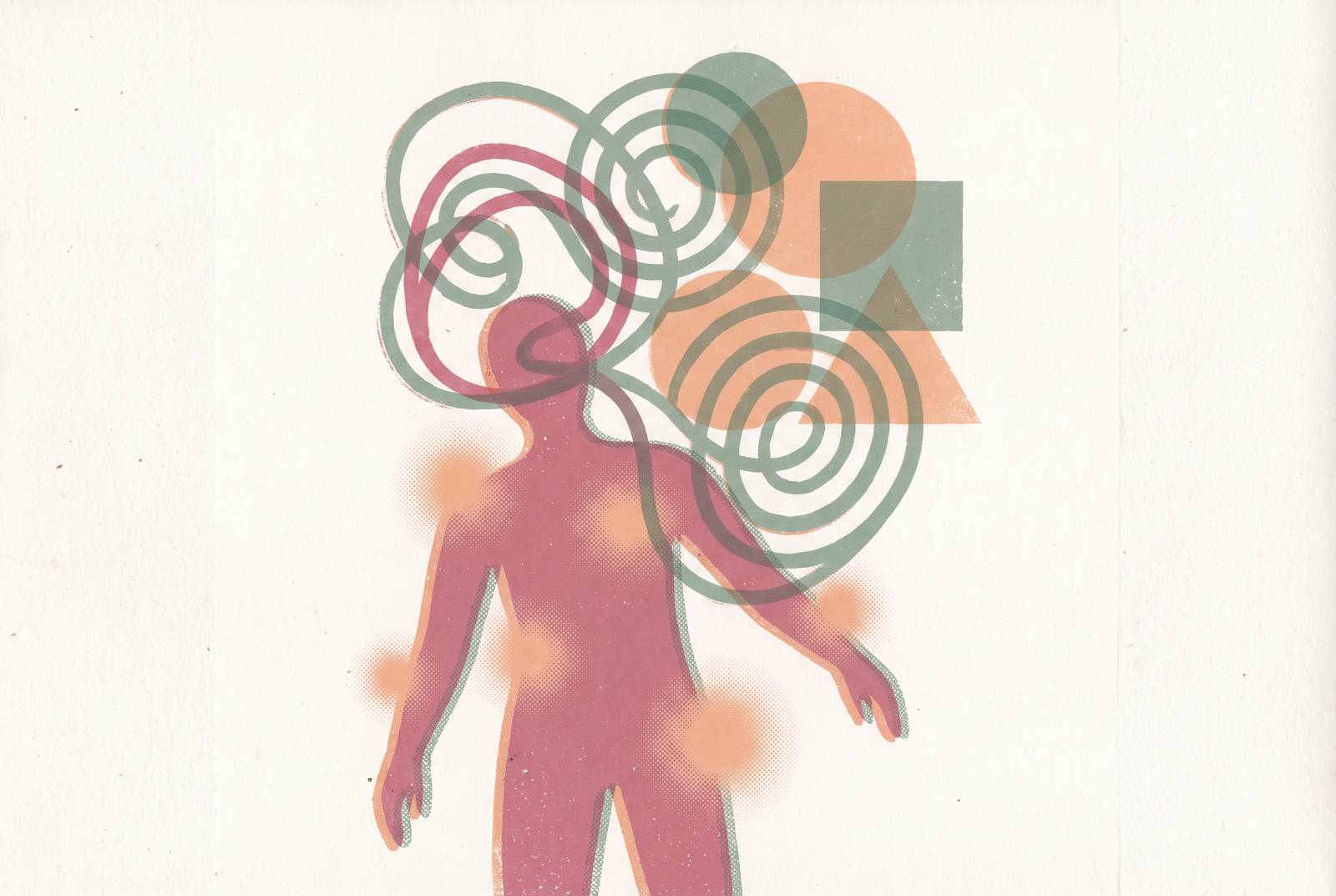
Fibromyalgia pain is caused by a nervous system that has learned to process ordinary signals as threats, and that distinction changes what treatment should actually be aiming at.
Why fibromyalgia pain is a nervous system problem, not a tissue problem
The International Association for the Study of Pain has a specific term for this kind of pain: nociplastic. That means the pain comes from altered nociception, the body's signal-processing system, without clear evidence of actual or threatened tissue damage triggering it, and without a disease or lesion in the somatosensory system to explain it. No torn muscle. No inflamed joint. No damaged nerve ending that a scan can point to.
That classification matters more than its clinical phrasing suggests. For decades, doctors dismissed fibromyalgia as psychogenic, as something patients imagined or exaggerated, because they couldn't find a lesion to match the pain. Calling it nociplastic ends that framing. The pain is real and physical. It just originates in how the nervous system processes signals, not in the tissue the signals supposedly come from.
Neuroinflammation appears on PET scans as microglial activation in fibromyalgia patients, active in a way that doesn't happen in people without the condition. Blood and spinal fluid studies back this up: patients show elevated pro-inflammatory cytokines and reduced anti-inflammatory mediators, a chemical signature of a nervous system running in a sensitized state.
The deeper mechanism here is called central sensitization. Neurons in the spinal cord and brain become abnormally responsive to normal, even subthreshold, sensory input. A touch that shouldn't register as painful gets amplified into something that does. The system is miscalibrated, running too hot, treating safe signals as dangerous ones, unlike a torn ligament, which is simply broken.
If pain can be a learned nervous system state rather than a fixed structural injury, the next question follows naturally: can that state be unlearned?
What CBT does inside a fibromyalgia brain
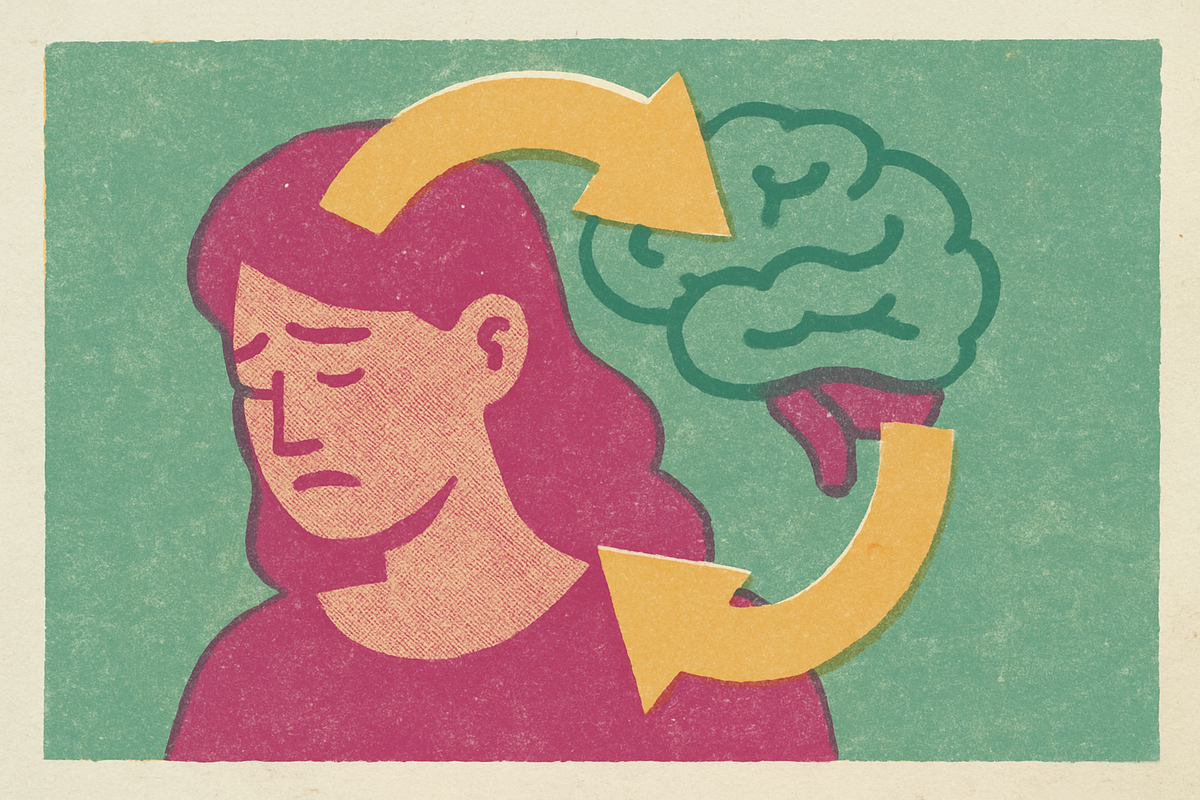
The answer is yes, and the mechanism behind it is now visible on a brain scan. Cognitive behavioral therapy targets a specific cognitive pattern called pain catastrophizing: excessive worry about pain, a sense of helplessness around it, and negative expectations about how it will unfold. It's a learned pattern, and like other learned patterns, the nervous system can be trained to run it less often.
A randomized controlled trial out of Brigham and Women's Hospital and Harvard Medical School put this to the test directly. Jeungchan Lee and Asimina Lazaridou, co-first authors, worked with Robert R. Edwards as co-senior author on a study of 98 fibromyalgia patients over eight weeks, published in Arthritis & Rheumatology. Before CBT, patients showed increased functional connectivity between the ventral posterior cingulate cortex, a key node in the brain's default mode network, and regions tied to movement and salience processing, specifically during moments of catastrophizing. After eight weeks of CBT, that connectivity measurably dropped.
Edwards described the goal of the work directly: "We wanted to explore how CBT, a talk therapy aimed at combatting maladaptive thoughts, can enhance individuals' daily functioning and alter the brain's processing of pain-related information."
A separate 2026 neuroimaging study pushed this further, and the finding deserves attention because most patients, and plenty of clinicians, have never heard it. Researchers tracked activity in the anterior midcingulate cortex, or aMCC, during moments of pain catastrophizing. That activity tracked symptom improvement across the eight-week CBT course, and it predicted whether a given patient would improve early or late in treatment. Machine learning models built on this data found that baseline aMCC activation predicted treatment response more accurately than the patients' own baseline pain ratings or catastrophizing scores did.
These are two distinct findings, worth keeping separate. The Brigham and Women's trial showed that CBT changes default mode network connectivity over an eight-week course. The 2026 study showed that a different brain region, the aMCC, can predict who responds to CBT and when. Neither finding means brain scans are now part of a standard fibromyalgia appointment. This is research infrastructure, built to understand and eventually refine treatment, not a diagnostic tool sitting in clinics today.
Across recent reviews of CBT-oriented interventions for fibromyalgia, the largest effects occur in pain catastrophizing. That's the main target, not a side effect. CBT also appears to help at the sleep interface: reducing catastrophizing and hypervigilance lowers the cognitive arousal that keeps people awake, which explains the sleep quality improvements documented in individualized CBT trials.
What CBT changes
CBT does not reliably reduce raw pain intensity in fibromyalgia. That finding deserves to be stated plainly rather than softened, because the honest accounting of what CBT does and doesn't do is what makes the case for it credible.
In the Brigham and Women's trial, CBT reduced pain interference significantly more than the education control arm did. Patients reported significantly less catastrophizing, and their fibromyalgia symptoms had significantly less impact on daily life. But pain severity scores themselves did not drop significantly more than they did in the control group.
That gap between "pain interferes less" and "pain hurts less" is the whole argument for understanding CBT correctly. The goal was never to erase the pain signal. The goal is to shrink the amount of daily life that pain gets to occupy, how much it limits movement, work, relationships, and rest.
There's a fair criticism to raise here: a treatment that doesn't lower raw pain intensity might look like psychological accommodation rather than medical progress, a way of coping with pain rather than resolving it. That's a reasonable objection, and it deserves a direct answer rather than a dismissal.
The answer comes back to what fibromyalgia actually is. In a nociplastic condition driven by central sensitization, the amplification itself, not just the pain it produces, is what needs treating. Reducing interference, reducing catastrophizing, and calming that amplification are appropriate medical targets for this specific mechanism. Expecting CBT to work like a painkiller, something that simply turns the volume down on a raw pain signal, misunderstands what's driving the pain.
The gains from CBT tend to be strongest while patients are actively practicing it, a meaningful limitation since this isn't a pill someone takes and forgets. It takes sustained behavioral effort from patients who are often already fatigued, and that effort is a real cost, not a minor inconvenience.
Still, the economics back the approach. An economic evaluation run alongside a six-month randomized trial found CBT to be the most cost-effective fibromyalgia treatment option, outperforming both pharmacotherapy and usual care on that measure. And there's a mental health benefit that runs alongside the pain benefit: rumination and catastrophizing are strong predictors of depression and anxiety in fibromyalgia patients, and CBT addresses those pathways even in the cases where pain intensity itself doesn't move.
How exposure-based CBT differs from traditional CBT for fibromyalgia
Fibromyalgia patients asking a clinician about CBT should know it isn't one single therapy. There are at least two distinct formats in active use, and they appear to work through different pathways in the nervous system.
Traditional CBT, often shortened to T-CBT, works mainly by restructuring catastrophizing thoughts and improving pacing and activity patterns. It's cognitive first: change the thinking, and behavior follows.
Exposure-based CBT, or Exp-CBT, takes a more direct behavioral route. It has patients systematically confront the activities and sensations they've learned to fear, so it targets avoidance behavior and hypervigilance head-on. The goal is to break the fear-avoidance cycle at the level of behavior, not only at the level of thought.
A randomized controlled trial registered as NCT05058911 compared internet-delivered versions of both formats directly, and it built in separate hypotheses for how each one works. For Exp-CBT, the researchers predicted the primary mediators would be reduced avoidance behavior and reduced hypervigilance. For T-CBT, they predicted the primary mediator would be reduced catastrophizing, with pacing included only as an exploratory factor rather than a primary one. That split shows the two formats aren't just two paths to the same destination; they're targeting overlapping but genuinely different mechanisms inside the same condition.
Both versions share one prediction in common: that reducing catastrophizing and increasing physical activity will improve fibromyalgia severity, measured by the Fibromyalgia Impact Questionnaire. But reducing hypervigilance is a hypothesis specific to Exp-CBT alone.
The field is pushing this question further. A trial at the Karolinska Institutet, registered as NCT07054333 and led by principal investigator Maria Hedman-Lagerlöf, is testing internet-delivered exposure-based CBT while measuring objective biological markers of pain regulation, not just what patients report feeling. That's an attempt to find out whether Exp-CBT produces changes in the physiology of pain regulation itself, not just changes in symptom scores.
None of this makes Exp-CBT the better choice. The evidence comparing the two formats head to head is still being gathered, so the honest takeaway for patients is that the format of CBT matters, and it's worth asking which version a clinician is offering.
How digital and app-based delivery is extending CBT's reach
Most people with fibromyalgia cannot get to weekly in-person CBT sessions. That access gap is why digital delivery matters: the results so far show meaningful improvement for many patients, even as real limitations remain.
The clearest digital success story comes from Acceptance and Commitment Therapy, a third-wave descendant of CBT. A smartphone program called Stanza became the first FDA-authorized digital therapeutic for fibromyalgia, following a phase-3 trial in which 71% of users reported meaningful improvement, compared to a much smaller share of users on an active control arm.
That trial, run by Swing Therapeutics under the name SMART-FM, tested a fully app-delivered digital ACT intervention against a digital symptom-tracker control arm, with no human therapist involved in either arm. That's a notable design choice: it isolates what a self-guided digital behavioral program can do on its own.
Other trials are testing different angles of digital delivery. A protocol for a mobile app called Bei, published in 2025, registered a trial testing the app as a supplement to multimodal fibromyalgia treatment, recruiting patients through AFINSYFACRO, a Spanish fibromyalgia patient association, embedding the digital tool inside an existing patient community rather than deploying it in isolation. The Karolinska trial mentioned earlier extends this evidence base too, using internet-delivered exposure-based CBT while measuring biological outcomes rather than relying only on what patients report about themselves.
None of this should get romanticized as a frictionless fix. Patients using these tools regularly report ambivalence and what researchers describe as digital fatigue. Continuous symptom monitoring can start to feel like a burden rather than a support. Poor app usability drives people to stop using the tool. And the sheer volume of health data an app generates can itself become a source of anxiety for a patient already managing a chronic condition.
One trial design offers a useful lesson here. A study called SMART-FM-SP, registered as NCT05962437, used a symptom-tracking app that let patients log symptoms daily and access educational material, a tool described as commonly used in chronic pain management, but kept it separate from psychotherapy delivery. That separation reflects a real design principle: tracking and therapy serve different functions, and conflating them risks undermining both. The tools that work are the ones that reduce the daily burden on a patient, not the ones that add another task to an already full plate.
Why symptom tracking and pacing are part of the same strategy as CBT, not separate activities
Pacing and symptom tracking often get treated as lifestyle extras, something a patient does on their own time, separate from actual treatment. That framing misses how directly these tools connect to the same nervous system logic that CBT is built on.
Christine Miserandino's Spoon Theory is a good example of why. It gives patients concrete language for explaining a finite daily energy budget to doctors, family members, and employers. It works as a communication and advocacy tool, and it maps directly onto the nervous system reality of fibromyalgia: a system that amplifies signals also tires faster under load.
Clinicians use Spoon Theory in sessions for more than communication. It helps validate what patients are actually experiencing, surfaces the guilt many patients feel about needing to rest, supports boundary-setting around energy and emotional labor, and feeds into personalized pacing plans built to reduce the boom-and-bust cycle of overexertion followed by flare-up.
Pacing itself is a strategic choice, not a sign of giving up. Both the Energy Envelope Theory and Spoon Theory share the same priority: keep nervous system load below the threshold that triggers post-exertional worsening. That's the behavioral half of what CBT works on cognitively. One trains the thinking patterns that amplify pain. The other manages the physical load that trips the same amplification system.
The NCT05058911 trial treated this connection as a research question in its own right, exploring pacing as a possible mediator of traditional CBT's effect on fibromyalgia severity. Pacing is part of the mechanism the therapy runs on, not a separate lifestyle habit sitting alongside it.
Symptom tracking earns its place in this system by surfacing patterns, not just piling up data points. Done well, it shows which activities tend to precede a flare, which sleep patterns predict next-day pain, and which emotional states appear right before a catastrophizing episode starts.
Patient education is the base of all of it, recommended universally as the first step in fibromyalgia management. A patient who understands the mechanism is more likely to stick with treatment, take an active role in self-management, and cope better with a condition that doesn't go away on a fixed timeline. Qualitative research backs this up directly: patients' treatment decisions get shaped by their relationship with their physician, medication side effects, personal fears, and their physical and mental health day to day. Structured tracking gives patients something concrete to bring into those conversations, not vague impressions, but specific evidence about what their own nervous system is actually doing.
Sources
- Objective Measurement of Pain Regulation in Individuals Who Have Received Internet-delivered Exposure-based Cognitive Behavior Therapy
- Cognitive Behavioral Therapy Eases How Fibromyalgia Pain is Experienced by the Brain
- Exposure-based Cognitive Behavior Therapy vs Traditional Cognitive Behavior Therapy for Fibromyalgia
- Anterior midcingulate cortex activity during pain catastrophizing predicts and sequentially tracks reduction in pain interference after cognitive behavioral therapy in fibromyalgia - PubMed
- A Randomized Controlled Neuroimaging Trial of Cognitive Behavioral Therapy for Fibromyalgia Pain - Lee - 2024 - Arthritis & Rheumatology - Wiley Online Library
- A Randomized, Controlled Neuroimaging Trial of Cognitive-Behavioral Therapy for Fibromyalgia Pain - PMC
- Cost-effectiveness and cost-utility of exposure-based vs. traditional cognitive behavior therapy for fibromyalgia: Results from a randomized controlled trial - The Journal of Pain
- Feasibility of an App-Supported Monitoring System for Cognitive-Behavioral Interventions in Fibromyalgia Patients in Public Settings - PubMed