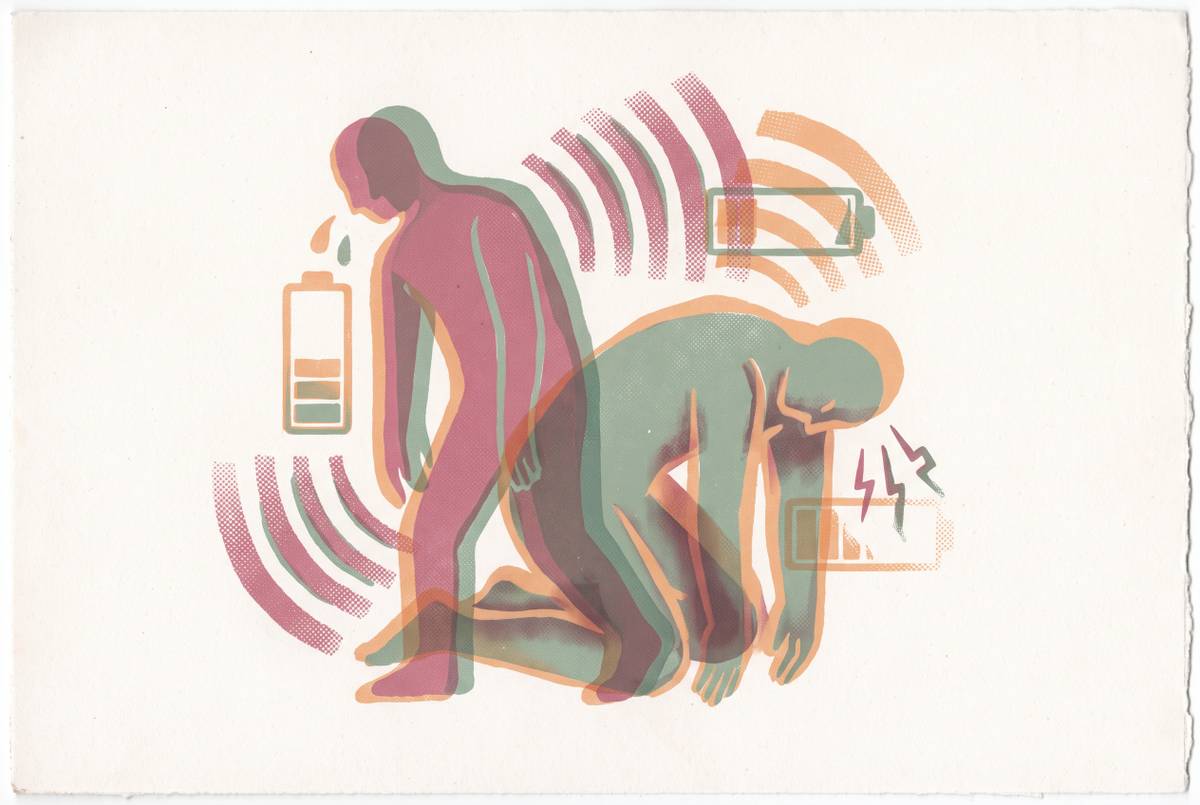
Low-Impact Exercises for Fibromyalgia
Gentle movement works best when tailored to your energy and nervous system response.

Low-impact exercise can help with fibromyalgia, but the activity you choose is only part of the answer. Starting gently, staying within your available energy, and finding movement you can sustain matter just as much. The aim is to make movement useful without making the rest of your life harder.
Why fibromyalgia makes ordinary exercise advice useless — and sometimes harmful
Fibromyalgia involves central sensitization. The nervous system amplifies pain signals out of proportion to tissue damage. Reduced pain inhibition, changes in the autonomic nervous system, and low-grade neuroimmune activation also affect the response to exertion. Because of how the nervous system responds, the usual advice to work harder or push past discomfort is a poor fit. The same effort can carry a different symptom cost.
That cost also changes from day to day because widespread pain, fatigue, disturbed sleep, cognitive symptoms, and mood problems compound one another. A bad night can raise pain sensitivity and make a planned walk much harder. Yet no validated biomarker exists, and diagnosis relies on symptom-based tools, leaving patients vulnerable to disbelief and advice to “just exercise more.” Pain and fatigue can then cause people to move less, become less able to be active, and grow more sensitive to pain. Research supports exercise as a way to interrupt that cycle, but not exercise that ignores the condition driving it.
What the evidence actually says exercise can do for fibromyalgia
European League Against Rheumatism (EULAR) guidelines give exercise the only “strong for” recommendation among fibromyalgia therapies. That is a stronger endorsement than medications receive, whose benefits are often modest and accompanied by side effects. Aerobic and resistance training can reduce pain and improve function and health-related quality of life. Aquatic and mind-body programmes can also help and are often well tolerated. The recommendation to move therefore rests on evidence.
The Scientific Reports study followed adults with moderate-to-severe fibromyalgia over twelve months and found that, at six months, those who exercised had better fibromyalgia impact scores than those who had standard care alone. Patients had less pain on average, slept better, and were more flexible. Crucially, these gains occurred without an improvement in maximum aerobic capacity. PET scans in some of the patients linked their improvement to metabolic changes in the cerebellum, a part of the brain that helps process pain. That suggests a neurological pathway for benefit, rather than cardiovascular fitness being a prerequisite.
The imaging findings offer a plausible but unproven mechanism for some of the benefits. They nevertheless help explain why gentle movement can be worthwhile even when it does not make someone measurably fitter. The goal of treatment is to help the nervous system recalibrate more than to help people perform well at sport. Serious adverse events are rare, and graded exercise that is planned well to suit each person usually carries little risk.
Why no single exercise type wins — and what the modality research actually tells us
Stretching with balance training has strong support for overall health status, while aerobic exercise combined with strength and stretching is well supported for pain reduction. Aerobic exercise alone can help reduce tender points, and there is evidence that whole-body vibration can improve aerobic capacity. These targets measure different kinds of success. Choosing an activity therefore starts with what most needs to improve.
A 2026 blinded randomised controlled trial looked at how progressive strength training, constant-intensity strength training, and walking compared with one another. All three reduced symptoms similarly, with no significant between-group differences in fibromyalgia impact at any time point. None exceeded the minimal clinically important difference threshold, which limits how much can be claimed about those improvements. Even so, walking performed as well as structured strength training, an important finding when access to a gym or physiotherapist is limited. Adherence was a problem across all groups, making sustainability a central issue.
Aquatic exercise also has particular support for anxiety and depression, which may matter as much as physical symptoms for some patients. The evidence gives patients real options based on their symptoms, circumstances, and preferences. An activity with a promising research result is of little practical use if it cannot become part of everyday life.
The specific modalities with the strongest support and how each works for fibromyalgia
Walking is an accessible starting point because its intensity is easy to control through route, terrain, pace, and duration. It can be broken into short bursts. That flexibility makes it useful when energy is limited or unpredictable. It suits someone who needs a way to move without equipment or a set place to exercise.
Aquatic exercise and hydrotherapy make it easier to move because warm water takes some load off the joints and eases muscle tension. This can make a pool session more approachable when land-based exercise feels too painful. Its psychological benefits may also be valuable when anxiety or depression adds to the symptom burden. It can be a good fit on days when pain is high, if a suitable pool is within reach.
Stretching addresses stiffness and reduced range of motion, while balance training supports daily activity and fall prevention. That combination matters when fatigue affects stability as well as energy. These movements can be gentle, seated, or modified during flares. They suit moderate-symptom days when a more demanding session would be too much.
Combining aerobic exercise with strength and stretching is a well-supported option when pain is the main concern. Low-impact aerobic choices include cycling, elliptical exercise, and swimming, which minimise joint and soft tissue stress. This mix suits someone who can keep up a wider range of movement while staying within their energy budget.
Yoga, tai chi, and Pilates bring gentle movement together with awareness of the breath and ways to manage stress. They help with physical symptoms as well as the ways stress affects fibromyalgia. Their practical appeal is that movement need not be separated from calming the nervous system. They may be a good fit when anxiety or other mental strain has a strong effect on symptoms.
Whole-body vibration has evidence for improving aerobic capacity, making it relevant when deconditioning is a substantial barrier. It is less widely available than walking or stretching, however. It is better suited to an adjunct role than to being the whole exercise approach. Its usefulness depends partly on access as well as its potential benefit.
How pacing turns exercise from a flare trigger into a sustainable habit
Pacing means planning how to use energy, which takes more than just resting or doing less. Your energy envelope has to cover everything you do in a day, and exercise uses the same energy that you need for work, appointments, and emotionally difficult conversations. Spoon Theory, coined by Christine Miserandino, gives this a practical image. Each spoon represents a unit of energy, and once spent, it is gone for the day.
The Scientific Reports study broke sessions into small bursts that each person could manage without making their pain worse. Participants assessed pain, mood, fatigue, and concentration before and after movement. The rule was that a session should leave them at least as well as before, and ideally better. That gives you a usable test without equipment or a performance target. If movement leaves you feeling much worse, the dose needs to change.
During aerobic activity, perceived exertion and the ability to hold a conversation are more useful guides here than chasing a heart rate target. Check symptoms before, during, and after movement, and treat rest days as part of the approach. In fibromyalgia, progression can be appropriate, but it should be very gradual and patient-led. This differs from pacing in ME/CFS and other post-viral conditions, where strict energy envelope management takes priority because overexertion can cause post-exertional malaise. A fixed schedule must not override that distinction.
Enjoyment belongs in the pacing plan too. An activity that suits your tastes is easier to sustain than one chosen only because it looks optimal on paper. Together, the spoon budget, the “as well as before” test, and personal preference provide a way to judge whether exercise actually fits. Pacing makes movement repeatable.
Building a starting routine: what a first week of paced movement actually looks like
If pain has kept you from being active, the first week needs to feel like something you can do, with little pressure to impress. General exercise guidance includes light-to-moderate activity two to three times per week, building up slowly over time to 25–45 minutes. The example below is an illustrative starting point that needs to be personalised. A physiotherapist familiar with fibromyalgia is ideally placed to personalise it.
Day 1 could be a 10-minute walk at a conversational pace, without a speed or distance goal. Day 2 could be rest or a few minutes of seated stretching. Day 3 could be gentle stretching and balance work, such as standing on one foot, slow neck rolls, and supported side stretches. Day 4 is rest, and Day 5 could repeat the walk or replace it with a short swim or pool walk if accessible. Days 6 and 7 could be rest, with a short gentle walk only if the symptom check-in is positive.
Before a session, rate pain, fatigue, and mood out of ten, then rate them again afterwards. If any symptom is substantially worse, shorten the next session. On bad symptom days, reduce duration and intensity. Increase duration by small increments only after two consecutive weeks at the same level without worsening symptoms. That is a condition for progression, which remains optional.
Tracking movement and symptoms together to find your personal patterns
A movement record tells you what you did, but a symptom record helps show what it cost. Together, they can show whether a session that feels comfortable leads to a flare the next day. Useful details include pain and fatigue before and after activity, the previous night’s sleep quality, mood, and context such as stress, weather, or medication timing. Cognitive demands matter too, since a difficult workday or distressing appointment can reduce exercise tolerance even when you feel physically fine.
Over time, the record can show which activities tend to precede flares and which times of day or week offer more energy. It can also show whether poor sleep predicts lower tolerance or whether a good session today tends to cost tomorrow. These patterns give the immediate before-and-after check a longer view. A month of structured records can help a care team assess whether the approach is working or needs adjustment. The aim is to learn what helps you, with no need to keep a perfect diary.
Wearable data can add to the picture by showing steps, heart rate, and sleep estimates. Devices such as Oura or Garmin can provide information to compare with your symptom notes. When the two disagree, record that difference too. Feeling okay while resting heart rate is elevated, for example, is a signal to note rather than a reason to discard either source of information.
How to use your exercise data to have more productive appointments
A brief written summary gives a physiotherapist or rheumatology clinician more to work with than recall alone. Include exercise type, frequency, duration, perceived exertion, symptom scores before and after, and any next-day consequences. That puts the activity and its cost in the same frame. A record of the past four weeks also protects against a good day in the consulting room understating your usual symptom burden. You have information about daily life that the clinician cannot get from that appointment alone.
Before the review, prepare questions about which symptoms deserve priority in tracking, including pain, fatigue, and sleep. Ask what meaningful improvement would look like for your situation. Discuss whether another modality might better suit your current symptoms. Ask when gradual progression would be appropriate given your starting point and recorded responses.
Progress in fibromyalgia can be slow and non-linear, so a temporary flare does not tell the whole story. A structured record helps distinguish that flare from a sustained worsening that needs a change of approach. It also helps patients and clinicians judge together how much exercise is helping, using more than fitness gains alone. The useful exercise plan is the one that improves life and remains possible to repeat.
Sources
- Strength Training Versus Walking on the Fibromyalgia Impact: A Blinded Randomised Controlled Trial - PMC
- Role of Exercise in Fibromyalgia Management: A Narrative Review of Mechanisms, Modalities, and Clinical Evidence
- Effect of different types of exercise in fibromyalgia syndrome: a network meta-analysis