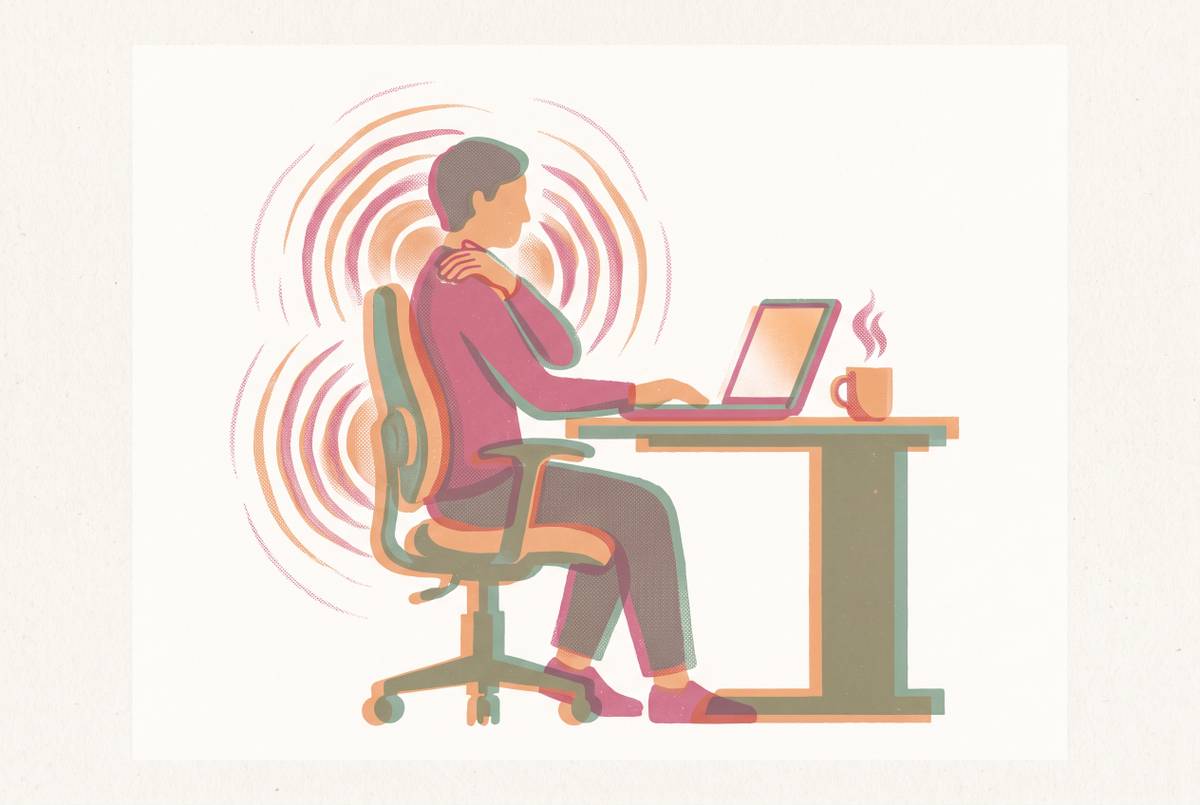
Post-Exertional Malaise in Fibromyalgia vs Chronic Fatigue Syndrome
PEM arrives days later with disproportionate severity, redefining diagnostic boundaries.
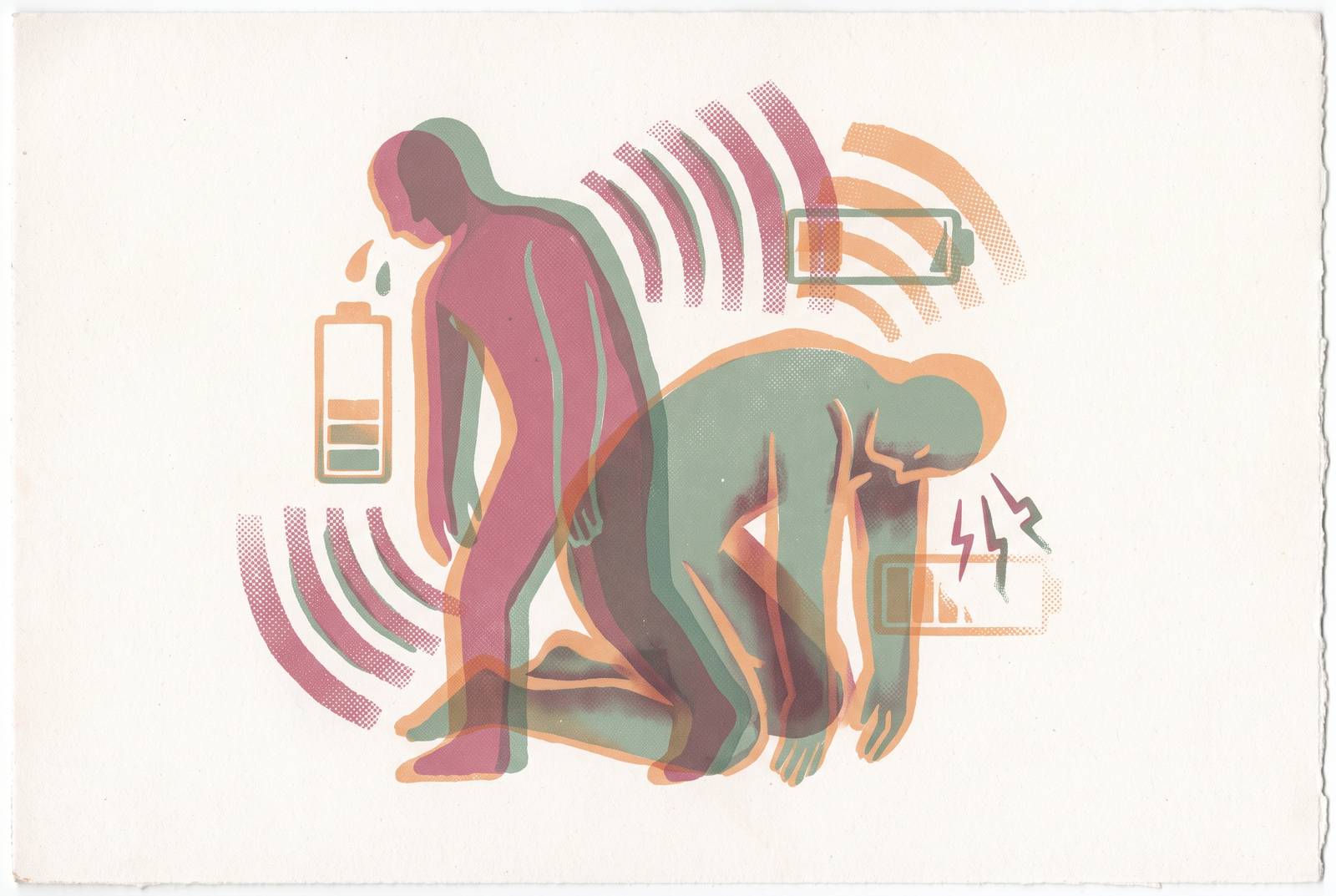
Get the starting point wrong and everything downstream about PEM gets misread.
The distinction turns on three features: timing, proportion, and symptom type. Regular fatigue eases with rest and relates roughly to the effort spent; post-exertional malaise arrives 12 to 48 hours after the trigger, produces severity wildly out of proportion to that effort, and typically worsens existing symptoms across the board while adding new ones, things like flu-like heaviness, cognitive fog, or sore throat that weren't present before the activity. Cognitive or sensory strain, not only physical exertion, can trigger it, and recovery stretches into days or weeks rather than overnight. That distinction does change the diagnostic picture: PEM is not part of fibromyalgia's diagnostic criteria at all, so its presence in someone already carrying a fibromyalgia label raises a real question about whether ME/CFS is a better fit, or whether both conditions are operating at once, and that question rarely gets asked if the clinician never identifies the crashes as PEM rather than ordinary fatigue.
It's not a symptom that happens to show up, it's the defining feature, the thing without which the diagnosis doesn't hold together. Fibromyalgia is defined by widespread pain and a shifting, unpredictable symptom picture, and PEM isn't part of its diagnostic criteria at all. That's the asymmetry to hold onto through everything that follows.
Both conditions share some genuinely frustrating traits. Neither has a confirmed biomarker as of 2025, and both get diagnosed largely by ruling other things out and matching a symptom pattern. Yet there's a harder asymmetry underneath that surface similarity: the two diagnoses are built on structurally different criteria, and that difference means a patient can carry a fibromyalgia label while an unaddressed thyroid problem or sleep disorder sits underneath it, undiscovered.
Diagnostic criteria have also moved the goalposts over time, and this matters more than it sounds. The 2010 revision of fibromyalgia's diagnostic criteria blurred the line between the two conditions enough that the overlap between patients receiving both diagnoses shifted substantially compared to the 1990 criteria. That's not new biology, but a paperwork change reshaping who gets counted where, and it should make anyone reading prevalence numbers across different decades a little more skeptical.
Fibromyalgia affects roughly 2% of U.S. adults, close to 4 million people, concentrated heavily among middle-aged women. Only one of those two conditions requires PEM to even get in the door.
The timing is the tell, since symptoms typically show up 12 to 48 hours after the trigger, often a full day or two later, according to NIH clinical trial data and patient materials from Hopkins Medicine. That lag is why so many patients miss the connection entirely. They'll blame a bad night's sleep or a random flare rather than the grocery run from two days ago.
This isn't soreness after a hard workout, and treating it like ordinary exercise fatigue is the single most common misread. PEM involves severity wildly out of proportion to the effort spent, recovery that stretches into days or weeks (sometimes months in severe cases), and triggers that include cognitive strain or sensory overload just as easily as physical activity. Patients have their own words for it: a "crash," a "flare," staying inside the "energy envelope." Those terms map directly onto what clinicians mean by PEM, even when the vocabulary doesn't match across the exam room table.
What does a crash actually feel like? Existing symptoms get worse across the board: exhaustion deepens, thinking gets foggier, pain increases, staying upright gets harder. New symptoms often show up that weren't there before, things like headache, sore throat, nausea, a flu-like heaviness. Patients describe feeling more ill than their already-compromised baseline, not just tired, and that distinction matters because this isn't ordinary fatigue turned up a notch.
The biology backs this up. Research into the biology of PEM points to measurable physiological changes after exertion, including shifts in gene expression and metabolic signaling. Research has identified candidate biochemical markers tied to PEM severity, suggesting metabolic disruption underneath the crash.
Worth saying plainly: PEM doesn't look identical from patient to patient, and triggers and symptom patterns can shift over time even within the same person.
PEM in fibromyalgia (real, but differently structured)
PEM shows up in fibromyalgia too, and dismissing it because it's not in the diagnostic criteria is a mistake, since it's just built differently. Researchers have begun examining distinct components of PEM in fibromyalgia, but the pain-specific piece isn't well mapped out yet.
Sort out which condition is driving a given patient's crash, and the research gets murky fast.
None of that makes fibromyalgia-linked PEM less real.
The biological controversy that complicates a clean separation
Recent research has complicated any tidy separation between the two conditions, finding overlapping biological signals where the diagnostic categories suggest there should be a clean split. That's inconvenient for anyone who wants a simple story, but it's the honest state of the science.
The straight answer is that PEM's cause is probably multifactorial in both conditions, not a single switch that flips. Persistent pathogens, environmental toxins, and genetic risk factors are all under active investigation, per recent research. This is not settled science, which means pretending otherwise does patients a disservice.
Here's what that means practically: a diagnosis label doesn't fully explain any one patient's experience. The biology underneath is messier than the categories built to describe it, and that mess is exactly why misdiagnosis happens as often as it does. A patient with textbook PEM can walk out with a fibromyalgia label that never prompts anyone to ask about post-exertional crashes at all.
What triggers look like across both conditions (and why misreading them leads to worse outcomes)
PEM triggers stretch further than most people expect going in. Physical exertion counts, even something as mild as a short walk or a grocery run. Cognitive effort counts too: reading, focused thinking, a long conversation. So does sensory overload, loud noise, bright light, a crowded room, and so does emotional stress.
Here's the part that trips people up: the type of trigger and the symptoms that follow don't necessarily match. Cognitive strain can produce physical collapse, and physical exertion can produce a cognitive crash days later. There's no clean one-to-one mapping, and expecting one leads people to dismiss real triggers because the resulting symptoms "don't make sense" to them at the time.
Add the delay problem back in: symptoms landing 12 to 48 hours after the trigger means patients regularly misattribute the cause, or give up trying to find one at all. Clinicians, working from that same delayed timeline, often share the confusion, which is part of why PEM gets underdiagnosed rather than just underreported.
Language adds another layer of difficulty. Research shows patients use wildly different terms to describe what's fundamentally the same experience, which makes both self-recognition and clinical conversations harder than they should be. Onset itself varies too, sometimes immediate, sometimes delayed, with duration ranging from a few days to several months. That variability isn't a sign the pattern is fake, but a feature of the illness, and treating it as inconsistency rather than variability is how patients end up not believed.
How to measure and communicate PEM to a clinician
PEM has an awkward property: it's easy to feel and hard to see. It happens between appointments, its onset is delayed by design, and it leaves nothing a clinician can point to during a 15-minute visit.
That's where structured tools earn their place. The DePaul Symptom Questionnaire for PEM, the DSQ-PEM, is a validated instrument covering frequency, severity, and duration across five core post-exertional symptoms, including fatigue relapse, cognitive decline, and flu-like malaise. Each item gets scored on a 0 to 4 scale, and a symptom counts as positive if it's rated at least "moderate" in severity at least "half the time" over the past six months, per 2025 research in Frontiers in Neurology. That threshold gives patients something concrete to check their own experience against, instead of guessing whether what they're feeling "counts."
Without a biomarker to point to, standardized symptom assessment carries most of the diagnostic weight. It's the difference between a clinical picture built on real data and one built on vague impressions. Worth bringing to an appointment: the trigger and its rough intensity, how long after the trigger symptoms showed up, which symptoms worsened or newly appeared, how long the crash lasted, and what, if anything, helped (rest, sleep, backing off activity).
One crash description is an anecdote, but five logged crashes with consistent timing is a pattern, and patterns move a clinical conversation forward in a way that a single bad day never will. Bringing that kind of structured history to an appointment changes what the clinician has to work with; they're looking at data instead of being asked to take one rough day on faith.
This is where purpose-built health tracking tools earn their keep. Software designed specifically for chronic illness management can pull together symptom logs, sleep data, and activity records, then surface the pattern and generate a summary a patient can carry into an appointment. The gap between daily lived experience and a fifteen-minute visit has to get bridged by something, and a spreadsheet full of half-remembered dates usually isn't it.
Pacing as the shared management strategy (and why applying it differs by condition)
Pacing is the management approach both conditions share, and it appears in CDC guidance on chronic fatigue syndrome. The idea: learn individual limits for physical and mental activity, then plan activity and rest around those limits instead of pushing through and paying for it two days later. The goal isn't permanent inactivity, but breaking the trigger-crash cycle long enough for the body to find some stability.
The anaerobic threshold can be measured through heart rate, and staying under it is thought to help prevent the physiological cascade that drives PEM. Heart rate monitoring, per Workwell Foundation's research, is an evidence-backed tool here, not a guess, and it's the one place in this whole discussion where pacing stops being a vibe and starts being a protocol.
Fibromyalgia pacing is murkier, and pretending otherwise sets patients up to fail. Pain tolerance, sleep quality, and emotional load all factor into where the limit sits, and there's no heart rate number to anchor it to.
In practice, pacing looks like breaking tasks into smaller pieces with rest built in between, treating cognitive and sensory activity as real exertion rather than something separate from physical movement, and using activity or symptom diaries to find personal limits, especially useful early in the illness. It also means resisting the boom-bust trap: a good day doesn't mean permission to make up for lost time, and that instinct is exactly what triggers the next crash.
Keeping a diary isn't busywork, but the raw data clinicians need to see a pattern they can't otherwise access from behind a desk.
None of this is easy to accept emotionally. Living inside a smaller envelope than before, especially for someone who used to measure their worth by what they could get done in a day, is a genuine loss. That's worth naming honestly instead of glossing over it with a pep talk about limits.
If someone has fibromyalgia but keeps crashing, how do you tell whether it's post-exertional malaise or regular fatigue, and does that change the diagnosis?
Knowing whether PEM defines a condition or just shows up alongside it changes how a patient talks to a clinician, and that conversation matters more than it gets credit for. "This is a hallmark of my diagnosis" carries different weight than "I also seem to get this sometimes." The first frames PEM as central and expected, while the second risks getting filed away as incidental, even when it isn't, and that filing mistake is how patients spend years being told to just exercise more.
The diagnostic grey area here is real, and it shouldn't get smoothed over for the sake of a tidy conclusion. That gap isn't a rounding error, but millions of people managing a defining, biologically distinct symptom without the language or clinical recognition to name what's actually happening to them.