Using Voice Journaling to Track Fibromyalgia Symptoms
Voice recording captures symptom patterns when writing becomes impossible.
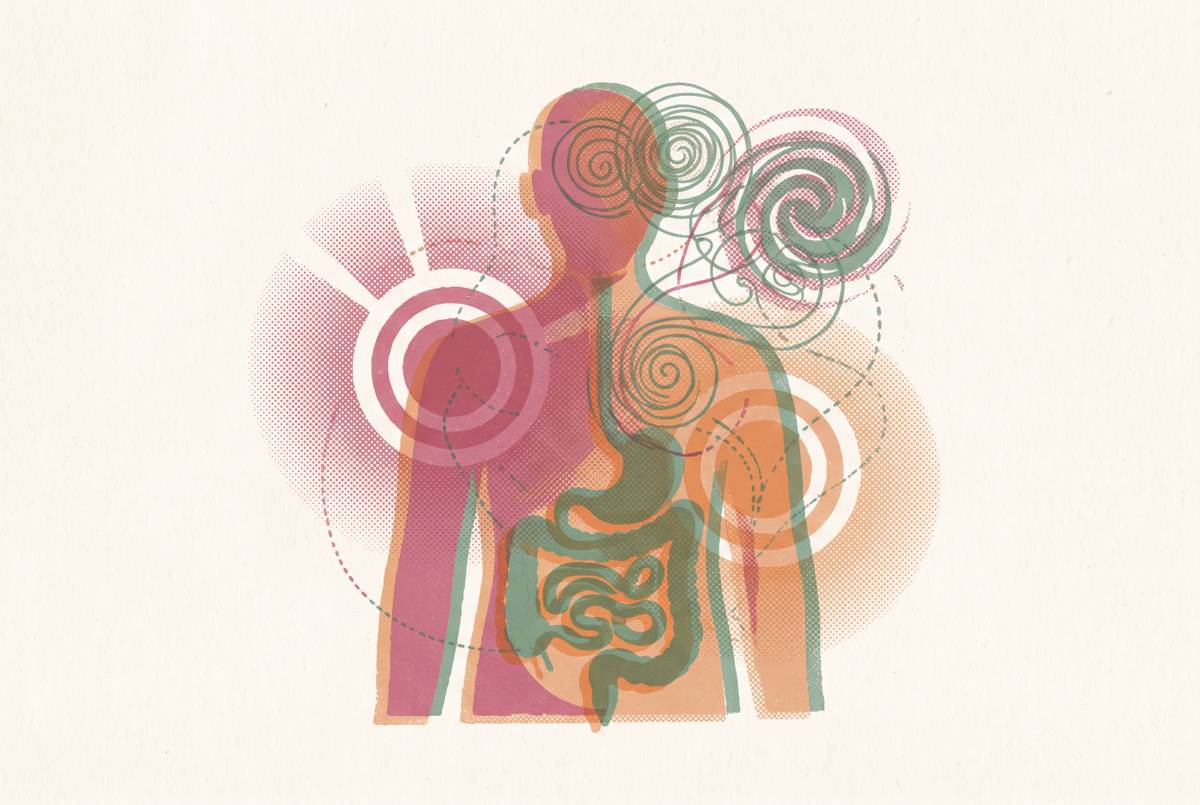
Fibromyalgia is a cluster of symptoms: widespread pain lasting three months or longer, fatigue that sleep doesn't fix, fibro fog, headaches, mood swings, and a body that seems to renegotiate its terms daily. It's a cluster: widespread pain lasting three months or longer, fatigue that sleep doesn't fix, fibro fog, headaches, mood swings, and a body that seems to renegotiate its terms daily. Tracking all of that with a pen or a phone keyboard sounds reasonable until you actually try it on a bad day. This piece looks at why voice journaling fits fibromyalgia's specific physical and cognitive demands better than written logs, and what that actually looks like in practice.
What fibromyalgia tracking needs to capture
Diagnosis alone is a pattern-recognition exercise. There's no blood test, no scan, no single biomarker that lights up and says "fibromyalgia." Clinicians work from evolving criteria and a constellation of symptoms that shift depending on the day, the week, the season. That same pattern-dependent logic carries straight into self-management. Managing fibromyalgia well means noticing trends over time, not reacting to isolated bad days.
So what actually needs logging? Pain, for one, but not just a number. Location matters (pain migrates), and so does the texture of it: burning, aching, stabbing, pressure. Energy levels across the day matter too, especially the peaks and the post-exertional crashes that follow overexertion. Sleep duration and quality. Morning stiffness. Cognitive symptoms like memory lapses and word-finding trouble happen to be the exact symptoms that make writing anything down difficult. Triggers: what was eaten, what was stressful, what medication was taken and when. And mood, which isn't incidental here. Roughly half of fibromyalgia patients report clinically significant anxiety (46.6% across a pooled sample of 21,591 patients in 62 studies) or depression (50.8% across 31,104 patients in 88 studies).
Consistency and honesty beat polish. A messy, honest entry is worth more to a clinician than a tidy one written three days late from memory. A 2026 ViewPoint by Lebeau Foustoukos and colleagues found that patients specifically valued tools that visualized their own progress. Patients valued tools that helped them see connections between their behaviors and their symptoms over time.
Why voice removes the friction that written formats cannot
Most people speak at around 150 words per minute, a pace that's faster and cognitively cheaper than typing or handwriting for the vast majority of people. That gap widens considerably when the person doing the typing is also managing joint pain, fatigue, and a fogged-over brain.
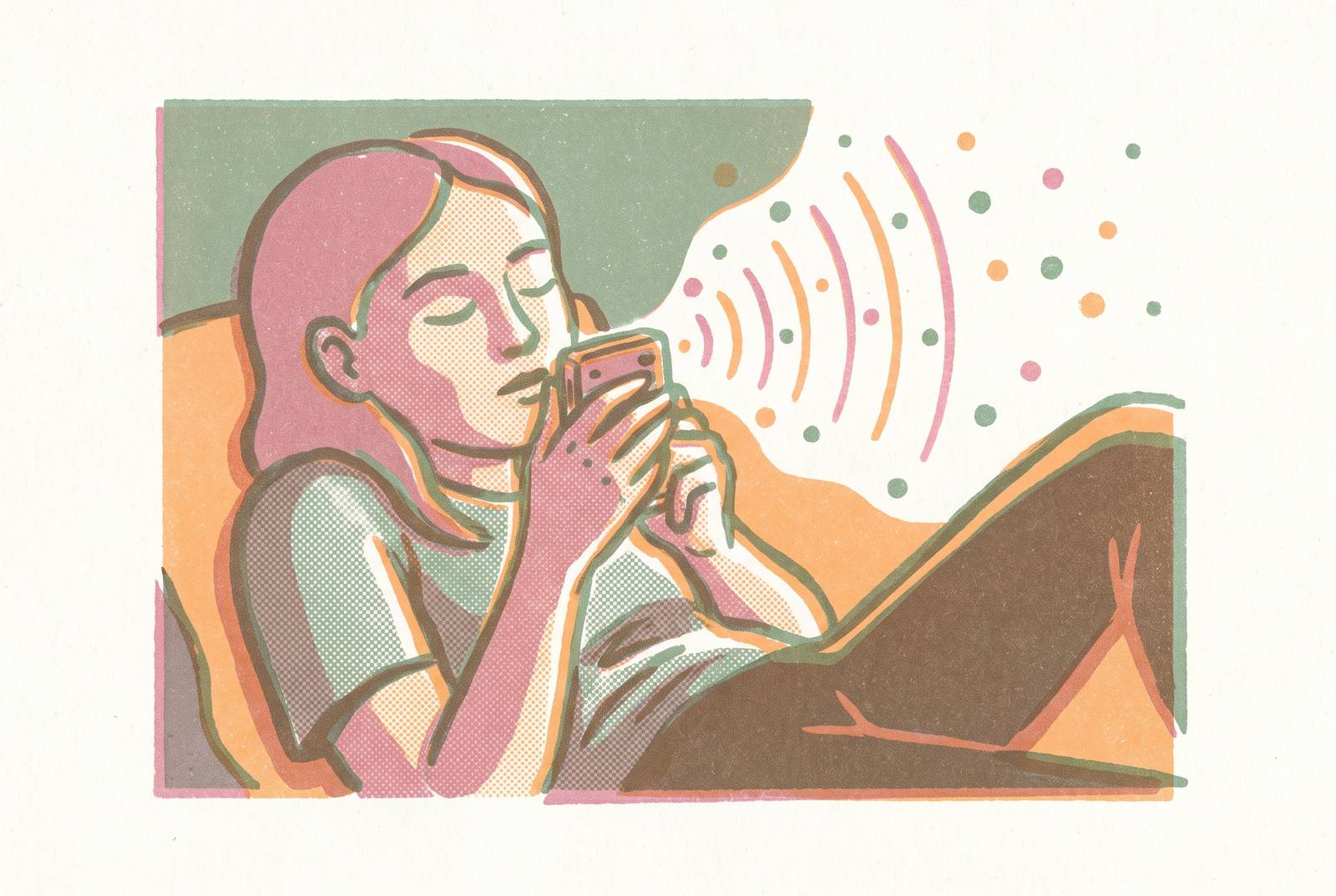
Voice recording keeps working on the days when nothing else does. Gripping a pen through hand pain, or staring at a blinking cursor while fog swallows the sentence you were trying to build, both fall apart under enough symptom load. Talking out loud generally doesn't require the same fine motor control or working memory. You just speak, the way you'd talk to a friend sitting next to you on the couch.
There's also no form to navigate. No dropdown menus, no remembering which field captures sleep versus which one captures mood, no spelling anything correctly. And because recording a voice memo takes seconds to start, it can happen exactly when the symptom is happening: still lying in bed at 7am, mid-afternoon during a flare, or flat on the couch after a walk that took more out of the body than expected. Written logs tend to demand a dedicated sitting-down moment. Voice doesn't.
What voice journaling can capture that text structurally cannot
A typed entry that says "pain: 7/10" throws away almost everything interesting about that 7. Was it said through gritted teeth? With a long pause before answering? A voice recording keeps the hesitation, the vocal effort, the tone. That's information a checkbox simply cannot hold.
Research on self-distancing and emotional processing has found links between reflective verbal expression and better emotional regulation, a finding with real relevance to fibromyalgia, where catastrophizing and rumination occur often as part of the symptom picture. There's also the difficulty many patients face in identifying and naming their own feelings to consider. Speaking freely, without being boxed into a pre-set list of mood options, may lower the barrier to actually naming what's going on emotionally.
The science here is still forming, but it's pointed in an interesting direction. A 2026 rapid review in Frontiers in Pain Research, authored by Tobey-Moore, Iyer, Wilkerson, and Annichiarico, looked at voice-based AI in objective chronic pain assessment. Machine learning models trained on voice data have shown early promise in detecting pain states, with shifts in pitch, pace, and tone tracking alongside mood changes. None of this is an established clinical standard yet. But it does suggest that an audio journal carries diagnostic texture a written one structurally cannot reproduce, whether or not any algorithm ever processes it.
What to say: a practical guide to fibromyalgia voice entries
The goal is capture. It's capture. A 90-second ramble beats a blank log every time, and nobody's grading delivery.
A loose structure helps on days when fog makes it hard to know where to start:
Waking up. Sleep quality, morning stiffness, how rested (or not) the body feels, first pain sensations of the day. Pain, right now. Where it is, what it feels like in words (burning, aching, stabbing, pressure), whether it's staying put or moving around. Mood. Anxious, flat, frustrated, fine. A one-word honest answer counts. Yesterday, briefly. Activity level, stress, food, medications and timing, anything that took unusual effort. One thing for the doctor. A phrase to remember, a question that popped up, a pattern that seemed to repeat.
Triggers deserve extra attention here. Prompting specifically for what was happening in the hours before a symptom shifted, what was eaten, what was stressful, what changed in the environment, is what eventually reveals the threads connecting one day to the next. And timing affects accuracy: an entry recorded in the moment, right as a flare starts or right after waking, holds more accurate detail than an end-of-day recap built from memory. That said, a late recap still beats nothing. Several short recordings scattered through the day tend to capture more than one long one attempted at night, when fog and fatigue are both at their worst.
How voice entries become patterns, not just moments
One entry is a snapshot. A month of entries is a dataset, and that's the real shift, moving from reacting to individual bad days toward spotting the pattern before the flare even hits.
A few things to watch for across weeks of recordings:
- Does poor sleep reliably appear a day or two before a high-pain stretch?
- How many days after a high-activity day does the crash usually land, and how severe is it?
- Do the same triggers keep surfacing before flares: certain foods, stress events, weather shifts, social obligations?
- Is cognitive fog worse at a particular time of day, or tied to specific triggers rather than random?
- After a medication change, do the following days sound different in tone, energy, or pain description?
Reviewing weeks of raw audio by hand is its own burden, though, especially for someone managing fatigue. Tools that transcribe voice entries turn stored audio into something searchable and sortable, which is a meaningfully different experience than scrolling back through old recordings trying to remember which one was the bad Tuesday. The 2026 Lebeau Foustoukos ViewPoint specifically argues for tools that integrate monitoring, education, and behavioral support rather than treating them in isolation. Voice tracking fits into that picture only when it feeds into something that actually surfaces the pattern, beyond simply archiving the sound file.
Turning voice recordings into something useful at a doctor's appointment
Fibromyalgia appointments run short and carry a lot of weight. Patients are routinely asked to summarize weeks of fluctuating, multisystem symptoms in a handful of minutes, often while dealing with fog in the room itself.
Retrospective memory just isn't reliable here. Fog, recency bias, and the sheer difficulty of describing pain that moved and changed all week combine to degrade whatever gets reported verbally in the moment. "It's been bad" is often the most a patient can manage under pressure, and that's not nearly enough for a clinician trying to adjust treatment.
A body of voice entries can produce something sharper:
- A real timeline showing whether things trended better or worse across the period.
- Named triggers that repeated across multiple entries, like a pattern of flares following high-social-activity days.
- Medication reactions described in the patient's own words, capturing not just what was taken but what followed.
- Specific phrases jotted (or rather, spoken) in the moment they were most vivid, before memory smoothed them over.
- An honest emotional and cognitive picture of the stretch, rather than the composed version patients often present in an exam room.
Tools that transcribe and summarize voice entries into a structured, doctor-ready report close a real gap: between the messy truth of daily symptoms and the organized information a clinician actually needs to act on.
How to build a voice journaling habit that survives bad days
The 2026 Lebeau Foustoukos focus group landed on a core insight: adherence depends on simplicity. Patients dealing with fibro fog need short, low-demand interactions. Elaborate routines don't survive contact with a flare.
Build the habit around the worst version of the day. A morning trigger that requires no standing, no prep, just talking while still lying in bed, removes most of the friction before it starts. Keep the default entry short. Sixty seconds covering pain, energy, and sleep is a complete entry. A simple verbal checklist or prompt sequence also helps on foggy mornings, when staring at a blank recording screen with no idea what to say is its own small defeat.
Treat each recording as a low-cost action, cheaper in energy than any written alternative. If it ever starts to feel like too much effort, that's a signal to shorten the format, not to push through on willpower. And a missed day isn't a failed habit. One entry in a rough week still beats zero. On crash days, the bar can drop to just one sentence, and that's still one more data point than an empty log.
What to look for in a voice-friendly tracking tool built for fibromyalgia
Not every tracking app is actually built for fibromyalgia, even when it claims to be. A few questions cut through the marketing fast.
Does it take voice input directly, rather than treating text as the default and voice as an afterthought? Does it track pain, sleep, mood, energy, medications, and triggers together, or does it silo each one into a separate screen that has to be filled out separately? Does it show correlations across weeks, or just store entries in a list with no way to see the shape of the data? Can it produce something a patient can actually hand to a doctor, or is it built purely for private reflection? Is the interface simple enough to use through fog, with plain language and no visual clutter competing for attention?
And does it actually understand fibromyalgia-specific ideas, like pacing, post-exertional patterns, and spoon theory, or is it a generic wellness tracker with a pain field bolted on? As of 2026, an analysis of 12 fibromyalgia self-management apps found only 42% qualified as multicomponent, so most tools on the market handle one piece of the picture and leave the rest for the patient to track somewhere else. That gap is exactly where voice-first, pattern-aware tools have room to matter.