How Symptom Patterns in Fibromyalgia Differ From Day to Day vs Week to Week
Daily swings and week-long crashes follow different patterns.
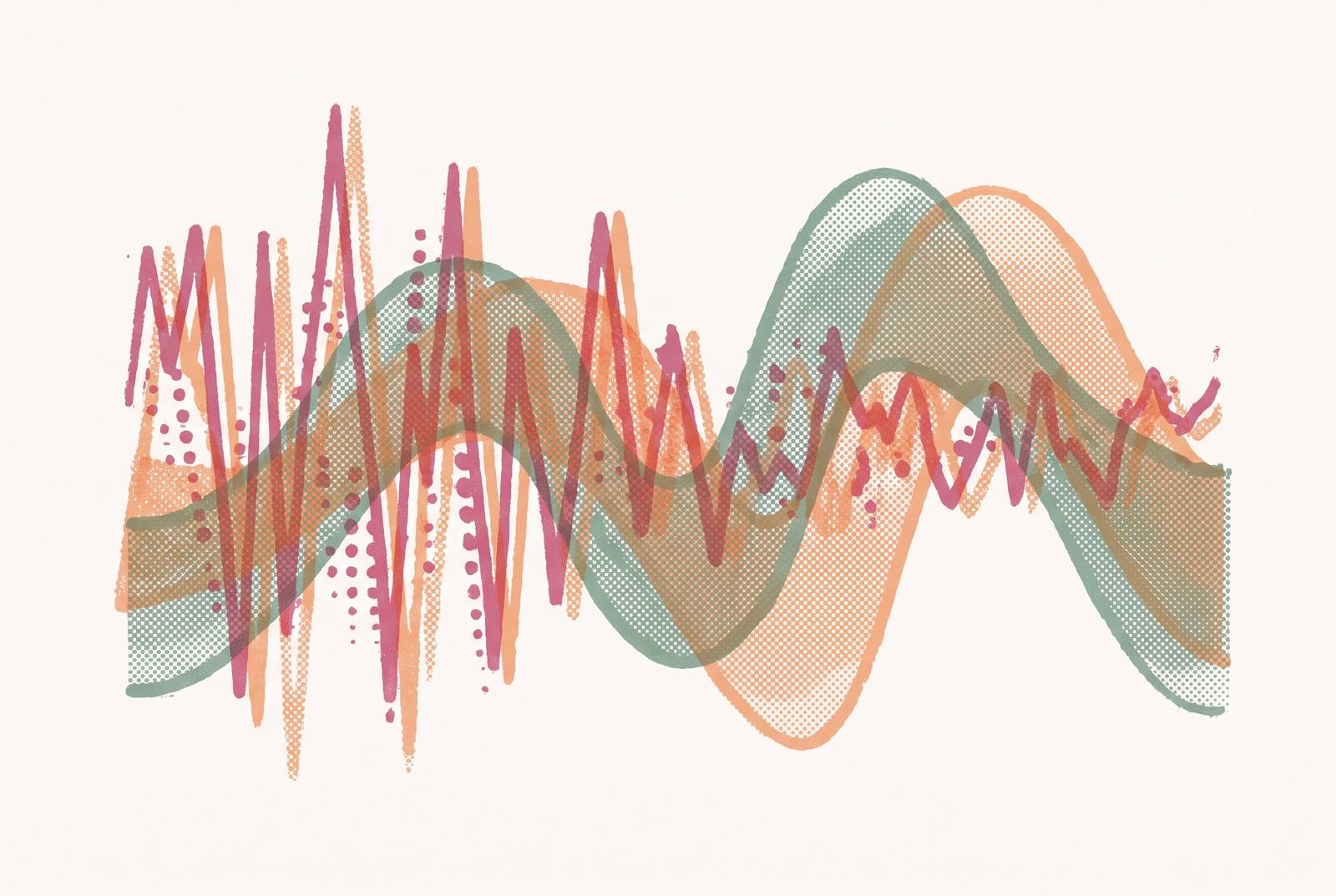
Fibromyalgia runs on three separate clocks at once: within a day, from one day to the next, and across weeks. Each clock has its own driver, and treating the condition as a steady baseline with the occasional bad day gets it wrong from the start. The variability is the disease, not noise sitting on top of it.
Fibromyalgia affects an estimated 2 to 8% of the global population, and patients still get told their symptoms sound inconsistent, sometimes directly, sometimes just a raised eyebrow when they explain they were fine on Tuesday and couldn't get out of bed Wednesday.
Central sensitization is the mechanism behind that swing. The nervous system amplifies pain signals that wouldn't register as painful in someone without the condition. A leading professional body in pain research now classifies this as "nociplastic" pain, a category separate from pain caused by tissue damage or nerve injury. No torn ligament, no inflamed joint, no scan that lights up. So when symptoms shift, there's no structural cause to point a finger at, and that absence is why the variability reads as suspicious to people standing outside the condition.
A nervous system that overreacts to ordinary input was never going to produce symptoms that move in straight lines. Expecting straight lines is the actual error here.
What happens to symptoms within a single day
Most fibromyalgia patients describe a typical day with the same story: pain sits heaviest in the morning, fatigue takes over by evening. It's common enough that it starts to sound like a rule.
The data doesn't back that up, at least not at the group level. Okifuji and colleagues, working across the University of Utah and the University of Washington, tracked 81 fibromyalgia patients three times a day for 30 days using handheld devices, capturing symptoms as they happened instead of asking patients to reconstruct a day afterward. That design, called ecological momentary assessment (EMA), exists specifically to dodge the distortions memory introduces.
Pooled across the group, there was no statistically significant diurnal pattern. No consistent morning-worse or evening-worse trend across the sample.
Both things are true at once, and most people miss that. Individual patients report clear, consistent daily rhythms, and there's no reason to doubt what they feel. But there's no single fibromyalgia clock that everyone runs on. A patient's rhythm belongs to that patient alone. It doesn't need to match a textbook description, or anyone else's day, to count as real.
How symptoms shift from one day to the next
This is where most patients actually live: in the gap between one day and the next. Fine on Tuesday, unable to move on Wednesday, no obvious trigger in between. That whiplash gets reported constantly and believed rarely, which has it backwards. The research confirms it as a genuine feature of the condition, not exaggeration.
Bartley, Robinson, and Staud ran one of the largest daily diary studies in fibromyalgia research: 256 patients, daily entries for up to 154 days. Nearly five months of day-by-day data for some participants, enough time to tell a real pattern from noise.
The results confirmed real variability, both within individual patients over time and between different patients. Higher baseline pain tracked with bigger day-to-day swings, and not just in pain unpleasantness. Fatigue and depressed mood swung harder too. The patients hurting most, on average, are also the ones whose symptoms bounce around the most.
Anxiety turned out to be a robust predictor of that fluctuation, and that single detail undercuts the purely physical framing of fibromyalgia still floating around in a lot of clinical conversation. Emotional and physical symptoms move together, day by day, and the data shows it.
The week-to-week arc and the boom-bust cycle
Week-to-week shifts aren't day-to-day noise piling up. They run on a different mechanism, and it has a name: the boom-bust cycle.
A good day appears in energy climbing and pain dropping, caused by the natural response to spend it: run the errands, finish the project, go to the event that's already been skipped twice. The payback doesn't arrive on schedule. Post-exertional malaise (PEM) typically lands 24 to 48 hours later, late enough that most patients never connect the overexertion to the crash that follows it.
The bust phase can wipe out days, sometimes weeks, of function. That delay is the entire reason one overambitious afternoon can flatten a week, and it's why the pattern stays invisible to the person living through it.
Left alone, the cycle doesn't hold steady. Repeated boom-bust swings may worsen the overall trajectory over time, so good days shrink and bust phases stretch longer. That's a decline driven by the cycle itself, not random chance.
Not all fibromyalgia patients fluctuate the same way
Fibromyalgia doesn't stamp one variability profile onto every patient, and treating it that way is where a lot of pacing advice goes wrong before it even starts. The Pain and Fatigue Variability Patterns study sorted patients into three distinct clusters based on how their symptoms actually moved.
Symptoms held fairly steady for Cluster 1 patients, who ran low variability with limited daily swing. Cluster 2 sat at the other extreme, high variability across pain, fatigue, and mood alike, wide day-to-day swings in nearly everything measured. Cluster 3 was the odd one out: low fluctuation in pain unpleasantness, moderate swings in pain intensity, fatigue, and depressed mood, but high variability in anxiety specifically. That third group's high anxiety variability suggests the fluctuation carries a real cost past mood alone.
A pilot analysis by Turlińska and colleagues at Jagiellonian University Medical College looked at 77 fibromyalgia patients and found three symptomatological patterns instead of variability clusters. Labeled "Physical," Pattern 1 showed pain near 6.5 and fatigue near 8 on a 0 to 10 scale, with anxiety and depression both under 3, a mostly somatic burden with little emotional overlay. Pattern 2, "Full," had pain, fatigue, anxiety, and depression all elevated together. Pattern 3, "Mild/Remissive," ran lower across every domain measured.
The clinical stakes are concrete. Handing an anxiety-focused treatment plan to a patient in the "Physical" pattern lands wrong, because anxiety isn't where their burden sits. A patient in the "Full" pattern faces the harder problem: emotional and physical symptoms feeding each other, each one making the other tougher to treat. The 2026 analysis also flagged that depression, anxiety, anhedonia, chronobiological preferences, and circadian rhythm disruption all tracked with poor medication response. Knowing which pattern applies decides what gets tried first, and getting it wrong burns time a patient doesn't have to spare.
Pacing as a response to both timescales
Activity pacing means balancing activity and rest so symptoms don't crater, sustainable by design instead of reduced for its own sake. Done right, it matches output to what the nervous system can actually absorb, on both the daily clock and the weekly one.
Spoon theory gave the idea a vocabulary that stuck. Everyone starts the day with a finite number of spoons, each task costs one, and fibromyalgia patients start with fewer than the people around them. As a way to explain an invisible condition to someone who's never lived inside one, it works, and it's become standard shorthand across chronic illness communities.
It was never built as a treatment protocol, though, and stretching it into one overstates what it can do. No clinical studies have tested spoon theory as a pacing method. It's a tool for explanation and self-understanding, full stop.
Energy Envelope Theory takes a more structured approach, because it treats overexertion and underexertion as the same failure wearing two faces. Pushing too hard causes PEM to follow. Pulling back too far causes deconditioning to set in, costing strength and tolerance the same way overexertion costs recovery time. The target sits in the middle: a pace steady enough that, held consistently, it lets capacity grow instead of lurching between boom and bust.
What symptom tracking across both timescales requires
Memory is a bad instrument here, and leaning on it is the most common mistake in how patients report their own symptoms. Prior research cited in Okifuji's EMA paper found recalled pain levels get distorted by current pain, current mood, and existing beliefs about the condition. A patient asked in a clinic appointment to summarize the past week is really reporting how the exam room feels right now, filtered backward through whatever mood walked in the door.
Daily tracking needs a short list, logged consistently: pain intensity, fatigue, sleep quality, activity level, mood, fibro fog, medications taken. At the week level, the useful record isn't the raw data points, it's the pattern they reveal: which days ran worse, what happened right before a flare, whether recovery reliably followed a stretch of overexertion. Triggers deserve their own separate line: food, weather, stress events, the type and length of activity involved.
Several validated instruments already measure fibromyalgia symptom burden, including the Fibromyalgia Impact Questionnaire (FIQ), the Widespread Pain Index, and the Symptom Severity Score, and versions of these show up built into tracking apps already. A flexible tracker that logs pain, fatigue, mood, sleep, medications, and triggers side by side can reveal a correlation a patient would otherwise miss entirely, a string of poor sleep lining up with a subsequent flare, say. That's the real payoff of tracking both timescales together instead of picking one and letting the other go dark.
Turning pattern awareness into better clinical conversations
None of this is self-knowledge for its own sake. A patient who can describe their own patterns clearly hands a clinician something to actually work with, instead of a vague impression to guess at.
Research consistently finds that large shares of fibromyalgia patients also meet criteria for depression and anxiety, figures that make emotional distress a defining feature of the condition rather than a side effect tacked on. For a large share of patients, emotional and somatic symptoms are woven together, and a clinician who hears only "my pain varies" is working from a fraction of the real picture.
Walking into an appointment with a week-over-week account of symptom movement, instead of a flat "I've been bad lately," changes what that conversation can actually accomplish. Naming a specific trigger alongside its delayed payoff matters just as much: the PEM hit 24 to 48 hours after a demanding weekend, not the same day as the overexertion. A record of which symptoms cluster together speaks directly to the subgroup research. Pain and fatigue may rise together while mood stays flat, or everything may spike at once, and that distinction tells a clinician where to aim first.
Energy and pacing notes fill in the last layer, showing that the boom-bust cycle sits under control or is quietly getting worse. A patient who can say, "my anxiety swings more than my pain does," or "my fatigue and pain run high but my mood stays steady," hands a clinician something specific enough to act on. That specificity is what separates a treatment plan built on guesswork from one built on what's actually happening, week by week, day by day, inside a nervous system running on its own schedule and nobody else's.
Sources
- Sequential Analyses of Daily Symptoms in Women With Fibromyalgia Syndrome - ScienceDirect
- Sequential Analyses of Daily Symptoms in Women with Fibromyalgia Syndrome
- Pain and Fatigue Variability Patterns Distinguish Subgroups of Fibromyalgia Patients - ScienceDirect
- Are there distinct patterns of mental and somatic symptoms in fibromyalgia? A pilot analysis
- Pain and Fatigue Variability Patterns Distinguish Subgroups of Fibromyalgia Patients
- Fibromyalgia: A Comprehensive Update for 2026 - Current Perspectives on Pathophysiology, Diagnosis, and Management
- Sequential Analyses of Daily Symptoms in Women with Fibromyalgia Syndrome
- Unravelling Fibromyalgia - International Association for the Study of Pain (IASP)